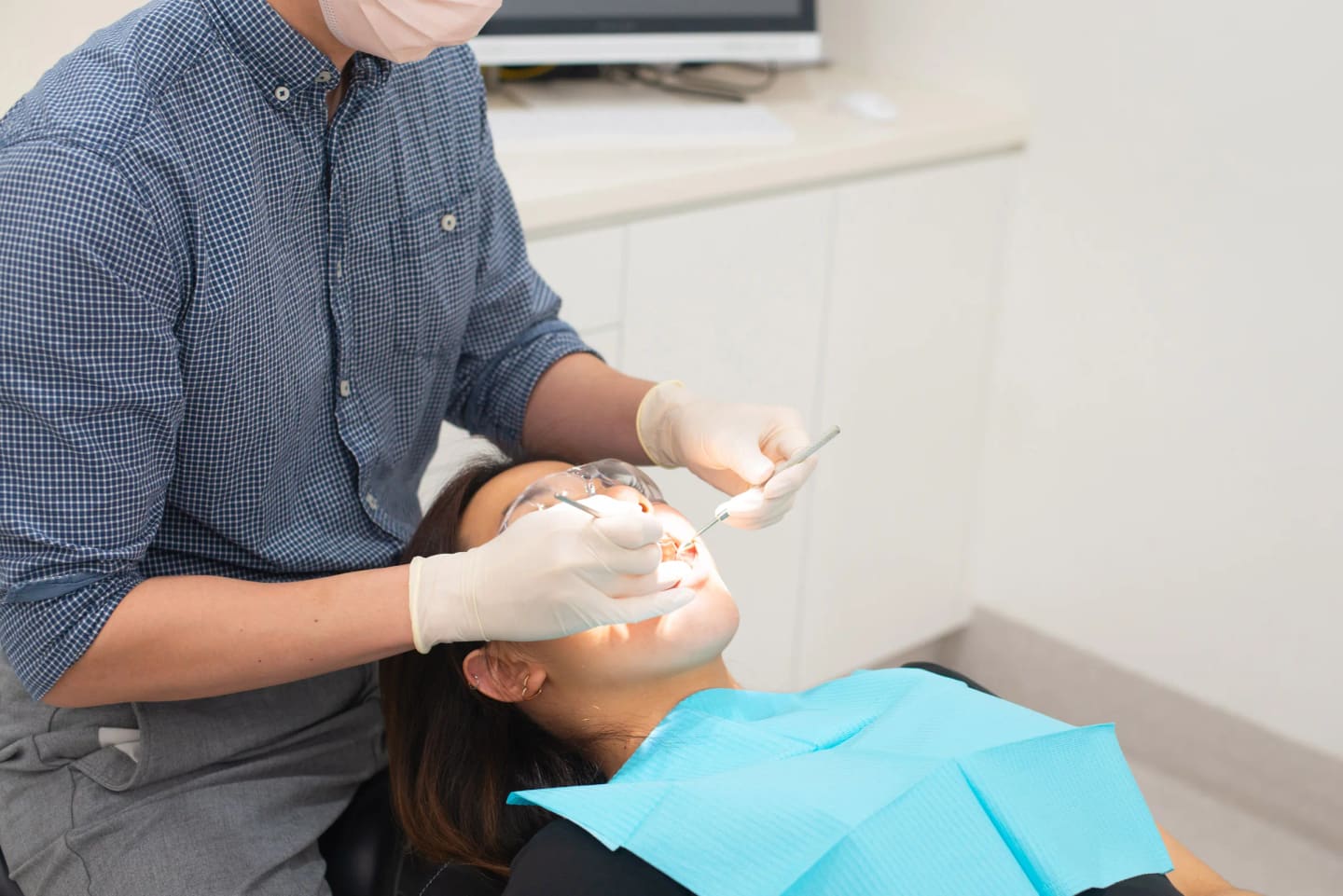
If you have been told you may need a bone graft before a dental implant, the next step is to understand the site, purpose, alternatives, risks, material, clinician, and timing. Some grafts can be completed with implant placement; others require a separate stage or specialist care. The label alone does not describe the complexity.
This guide explains what bone grafting involves, why it is sometimes needed, and what recovery looks like.
Why bone grafts are needed
Your jawbone needs a certain volume and density to support a dental implant. The implant fixture is a small titanium post that is placed into the bone, where it integrates over several months (a process called osseointegration). If there is not enough bone at the site, the implant may not have sufficient support to remain stable long term.
Bone loss in the jaw can occur for several reasons:
Tooth loss. When a tooth is extracted or lost, the bone that previously supported it begins to resorb. This process starts within weeks and continues over months and years. The longer the gap remains, the more bone is lost.
Gum disease. Advanced periodontitis destroys the bone that supports teeth. Even after gum disease is treated, the bone loss it caused does not reverse on its own.
Trauma. A fracture or injury to the jaw can damage bone structure.
Anatomical factors. Some patients naturally have thinner bone in certain areas, particularly the upper back jaw where the sinus cavity sits close to the tooth roots.
Long-term denture wear. Dentures sit on the gum surface and do not stimulate the underlying bone. Over years, this can lead to significant ridge resorption.
A CT scan (CBCT) taken during your implant consultation reveals the exact bone dimensions at the planned implant site. This imaging determines whether grafting is needed, what type, and how much.
Types of bone graft
Not all bone grafts are the same. The type used depends on the amount of bone needed and the location.
Socket preservation graft
Performed at the time of tooth extraction. Graft material is placed into the empty socket to prevent the bone from collapsing inward as it heals. This is the most common type of bone graft in dentistry and is relatively minor.
Healing time: 3 to 4 months before the site is ready for implant placement.
Ridge augmentation
Used when the jawbone ridge has already resorbed and is too narrow or too short to support an implant. Graft material is placed along the ridge to build it up. A membrane is often used to hold the graft material in place while new bone forms.
Healing time: 4 to 6 months.
Sinus lift (sinus augmentation)
Specific to the upper back jaw. The maxillary sinus sits directly above the roots of the upper back teeth. When these teeth are lost, the sinus can expand downward into the space, leaving insufficient bone height for an implant. A sinus lift involves gently lifting the sinus membrane and placing graft material beneath it to create enough bone height.
Healing time: 4 to 9 months, depending on the amount of bone needed.
Block graft
For more significant bone deficiencies, a block of bone may be taken from another site (often the chin or the back of the lower jaw) and fixed to the deficient area with small screws. This is a more involved procedure and is less common than particulate grafts.
Healing time: 4 to 6 months.
Graft materials
Bone graft material comes from several sources:
- Autograft: Bone harvested from the patient's own body. Considered the gold standard because it contains living cells that promote new bone growth. The downside is a second surgical site.
- Allograft: Processed bone from a human donor (bone bank). Widely used, well documented, and avoids a second surgical site.
- Xenograft: Bone derived from an animal source (commonly bovine). Processed to remove all organic material, leaving a mineral scaffold that supports new bone growth.
- Alloplast: Synthetic bone substitute material (e.g., calcium phosphate or hydroxyapatite). No donor tissue involved.
Your dentist or surgeon will recommend the most appropriate material based on the size and location of the graft, your medical history, and the evidence for each material in that specific application.
What to expect during the procedure
Most bone grafts are performed under local anaesthetic in a dental chair. The steps vary by type, but a typical socket preservation or ridge graft follows this general sequence:
- The area is numbed with local anaesthetic.
- If an extraction is part of the plan, the tooth is removed first.
- The graft site is prepared and cleaned.
- Graft material is placed into the site.
- A membrane may be placed over the graft to contain it and protect it during healing.
- The gum tissue is closed with sutures.
The procedure typically takes 30 to 60 minutes. For larger grafts or sinus lifts, it may take longer.
Recovery and aftercare
Post-operative recovery varies by the extent of the graft. General guidance:
- Pain: Mild to moderate discomfort for 2 to 5 days. Over-the-counter pain relief (ibuprofen or paracetamol) is usually sufficient.
- Swelling: Common for 2 to 3 days. Ice packs applied to the outside of the face in 20-minute intervals can help.
- Diet: Soft foods for 1 to 2 weeks. Avoid chewing on the graft site.
- Activity: Avoid strenuous exercise for 3 to 5 days.
- Oral hygiene: Gentle brushing away from the surgical site. Saltwater rinses may be recommended after the first 24 hours.
- Smoking: Avoid smoking for as long as possible. Smoking significantly impairs bone healing and increases graft failure risk.
Your dentist will schedule follow-up appointments to monitor healing and determine when the site is ready for implant placement.
Cost of dental bone grafting in Brisbane
Bone graft costs vary by type and complexity.
Procedure | Starting price |
|---|---|
Socket preservation graft | From $800 |
Ridge augmentation | From $1,500 |
Sinus lift | From $1,500 |
These are indicative starting prices. Your quote may differ based on clinical assessment.
Bone grafting is often itemised separately from the implant itself. Your dentist will provide a comprehensive quote covering all stages of treatment.
Payment plans may be available to approved applicants.
Not every implant needs a bone graft
It is worth noting that many implant patients do not require bone grafting. If you have adequate bone volume at the implant site, your treatment proceeds directly to implant placement. The need for grafting is assessed on a case-by-case basis using 3D imaging.
At Ivy Dental in Everton Park and Nundah, we use CBCT scanning to assess bone volume before recommending any grafting procedure. If a graft is needed, we explain why, what type, and what it adds to your timeline and cost.
Book an implant consultation at Ivy Dental. Call (07) 3266 7120 or visit us at Everton Park or Nundah. Open 7 days.