Often considered for
Selected tooth movement
- Mild to moderate crowding or spacing
- Relapse after previous orthodontic treatment
- Selected bite concerns and rotations after full assessment
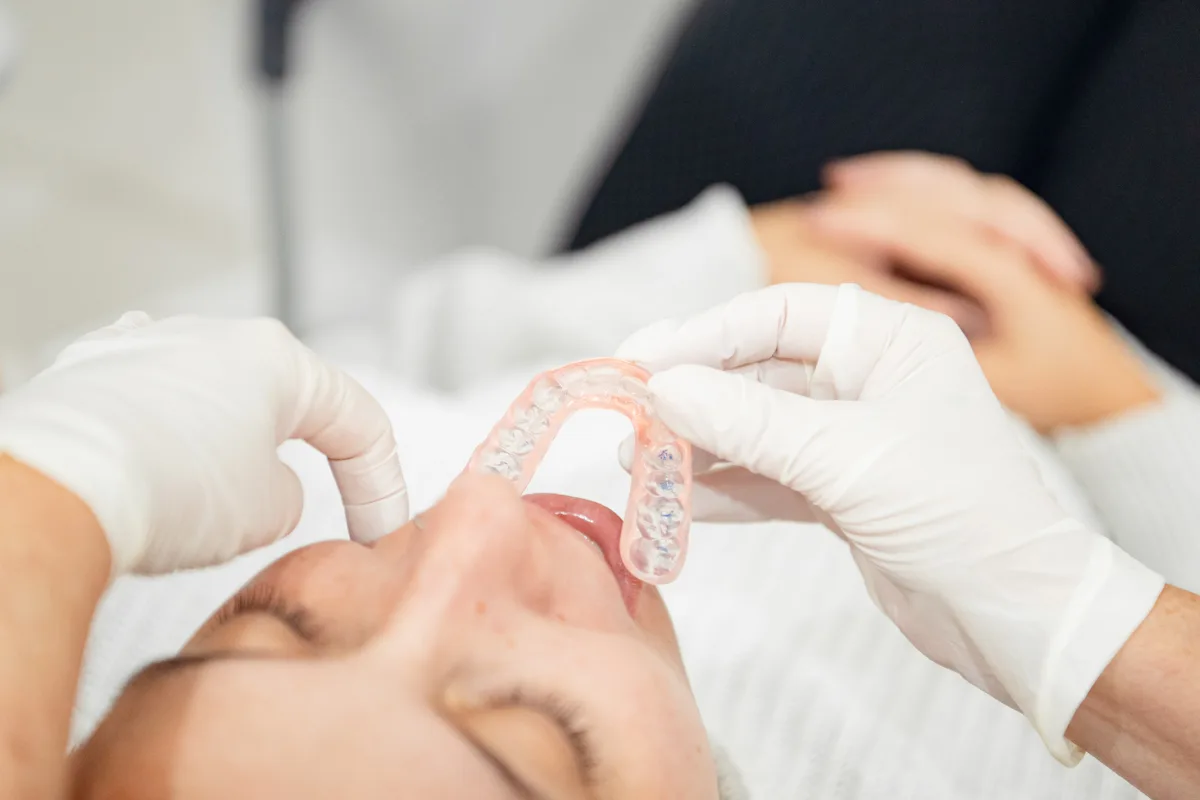
Clear aligners
Explore a discreet, removable way to straighten your teeth. We discuss what you would like to change, assess your teeth and bite, and explain your options, treatment stages and costs.
Suitability, treatment time and results depend on your teeth, bite and wear schedule.
From $6,5003D digital recordsRetainers included
Your starting point
Crowding, gaps or teeth that have moved after previous orthodontic treatment are common reasons to explore aligners. Your dentist checks which movements are appropriate for your teeth and bite.
Healthy teeth and gums and consistent daily wear support treatment. We will explain if fixed braces or specialist orthodontic care would better suit your case.
Often considered for
Needs discussion
Not ready yet
Compare the mechanics
| Compare | Clear aligners | Fixed braces |
|---|---|---|
| Visibility | Clear trays can be less noticeable, but trays and attachments may still show | Brackets and wires are visible |
| Daily responsibility | Remove for meals and wear for 20 to 22 hours each day | Fixed in place, with careful cleaning and food precautions |
| Case range | Useful for many selected cases, but not every complex movement or bite | Can manage a broad range of movements and complex cases |
| Planning changes | Tracking may vary and refinement trays are common | Wire and bracket adjustments are made during reviews |
| At Ivy Dental | From $6,500 after assessment and records | Not provided at Ivy; referral can be arranged when appropriate |
The treatment sequence
Every stage depends on the one before it. The simulation helps communicate the proposed plan, while in-person reviews show how your teeth are responding.
Examine oral health, bite, jaw relationship, existing dental work, goals, and whether an orthodontic referral is indicated.
Take a 3D scan and other records needed to plan the proposed movements and attachments.
Discuss the simulation, estimated timing, limitations, alternatives, costs, and the role of your daily wear.
Wear each set as directed and attend reviews so tracking, hygiene, attachments, and bite can be checked.
Use refinement trays if indicated, then wear retainers as directed to reduce unwanted tooth movement.
Transparent cost factors
The exact quote follows assessment and records. It reflects movement complexity, the number of stages, attachments, whether interproximal reduction is planned, expected refinements, active treatment time, and retention.
Planned refinement aligner sets and retainers are included in the Ivy quote. Payment plans may be available to approved applicants, and health fund benefits depend on your policy.
Included in planning
Records are used to assess suitability, stage tooth movement, and explain the proposed treatment direction.
Included when planned
Your dentist checks how your teeth respond and may plan additional aligner sets to adjust movements. Planned refinement sets are included in your quote.
Included at completion
Retention is part of treatment, not an optional extra. Retainers require long-term wear and eventual review or replacement.
Day to day
You can remove aligners for meals and cleaning. Wearing them for the prescribed time and keeping your review appointments helps treatment stay on track.
Aim for 20 to 22 hours each day as directed. Change trays on the planned schedule unless the clinic advises otherwise.
Remove trays for food and drinks other than water. Do not expose trays to heat that could distort them.
Brush and floss before replacing trays. Clean aligners as directed and keep them in their case when removed.
Keep review appointments and contact the clinic if a tray no longer seats, an attachment comes off, or symptoms concern you.
Limits and risks
Orthodontic tooth movement is a clinical process. Comfort, timing, tracking, and results vary, and changes to the plan may be needed.
When aligners are not the answer
Ivy Dental does not provide fixed metal or ceramic braces. If your bite, jaw relationship, age, movement complexity, or likely compliance makes aligners unsuitable, we can discuss referral to an orthodontist.
A cosmetic option such as veneers can change visible shape in selected cases, but it does not move teeth or correct the underlying bite.
Clinical team
Treatment planning starts with assessment. The profiles below are a starting point if you would like to read more about clinicians involved in this area of care. The right appointment depends on location, timing, and clinical need.
Continue comparing
Available now
Common questions
A considered first step
Your first visit can clarify suitability, likely complexity, alternatives, responsibilities, and cost before you decide whether to proceed.