Skip to content
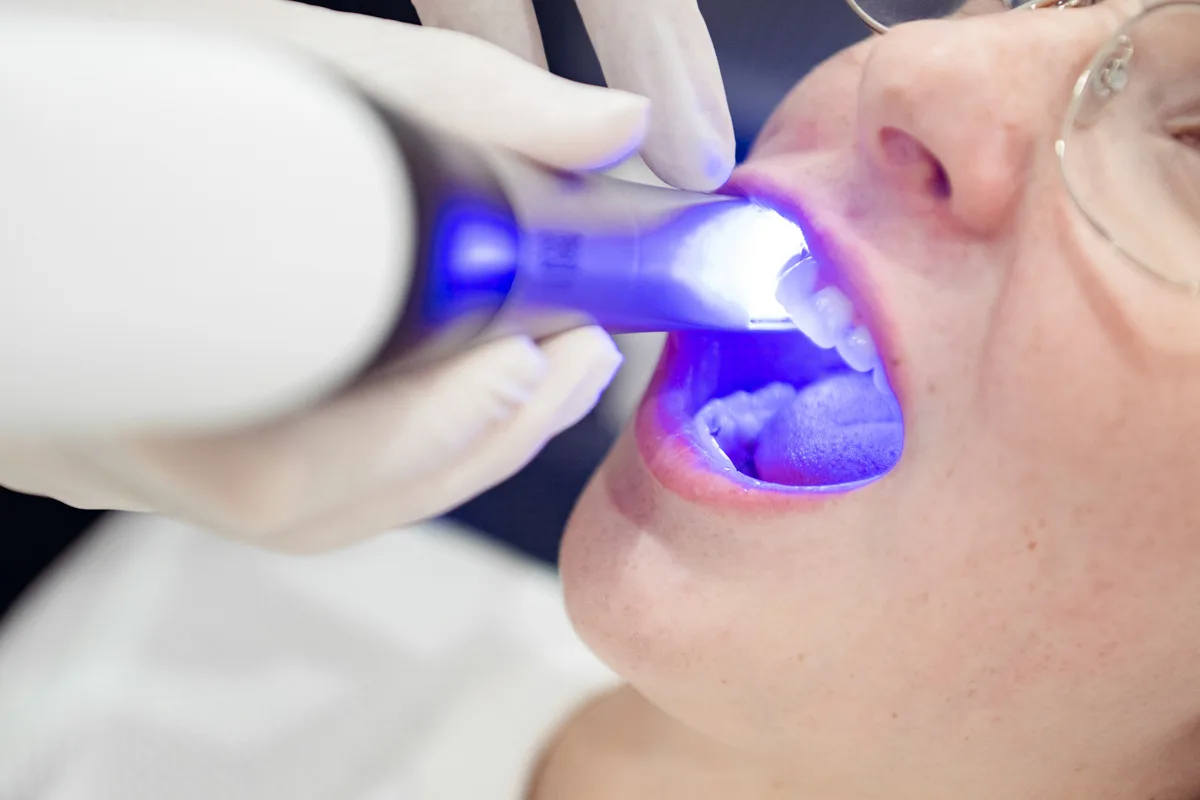
Clinician supervising professional in-chair teeth whitening

Professional teeth whitening

First understand the colour change.

Whitening can lift many common stains, but not every dark, yellow, grey, or uneven tooth has the same cause. We check your teeth and restorations first, then recommend in-chair, take-home, another treatment, or no treatment.

Results and sensitivity vary. Whitening does not change the colour of fillings, crowns, veneers, or bridges, and no specific shade can be guaranteed.

In-chair from $850Take-home from $299Clinician supervised

Assessment before bleaching

Colour tells us where to start.

Surface stain from food, drinks, or tobacco may respond differently from colour within the tooth. A single dark tooth, new colour change, pain, or a visible crack needs diagnosis, not automatic whitening.

Natural enamel and dentine, age, previous trauma, fluorosis, medicines such as tetracycline, and existing restorations can all affect what whitening can achieve.

Often responsive

Surface staining

Selected staining from coffee, tea, red wine, tobacco, and other habits may improve after cleaning and whitening.
Variable response

Colour within the tooth

Age-related darkening and some intrinsic discolouration may improve more slowly or less evenly.

Needs diagnosis

One dark tooth

Trauma, nerve changes, decay, cracks, or previous root canal treatment can require a different investigation and plan.

Will not whiten

Dental restorations

Fillings, bonding, crowns, veneers, and bridges keep their existing shade and may need separate planning.

Two professional options

Faster in the chair, or gradual at home.

In-chair and take-home teeth whitening comparison
CompareIn-chair whiteningTake-home whitening
Starting priceFrom $850From $299
TimingA supervised appointment, commonly around 60 minutesA planned course commonly used over about two weeks
How it worksGel is applied and monitored by the clinical teamPrescribed gel is used in custom-fitted trays at home
Pace and controlConcentrated into one visitMore gradual, with the schedule adjusted as directed
Touch-upsA later review may identify whether another session is appropriateCustom trays may be reused with fresh prescribed gel when clinically appropriate

A supervised process

Examine, explain, whiten, review.

The assessment is there to protect teeth, gums, and expectations. It also avoids trying to bleach a colour change that needs dental treatment instead.

  1. 01

    Examine

    Check decay, cracks, sensitivity, gums, enamel, exposed roots, restorations, and the pattern of discolouration.

  2. 02

    Set expectations

    Discuss likely response, limitations, sensitivity, alternatives, and the effect on visible restorations.

  3. 03

    Choose the method

    Select in-chair or custom take-home treatment based on suitability, timing, comfort, and preference.

  4. 04

    Whiten as directed

    Protect soft tissues, use the prescribed product and schedule, and adjust if sensitivity develops.

  5. 05

    Review and maintain

    Allow the shade to stabilise, reassess concerns, and plan touch-ups only when clinically appropriate.

Published starting prices

Two routes, with clear limits.

In-chair whitening starts from $850. Custom take-home whitening starts from $299. Your quote follows examination and confirms what is included.

Extra treatment may be needed if there is decay, gum disease, significant sensitivity, a crack, or a restoration that needs separate management. Health fund benefits depend on your policy and are often limited for cosmetic treatment.

In-chair

From $850

A supervised treatment appointment with soft-tissue protection, professional whitening product, and sensitivity management as indicated.

Take-home

From $299

Custom trays, prescribed whitening gel, instructions, and an individual schedule. Replacement or top-up gel is a separate future cost.

Limits and risks

Whiter is not the same as healthier.

Whitening is elective. It should be delayed or avoided when oral health, age, pregnancy, breastfeeding, enamel condition, or the cause of discolouration makes treatment unsuitable.

Sensitivity

  • Temporary tooth sensitivity is common and often settles within 24 to 48 hours.
  • Existing sensitivity, cracks, exposed roots, and enamel wear can increase discomfort.
  • The schedule or concentration may need adjustment, or treatment may need to stop.

Uneven or limited change

  • Crowns, veneers, fillings, bonding, and bridges do not whiten.
  • Tetracycline staining, fluorosis, and trauma-related greying may respond poorly or unevenly.
  • A specific shade or degree of change cannot be guaranteed.

Soft tissue and timing

  • Gel contacting gums can cause temporary irritation.
  • Active decay, gum disease, significant erosion, or unresolved dental symptoms need attention first.
  • Ivy recommends postponing elective whitening during pregnancy, breastfeeding, and for patients under 18.

Whitening or veneers

Change colour first when colour is the concern.

The conservative sequence

Whitening does not remove enamel and may be the more conservative place to start when natural teeth are healthy and colour is the main concern. It will not change tooth shape, alignment, or the shade of restorations.

Veneers can change colour and shape in selected cases, but usually involve irreversible tooth preparation and greater maintenance. Bonding, restorative care, or monitoring may also be more appropriate after diagnosis.

Compare whitening and veneers

After whitening

Protect comfort and let the shade settle.

Follow the schedule

Use take-home gel only for the amount of time and frequency prescribed. More product or longer wear does not guarantee a better result.

Manage sensitivity

Use the recommended desensitising products and contact the clinic if symptoms are severe, persistent, or affect a specific tooth.

Maintain, do not chase

Daily cleaning and reducing stain exposure can help. Touch-ups should be spaced and supervised rather than repeated without review.

Clinical team

Clinicians involved in whitening assessment.

Treatment planning starts with assessment. The profiles below are a starting point if you would like to read more about clinicians involved in this area of care. The right appointment depends on location, timing, and clinical need.

Available now

Choose the clinic that suits you.

Common questions

Whitening without the shade promises.

Will teeth whitening make my teeth sensitive?
Temporary sensitivity is common during or after whitening and often settles within 24 to 48 hours. Ivy uses desensitising measures and can adjust the concentration or schedule to your needs, but individual experiences vary.
How many shades lighter will my teeth become?
A specific shade change cannot be guaranteed. Response depends on the starting colour, type and depth of discolouration, enamel and dentine, previous dental treatment, and the whitening method. We discuss a realistic range after examining your teeth.
How long do whitening results last?
Results often remain noticeable for about 1 to 3 years, but this varies. Coffee, tea, red wine, tobacco, diet, oral hygiene, and natural ageing affect restaining. Clinically appropriate touch-ups may help maintain the result.
Can I whiten veneers, crowns, or fillings?
No. Whitening changes natural tooth tissue, not porcelain, composite fillings, crowns, veneers, or bridges. Visible restorations may no longer match after natural teeth lighten, so shade and replacement timing should be discussed first.
Is in-chair or take-home whitening better?
Neither is universally better. In-chair treatment is completed in a supervised appointment and suits people wanting a faster change. Take-home whitening works more gradually with custom trays and gives more control over pace. Suitability, sensitivity, timing, and preference guide the choice.
Is professional whitening suitable if my enamel is worn?
It depends on the cause and degree of wear. Significant erosion, cracks, exposed roots, decay, gum disease, or existing sensitivity may need assessment and treatment before whitening, or may make another approach more suitable.
How soon before an event should I whiten?
Allowing about a week after in-chair treatment gives sensitivity time to settle and the colour time to stabilise. For take-home whitening, allow at least three weeks for assessment, tray fabrication, the planned course, and any adjustments.
Can I whiten while pregnant or breastfeeding?
Ivy Dental recommends postponing elective whitening during pregnancy and breastfeeding because there is not enough evidence to confirm safety. We can discuss cleaning, stain management, and future timing instead.
Are shop-bought whitening products effective?
Some products may reduce selected surface stains, but the result and concentration vary. Poorly fitted trays or unsuitable products can irritate gums or worsen sensitivity. An examination also checks that a dark tooth or colour change is not caused by decay, a crack, trauma, or another dental problem.
Why choose Ivy Dental for whitening?
Ivy Dental uses dentist-prescribed whitening products with assessment and clinician supervision. The plan includes sensitivity management and realistic expectations rather than a promised shade. Custom take-home trays can be reused for clinically appropriate touch-ups with prescribed gel. Everton Park and Nundah are open 7 days.
What if whitening will not address my concern?
If the colour change is caused by a dental problem or is unlikely to respond to bleaching, we explain that before treatment. Depending on the diagnosis and your goals, options may include treating the tooth, monitoring, bonding, veneers, crowns, or accepting the current colour.

A considered first step

Start by finding out what whitening can change.

We can check the cause of discolouration, assess sensitivity and restorations, and give you a realistic recommendation before you choose in-chair or take-home treatment.