Most patients considering cosmetic dental work have one recurring concern: what will it look like? You can read about veneer materials and crown types, but until you can see the planned result on your own face, there is a gap between expectation and reality.
Digital smile design closes that gap. It is a planning process that produces a visual preview of your treatment outcome before any clinical work begins. At Ivy Dental in Brisbane, we use it routinely for veneers, crowns, and multi-tooth cosmetic cases at Everton Park and Nundah.
What digital smile design involves
The process starts with a set of high-resolution photographs of your face and teeth. These are not standard dental photos taken from inside the mouth. They include full-face images, profile shots, and close-ups of your smile in different positions.
Your dentist then uses specialised software to map your facial proportions, lip line, midline, and tooth display. From this analysis, a digital mockup is created showing the planned shape, size, and alignment of your new teeth overlaid on your own photograph.
The result is a before-and-after comparison using your face, not a stock image or generic template. You see what the final outcome is expected to look like before agreeing to proceed.
Why previewing matters
Cosmetic dentistry involves irreversible steps. Porcelain veneers require tooth preparation. Crowns involve reshaping the underlying tooth structure. Once that work is done, you cannot undo it.
Digital smile design introduces a checkpoint. You and your dentist review the proposed result together. If the teeth look too long, too square, too uniform, or not quite right, adjustments are made on screen before any tooth is touched.
This reduces two common problems. First, the "I didn't expect it to look like that" response after treatment. Second, the clinical guesswork that can happen when a dentist relies on experience alone rather than a shared visual plan.
Which treatments use it
Digital smile design is most valuable when multiple teeth are being treated and the overall appearance of the smile matters.
Veneers. When placing 6 to 10 porcelain veneers, symmetry and proportion across the arch are critical. Digital smile design maps these proportions in advance. Porcelain veneers at Ivy Dental start from $1,200 per tooth.
Crowns. Front-tooth crowns need to match the surrounding teeth in shape and size. A digital preview helps confirm the planned outcome before the lab fabricates the restoration. Crowns start from $1,600.
Smile makeovers. Cases involving a combination of veneers, crowns, and gum recontouring benefit from an overall plan rather than treating each tooth in isolation.
Aligners. Clear aligner treatment includes its own form of digital planning, with 3D models showing projected tooth movement at each stage. Aligner treatment at Ivy starts from $6,500.
How it works at Ivy Dental
Our process has four stages.
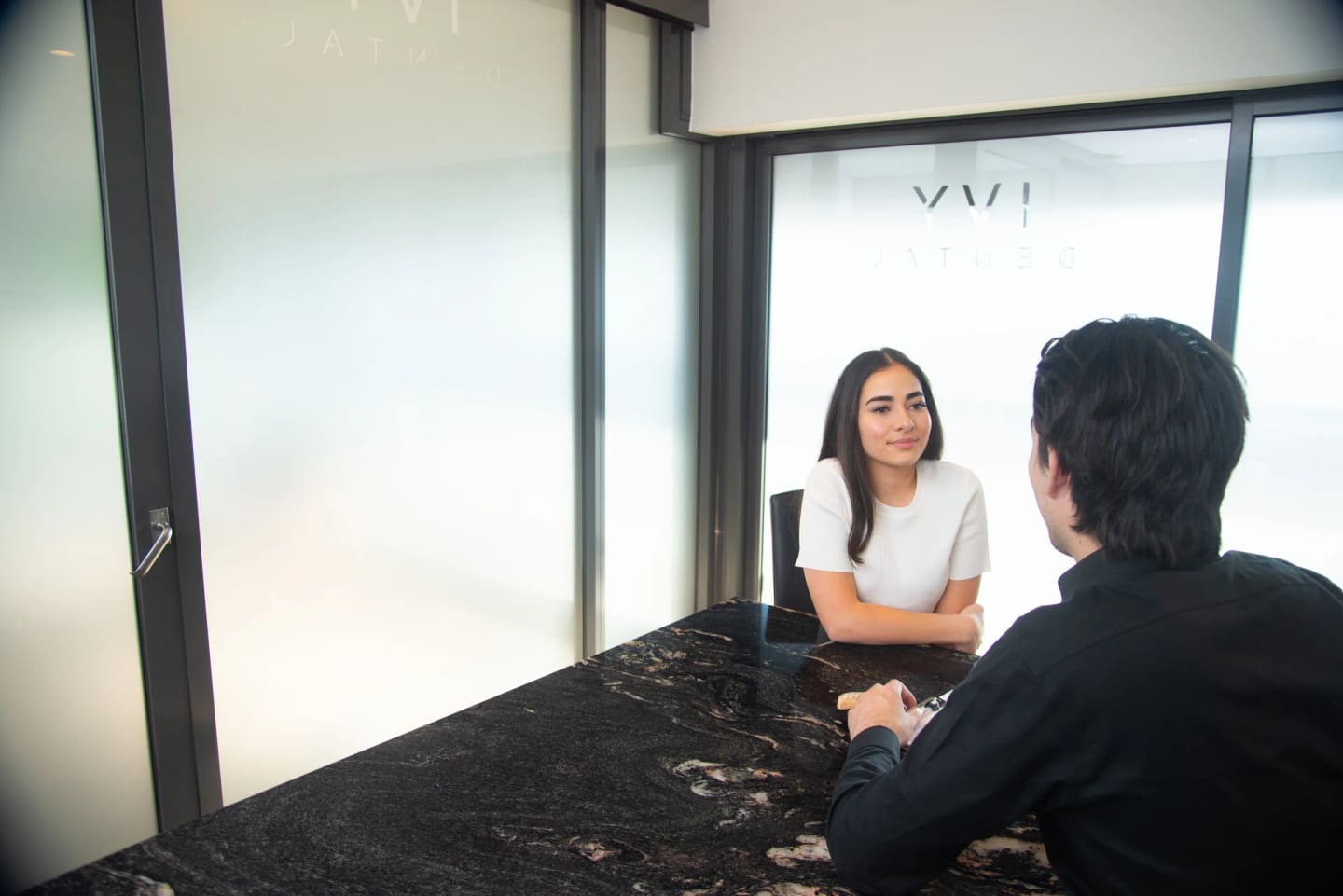
1. Consultation and photography. At your first appointment, we take the full set of facial and dental photographs. We also discuss what you want to change and what matters most to you. Some patients want maximum whiteness and uniformity. Others want a natural look that does not announce itself as dental work.
2. Design. Your dentist works with our in-house dental lab to create the digital mockup. Because our ceramist works in the same building, the person fabricating your restorations is involved from the design stage, not just at the end.
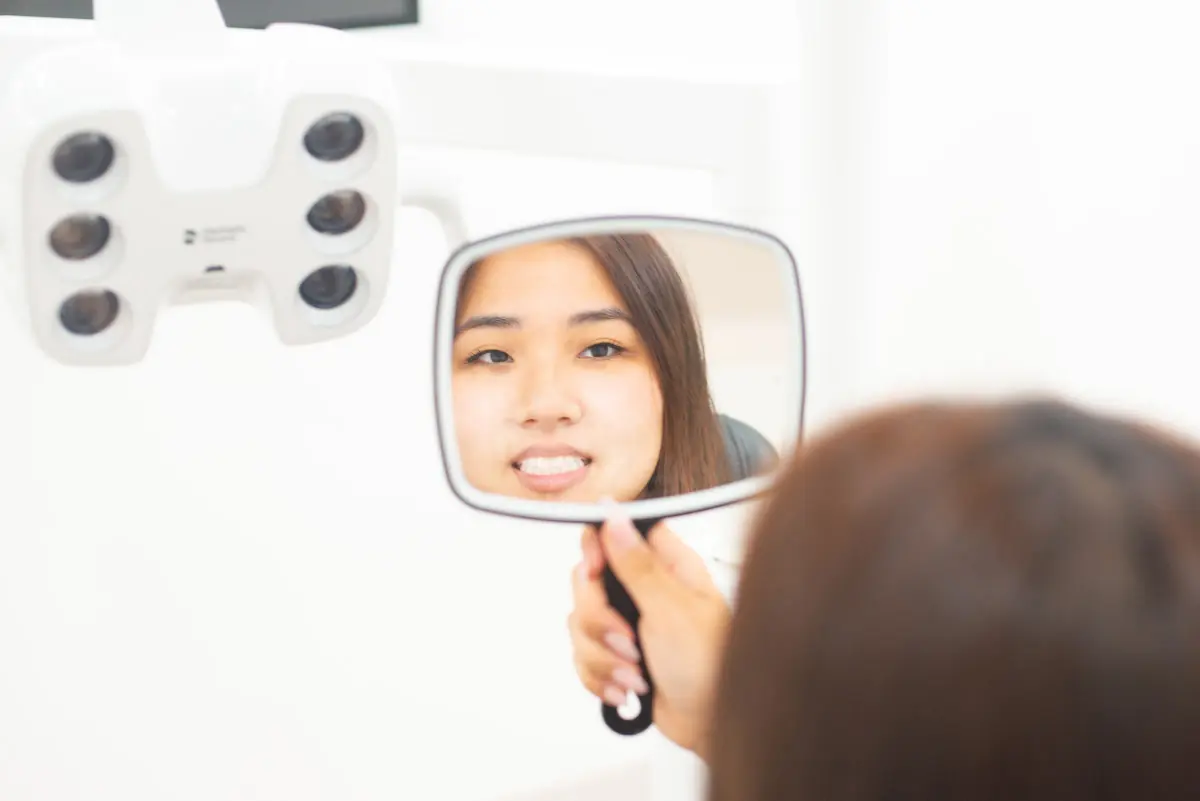
3. Review. We present the mockup at a follow-up appointment. You see the projected result on your own photographs and can request changes. Want the lateral incisors slightly shorter? The central teeth a shade warmer? Those adjustments are made before any clinical work begins.
4. Treatment. Once you approve the design, it becomes the blueprint for your treatment. The lab uses it to fabricate your veneers or crowns. Your dentist uses it to guide preparation. The agreed design is the reference point throughout.
Book a cosmetic consultation to see your digital smile preview.
What digital smile design does not do
It is a planning tool, not a promise. The mockup shows the intended outcome, but individual factors such as gum response, tooth structure, and material behaviour mean the final result may differ slightly from the preview.
It also does not replace clinical assessment. A digital design might look ideal on screen, but your dentist may identify structural or biological reasons why a modification is needed. The design informs the plan. It does not override clinical judgement.
How Ivy's in-house lab connects to the process
Many dental practices send their lab work to an external laboratory. The dentist takes impressions, ships them interstate or overseas, and receives finished restorations days or weeks later. Communication between dentist and technician happens through written notes and photos.
At Ivy Dental, our ceramist works in the same building. During the digital smile design process, the ceramist can review the mockup directly with the dentist. During fabrication, they can check shade, translucency, and fit in person rather than through a shipping label.
This connection between our clinical team and our lab is one reason we use digital smile design as standard for cosmetic cases. The technology works well when the people involved can collaborate face to face.
What to ask at your consultation
If you are comparing cosmetic dental providers in Brisbane, these questions can help you evaluate how each practice approaches treatment planning:
- Do you use digital smile design or a similar preview process?
- Can I see the expected result before committing to treatment?
- Who fabricates the restorations, and where is the lab located?
- What happens if I want changes after seeing the mockup?
Practices that plan visually before starting clinical work tend to produce more predictable outcomes. It is not the only factor that matters, but it is a meaningful one.
See your smile before you commit
If you are considering cosmetic treatment and want to see what digital smile design looks like for your teeth, the first step is a consultation at our Everton Park or Nundah clinic.
Book a cosmetic consultation or call (07) 3266 7120 to discuss digital smile design with our team.
Indicative pricing. Your quote may differ based on clinical assessment.