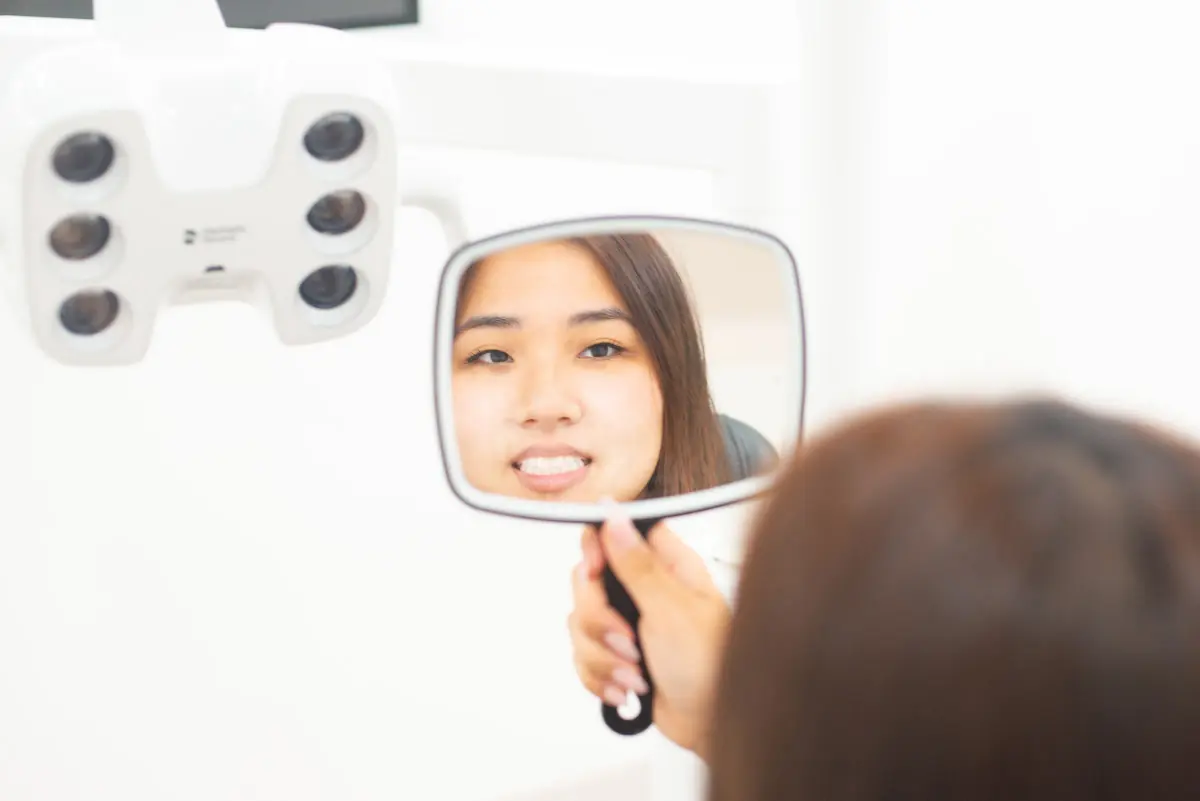
Social media has made cosmetic dentistry visible to a younger audience. Teenagers who are unhappy with their smile are increasingly asking about veneers. Parents researching the topic want to understand whether it is safe, appropriate, and worth the investment at this stage of their child's development.
The short answer is that porcelain veneers are rarely the right treatment for teenagers. There are good clinical reasons for this, and better alternatives are usually available. This guide explains why waiting matters and what can be done in the meantime.
Why porcelain veneers are not recommended for most teenagers
The teeth are still developing
Tooth development continues into the late teens and early twenties. The roots finish forming, the pulp chamber (the nerve space inside the tooth) gradually recedes, and the enamel reaches its final maturity. Placing veneers on teeth that have not finished developing creates several risks.
Larger pulp chambers. In younger patients, the nerve inside the tooth sits closer to the outer surface. Veneer preparation involves removing a thin layer of enamel. In an adult tooth with a receded pulp, this is a controlled and predictable procedure. In a younger tooth, the margin for error is smaller. Over-preparation can damage or expose the nerve, potentially requiring root canal treatment.
Ongoing eruption. Teeth may still be shifting slightly in position as the jaw grows. Veneers placed before this process is complete may end up in the wrong position relative to the final bite and gum line.
The gum line has not settled
Gum tissue in teenagers is still maturing. The gum margin may recede slightly over the next few years as the facial skeleton reaches its adult proportions. Veneers designed to sit at the current gum line may end up with visible margins as the gum position changes. This would require replacement earlier than expected.
It is an irreversible commitment
Porcelain veneers require permanent removal of enamel. Once that enamel is gone, the tooth will always need a veneer or crown. Making that irreversible decision during adolescence, when preferences and self-perception are still forming, is a significant step. Most clinicians and parents agree that it is better to wait until the patient is old enough to make a fully informed, long-term decision.
When a teenager might need treatment
There are situations where cosmetic dental treatment for a teenager is clinically justified rather than purely aesthetic.
Trauma. A chipped or fractured front tooth from a sports injury or accident needs repair. This is restorative, not cosmetic, and can be addressed at any age.
Developmental anomalies. Some teenagers have teeth that formed with structural defects (enamel hypoplasia, fluorosis, or developmental pitting). These can affect confidence and in some cases compromise the tooth's integrity.
Significant discolouration. Tetracycline staining or other intrinsic discolouration that does not respond to whitening may warrant treatment, though the approach should be conservative.
In these cases, the treatment of choice for a teenager is typically composite bonding rather than porcelain veneers.
Book a consultation to discuss your teenager's options.
Better alternatives for teenagers
Composite bonding
Composite resin can be shaped and bonded directly to the tooth to repair chips, close gaps, improve shape, and mask discolouration. It requires minimal or no enamel removal. It is reversible. And it can be modified, repaired, or replaced as the patient grows.
Composite bonding is typically less expensive than porcelain veneers and can be completed in a single appointment. It does not last as long as porcelain (typically 5 to 7 years), but that is an advantage for a teenager. By the time the composite needs replacing, the patient will be an adult with fully developed teeth, and they can make an informed decision about whether to continue with composite or move to porcelain.
Orthodontic treatment
If the concern is alignment, crowding, or spacing, orthodontic treatment addresses the underlying issue rather than masking it with veneers. Braces or clear aligners during the teenage years can produce a result that lasts a lifetime with proper retention.
Veneers on crooked teeth may look straighter, but they do not fix the underlying bite. Orthodontics does.
Teeth whitening
For teenagers over 16 with surface staining or natural yellowing, professional teeth whitening can make a significant difference. It is non-invasive, reversible, and far less expensive than veneers. Your dentist can advise on the appropriate approach based on the patient's age and enamel condition.
Enamel microabrasion
For superficial white or brown spots on the enamel (common after braces), microabrasion can improve appearance without adding any material to the tooth. It involves gently removing a very thin layer of surface enamel to reduce the visibility of the discolouration.
The right time for veneers
Most dentists recommend waiting until at least 18 to 20 years of age before considering porcelain veneers. By this stage, tooth development is typically complete, the pulp has receded to its adult position, and the gum line has stabilised.
Even at 18, there is no rush. Veneers are a long-term commitment. Taking a few extra months to plan the case properly, complete any orthodontic work, and ensure the patient understands the maintenance requirements is time well spent.
What parents should know
If your teenager is asking about veneers, that conversation is worth having with a dentist rather than dismissing it or relying on social media for guidance. A consultation can clarify what is achievable now, what should wait, and what the realistic options and costs are.
At Ivy Dental, we see young patients at our Everton Park and Nundah clinics. We will assess the clinical situation, explain what we recommend and why, and outline a timeline that protects your child's dental health while addressing their concerns.
Call (07) 3266 7120 or book online.
Book a cosmetic consultation at Ivy Dental.
Individual results vary. Treatment recommendations depend on clinical assessment. Not all cosmetic treatments are suitable for patients under 18.