Extrinsic
Surface deposits
Coffee, tea, red wine, tobacco, plaque, and some foods can leave deposits on enamel or around restorations. Home care or professional cleaning may help depending on the cause.
A practical guide to surface stain, tooth colour, whitening maintenance, daily habits, and changes that need clinical assessment.
Stain prevention
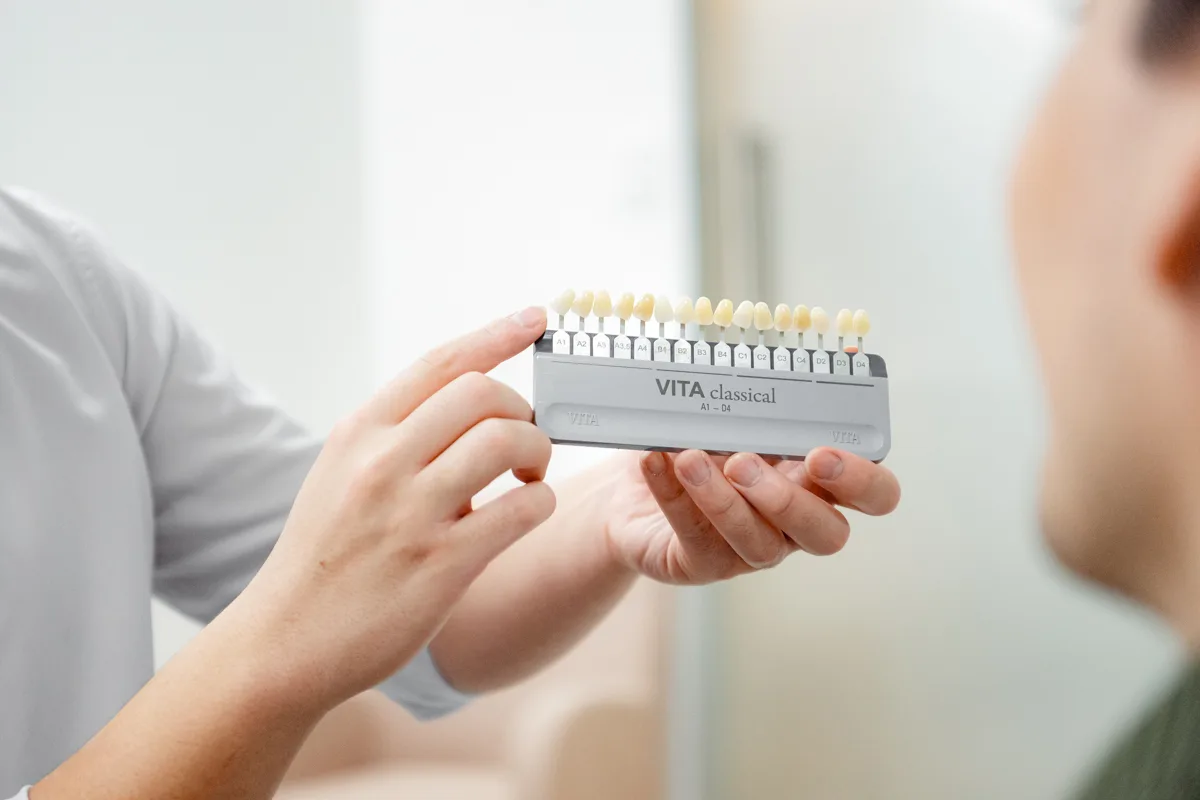
Tooth colour changes for different reasons. The useful first step is separating removable surface stain from colour inside the tooth, then choosing maintenance that fits your teeth and restorations.
A new colour change in one tooth should be assessed rather than treated as ordinary stain.
Surface and internal colourNo universal white-only dietRestorations do not whiten
Start with the cause
A cleaning, whitening plan, or restoration only makes sense after identifying what has changed and which material is involved.
Extrinsic
Coffee, tea, red wine, tobacco, plaque, and some foods can leave deposits on enamel or around restorations. Home care or professional cleaning may help depending on the cause.
Intrinsic
Ageing, trauma, development, medication history, old restorations, or the tooth structure itself can affect colour. Whitening does not address every cause.
Do not assume a new dark, grey, pink, or opaque area is a food stain. Examination may be needed to rule out decay, cracking, trauma, or a restoration problem.
Common contributors
You do not need to ban ordinary foods. Understanding repeated exposure is more useful than treating every coloured ingredient as a problem.
| Compare | How it shows up | Practical response |
|---|---|---|
| Coffee and tea | Can contribute to surface deposits over time | Avoid slow sipping for hours; rinse with water if convenient |
| Red wine and dark sauces | Pigment and acidity can contribute to surface discolouration | Keep normal hygiene and avoid aggressive brushing straight after acidic exposure |
| Tobacco | Can cause substantial surface staining and carries wider oral health risks | Ask for support to stop; cleaning alone does not address the health risk |
| Plaque and calculus | Can collect pigments and make colour look uneven | Use daily hygiene and the professional care interval recommended for you |
| Restoration margins | Composite, cement, or rough surfaces may pick up colour differently | Arrange assessment if a margin looks dark, rough, or difficult to clean |
Daily maintenance
The goal is oral health and manageable maintenance, not anxiety about every cup of coffee.
Brush twice daily using a fluoride toothpaste suitable for your teeth and restorations.
Interdental cleaning helps manage plaque where toothbrush bristles do not reach.
Repeated sipping over a long period can increase contact with pigments. Finish the drink rather than stretching it across the day where practical.
Water can clear residue. After acidic food or drinks, avoid immediately brushing hard.
More whitening gel or longer wear can increase sensitivity without making the plan safer.
New or uneven colour may need assessment of the tooth, gums, deposits, or restorations.
After whitening
Whitening protocols differ. A strict white-only diet is not a universal evidence-based requirement, but individual instructions may still account for sensitivity, enamel condition, restorations, or the whitening system used.
During treatment
Do not add extra gel or extend wear time. Contact the clinic if sensitivity is strong, persistent, or unusual.
Food and drinks
Use ordinary hygiene and follow your clinician's or manufacturer's directions. Rinsing after dark drinks is reasonable if convenient.
Ongoing
Natural teeth can darken again over time. Habits, ageing, and the original cause of colour all influence maintenance.
Top-ups
Ask before top-up whitening if you have new sensitivity, decay, cracks, gum change, or restorations that no longer match.
Common questions
Keep exploring
A considered first step
Request a colour review before choosing whitening, especially if the change is new, uneven, sensitive, or limited to one tooth.