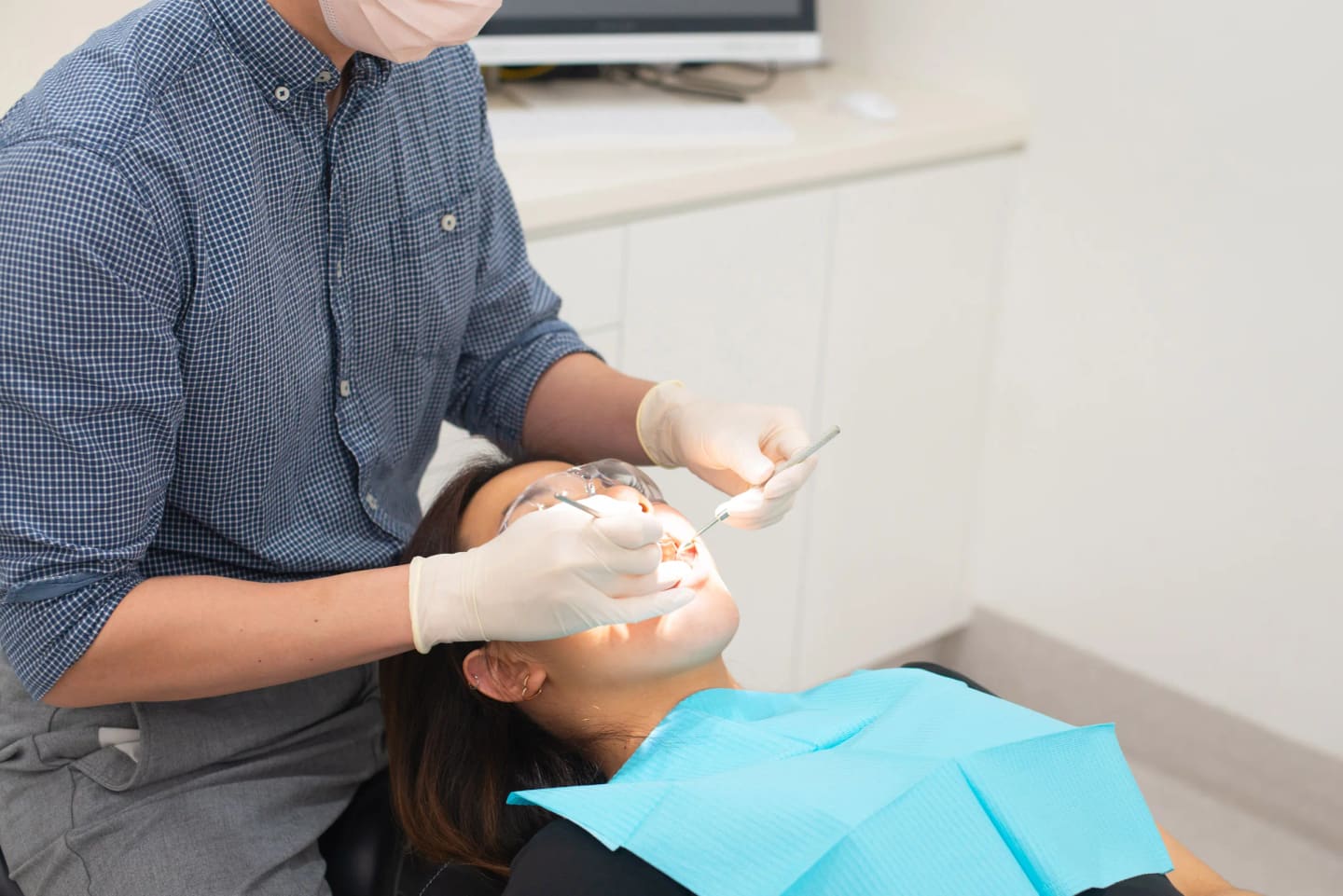
You have a crooked tooth, or your child's bite does not look right, or you are considering straightening your smile. The question is: do you go to your dentist or an orthodontist? They are not the same thing, and understanding the difference helps you make the right choice for your situation.
What a general dentist does
A general dentist is your primary dental care provider. They complete a Bachelor of Dental Surgery (BDSc) or equivalent degree and are registered with the Dental Board of Australia to practise all areas of general dentistry.
Their scope includes:
- Check-ups and preventive care
- Fillings, crowns, and other restorations
- Root canal treatment
- Extractions, including wisdom teeth
- Teeth whitening and cosmetic procedures
- Gum disease treatment
- Emergency dental care
- Some orthodontic treatment (clear aligners, minor tooth movement)
A general dentist sees the full picture of your oral health. They manage your teeth, gums, jaw, and soft tissues. They are the first person you see for most dental concerns and the one who coordinates referrals to specialists when needed.
What an orthodontist does
An orthodontist is a dental specialist who has completed a general dentistry degree plus an additional 2 to 3 years of university-based specialist training in orthodontics. They are registered as specialists with the Dental Board of Australia.
Their scope focuses on:
- Diagnosing and treating misaligned teeth and jaws
- Fixed braces (metal and ceramic brackets)
- Clear aligner treatment for complex cases
- Palatal expanders and growth modification appliances for children
- Surgical orthodontics (in collaboration with an oral surgeon) for severe jaw discrepancies
- Retention planning after orthodontic treatment
Orthodontists do not perform fillings, extractions, whitening, or other general dental procedures. Their entire practice is focused on tooth and jaw alignment.
When your general dentist is the right choice
For many patients, your general dentist can manage orthodontic treatment without a specialist referral. This is particularly true for:
Mild to moderate crowding. If your teeth are mildly crowded or slightly rotated, clear aligners prescribed by an experienced general dentist can produce good results. At Ivy Dental, we provide clear aligner treatment starting from $6,500 for suitable cases.
Minor spacing issues. Small gaps between front teeth that do not involve bite correction can often be closed with aligners or cosmetic bonding.
Cosmetic alignment of front teeth. If your back teeth bite together well and the issue is limited to the appearance of your front teeth, a general dentist experienced in cosmetic orthodontics can often manage this.
Adults who want a discreet option. Many adults prefer clear aligners over fixed braces, and general dentists are well positioned to provide this treatment alongside their other dental care.
The advantage of having your general dentist manage your orthodontic treatment is continuity of care. The same practice handling your check-ups, fillings, and cosmetic work also manages your alignment. There is no back-and-forth between providers.
When an orthodontist is the right choice
Some cases require specialist training and equipment. Consider seeing an orthodontist if:
The bite is significantly off. Deep bites, open bites, crossbites, and underbites involve the relationship between the upper and lower jaws, not just individual tooth positions. These cases often require fixed braces, elastics, or appliances that are beyond the scope of most general dentists.
Jaw growth is a factor. In children and adolescents, orthodontic treatment sometimes involves guiding jaw growth with functional appliances. This requires specialist knowledge of skeletal development.
Surgical orthodontics is needed. Severe skeletal discrepancies, where the upper and lower jaws are significantly mismatched in size or position, may require a combination of orthodontic treatment and jaw surgery. This is planned and managed by an orthodontist in collaboration with an oral and maxillofacial surgeon.
Impacted teeth need to be guided into position. Teeth that are stuck in the bone (particularly upper canines) sometimes need to be surgically exposed and then guided into the arch with fixed braces. This requires specialist orthodontic planning.
Previous orthodontic treatment has relapsed. If you had braces as a teenager and your teeth have moved significantly, an orthodontist can assess why the relapse occurred and plan retreatment that addresses the underlying cause.
The overlap: where both can treat
There is a middle zone where both general dentists and orthodontists can provide effective treatment. Clear aligner cases of moderate complexity often fall into this space.
What matters in this zone is the diagnosis, the clinician's experience with the type of movement involved, how progress will be monitored, and whether they recognise when referral is the safer path. Professional title is only one part of that assessment.
Questions to ask any provider before starting orthodontic treatment:
- How many similar cases have you treated?
- Can I see before-and-after examples of cases like mine?
- What happens if the result is not tracking as planned?
- What retention (retainer) plan do you recommend?
- What is the total cost, and what does it include?
Cost comparison
Orthodontic treatment costs vary by complexity, not just by provider type.
Treatment pathway | Ivy Dental | Other provider |
|---|---|---|
Clear aligners for a suitable case | From $6,500 after assessment and records | Independently assessed and quoted |
Fixed braces | Not provided by Ivy Dental | Assessed and quoted by the orthodontic provider |
Complex orthodontics or surgical planning | Referred when indicated | Assessed and quoted by the relevant specialist team |
Cost cannot be compared from a provider title alone. Compare the diagnosis, proposed movements, monitoring, refinements, retention, exclusions, and total written fee.
Health fund rebates for orthodontic treatment vary by fund and policy. Treatment by a specialist orthodontist may attract different rebate amounts than treatment by a general dentist. Check with your fund before starting.
How to decide
Start with your general dentist. At your next check-up, raise your concerns about alignment or your child's bite. Your dentist can assess the situation and tell you whether it is something they can manage or whether a specialist referral would serve you better.
A good general dentist will refer when the case is beyond their scope. A good orthodontist will send you back to your general dentist for all non-orthodontic care. The two work together, not in competition.
At Ivy Dental in Everton Park and Nundah, we provide clear aligner treatment for suitable cases and refer to trusted orthodontic specialists when the case requires it. Either way, we help you understand your options before you commit.
Book an alignment consultation at Ivy Dental. Call (07) 3266 7120 or visit us at Everton Park or Nundah. Open 7 days.