Many parents assume their child's first dental visit should happen around age 3 or 4, when the baby teeth are well established. In practice, the recommended age is much earlier than most people expect.
The Australian Dental Association (ADA) recommends a first dental visit by age 1 or within 6 months of the first tooth appearing, whichever comes first. This is not about treatment. It is about establishing a baseline, catching problems early, and building a positive association with dental care from the start.
Why the first visit matters so early
Baby teeth start erupting around 6 months of age. By 12 months, most children have between 4 and 8 teeth. These early teeth are vulnerable to decay, and decay in baby teeth can progress rapidly due to their thinner enamel.
Early decay in infants and toddlers (sometimes called early childhood caries) is more common than many parents realise. It is often linked to prolonged bottle feeding, frequent sugary drinks, or falling asleep with milk on the teeth. A dental visit at 12 months allows the dentist to spot early warning signs before they become painful problems.
Beyond decay detection, the first visit is about:
- Checking jaw and bite development
- Identifying any structural concerns with incoming teeth
- Providing parents with age-appropriate brushing and diet guidance
- Creating a positive first experience so the child is not afraid of the dentist later
The kids' first dental visit guide on our site walks through what to expect in detail.
What happens at the first visit
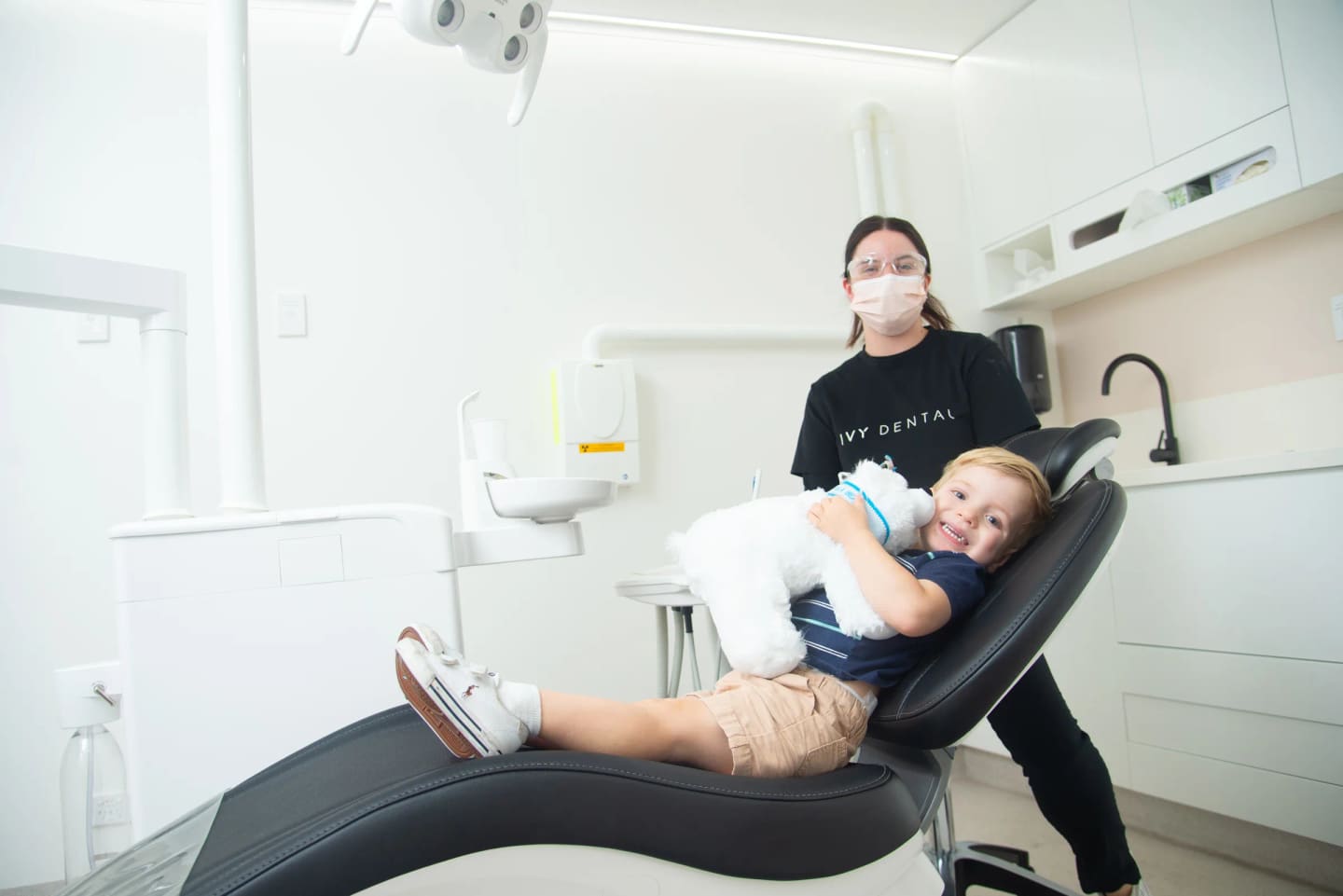
The first dental appointment for a young child is deliberately short and non-threatening. At Ivy Dental, we keep these visits low-pressure.
For children under 2, the visit typically involves:
- The child sitting on a parent's lap in the dental chair
- A visual check of the teeth, gums, and mouth
- A gentle feel of the gums and jaw
- Guidance for the parent on brushing, fluoride, and feeding habits
- Answering any questions the parent has
There is no drilling, no X-rays (unless there is a specific concern), and no procedure the child will find distressing. The goal is a positive, relaxed experience.
For children aged 2 to 4, the visit may also include:
- A gentle clean with a soft polishing brush
- Fluoride application if appropriate
- More detailed assessment of how the teeth are coming in
- Discussion of any habits (thumb sucking, dummy use) that may affect tooth alignment
At our kids dentistry clinics in Everton Park and Nundah, the team is experienced with young children and understands that patience and a calm environment matter more than efficiency at this age.
Making the first visit positive
A child's early dental experiences shape their attitude toward dental care for years. A negative first visit can create anxiety that persists well into adulthood. A positive one builds a foundation for routine dental care without stress.
Practical tips for parents:
Book a morning appointment. Young children are typically better rested and more cooperative in the morning.
Keep your language neutral. Avoid words like "pain", "needle", "hurt", or "drill" even if reassuring. Children pick up on these words and form associations. Instead, keep it matter-of-fact: "We are going to visit the dentist so they can count your teeth."
Do not transfer your own anxiety. If you are anxious about dental visits yourself, be aware that children read your body language and tone. Stay calm, even if you do not feel it.
Do not promise rewards for bravery. This implies there is something to be brave about. Treat the visit as normal and unremarkable. Praise cooperation afterward without framing it as overcoming something scary.
Bring a comfort item. A favourite toy or blanket can help younger children feel secure in an unfamiliar environment.
Expect some tears. Especially for children under 2, some fussiness is normal. It does not mean the visit was traumatic. The dental team is used to this and will guide you through it.
Developmental milestones to watch
Between dental visits, there are a few things parents can monitor at home.
First teeth (6 to 12 months). The lower front teeth usually appear first. Teething may cause fussiness, drooling, and a desire to chew on objects. This is normal.
Full set of baby teeth (by age 3). Most children have all 20 baby teeth by age 3. If teeth are significantly delayed, mention it at a dental visit. Delayed eruption is usually harmless but occasionally warrants investigation.
Spacing between teeth. Gaps between baby teeth are a good sign. They indicate there may be adequate space for the larger permanent teeth to come through later. Crowded baby teeth can sometimes predict crowding in the adult teeth.
Thumb sucking and dummy use. Both are normal in infants and toddlers. If the habit continues past age 3 to 4, it may start to affect the alignment of the teeth and the shape of the palate. Your dentist can advise on when and how to address it.
Discolouration or white spots. White spots on baby teeth can indicate early decay or enamel defects. Brown or dark spots may indicate more advanced decay. Either warrants a dental visit rather than a wait-and-see approach.
Book a children's dental visit at Ivy Dental if you have noticed any of these signs.
CDBS: financial support for children's dental care
The Child Dental Benefits Schedule (CDBS) is a federal government program that provides up to $1,158 in dental benefits over two consecutive calendar years for eligible children aged 0 to 17.
Eligibility is based on your child being covered by Medicare and your family receiving a qualifying government payment such as Family Tax Benefit Part A.
What CDBS covers:
- Examinations and assessments
- X-rays
- Cleaning and fluoride treatment
- Fissure sealants
- Fillings
- Root canal treatment on baby teeth
- Extractions
At Ivy Dental, we bulk-bill CDBS-covered items. This means $0 out of pocket while the planned items are covered by your child's remaining Medicare balance. Our team can check eligibility at the time of booking.
For a full breakdown of how the program works, including how to check eligibility and what to bring, see our CDBS guide for parents.
When to start brushing at home
You do not need to wait for a dental visit to start oral care.
Before teeth appear: Wipe your baby's gums with a clean, damp cloth after feeds. This removes milk residue and gets them used to having their mouth cleaned.
First tooth to 18 months: Use a soft infant toothbrush with a smear of low-fluoride toothpaste (no bigger than a grain of rice). Brush twice daily, with one of those times being before bed.
18 months to 6 years: Use a pea-sized amount of low-fluoride children's toothpaste. Brush twice daily. Supervise brushing and help with hard-to-reach areas. Most children do not have the dexterity to brush effectively on their own until around age 6 to 8.
From age 6: Switch to standard fluoride toothpaste. Continue supervising until you are confident your child is brushing all surfaces effectively.
Establishing this routine early makes dental visits easier because the child is already accustomed to having their teeth cleaned.
Do not wait for a problem
The purpose of early dental visits is prevention. Waiting until a child has a toothache means the problem is already advanced enough to cause pain, and treatment at that point is more involved and more stressful for the child.
Regular check-ups every 6 to 12 months from age 1 onward allow your dentist to catch concerns early, reinforce good habits, and keep your child's teeth on track.
We welcome families at our Everton Park and Nundah clinics, with our Indooroopilly location opening soon. Our general dentistry team sees patients of all ages, including infants and toddlers.
Book your child's first dental visit and start them on the right track, or call (07) 3266 7120.