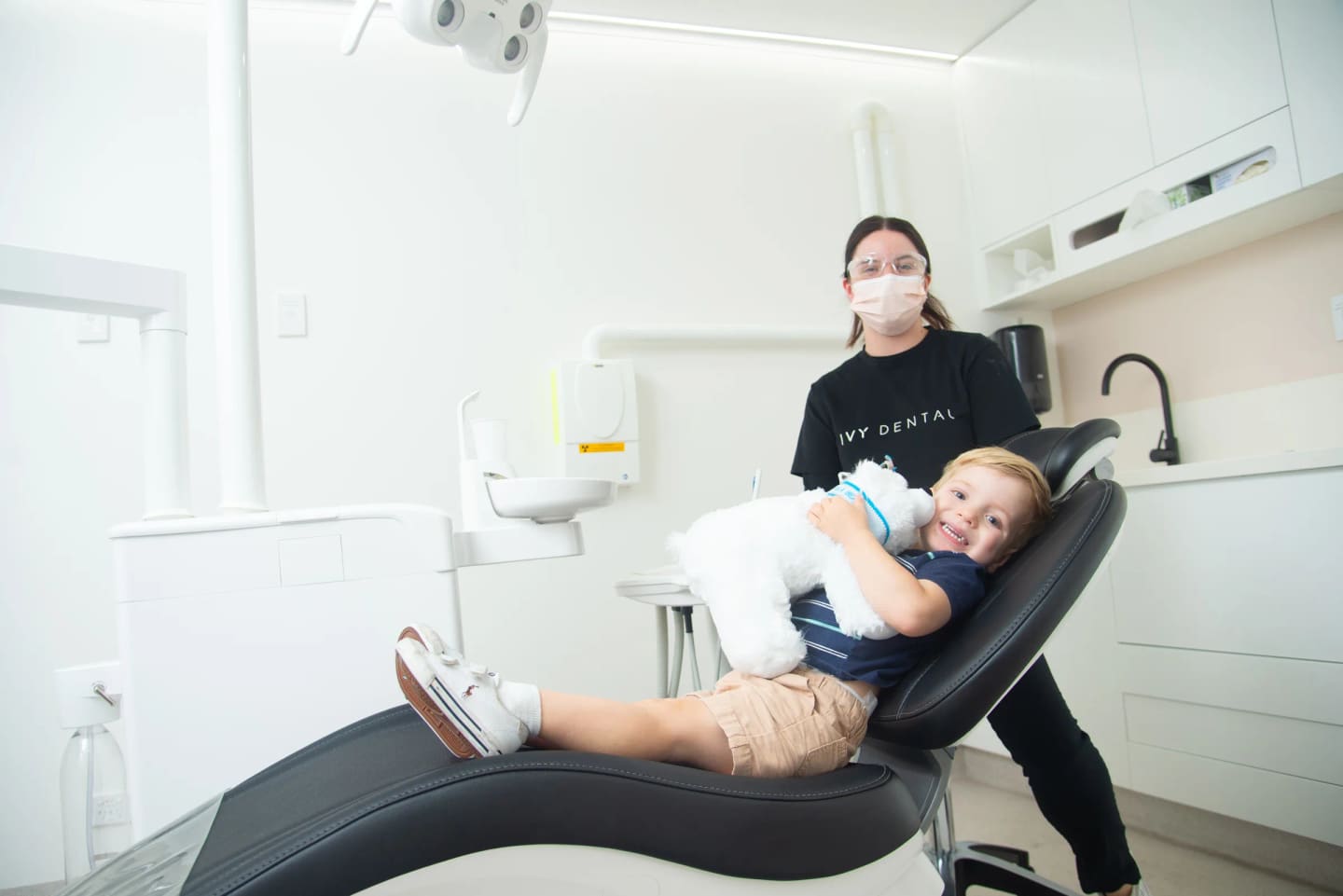
One of the most common questions we hear from new parents is: when should my child first see a dentist? The answer is earlier than most people expect, and the visit itself is usually much simpler than parents imagine.
This guide covers when to book that first appointment, what happens during the visit, and how to set your child up for a positive experience that builds healthy dental habits from the start.
When should your child first visit a dentist?
The Australian Dental Association recommends that children have their first dental visit by the time they turn one, or within six months of their first tooth appearing - whichever comes first. For most children, this means somewhere between six and twelve months of age.
This might seem early, especially when your child only has a few teeth. But the first visit is not about fillings or complex treatment. It is about establishing a baseline, identifying any early concerns, and getting your child comfortable with the dental environment before any treatment is needed.
Early visits also give your dentist an opportunity to discuss topics like:
- Teething patterns and what to expect over the coming months
- Fluoride - whether your child is getting the right amount from toothpaste and water
- Bottle and dummy habits that may affect how teeth develop
- Cleaning techniques appropriate for your child's age and stage
Starting early means potential issues - such as early decay, bite concerns, or habits that could affect tooth alignment - can be identified while they are easier to manage. For a detailed overview of what check-ups involve for patients of all ages, see our dental check-up guide.
What happens at a child's first dental visit?
The first appointment is designed to be gentle, short, and low-pressure. For very young children (under two), the clinical component is typically brief. Here is what you can generally expect.
A friendly introduction
Your dentist and the dental team will take time to introduce themselves and let your child get familiar with the surroundings. For toddlers, this might mean sitting on a parent's lap in the dental chair rather than sitting alone. The goal is to make the experience feel safe and normal.
A gentle examination
The dentist will look at your child's teeth, gums, jaw, and bite. For very young children, this may involve the dentist gently lifting the lip and examining the teeth while the child sits on your lap - sometimes called a "knee-to-knee" exam, where you and the dentist sit facing each other with the child's head in the dentist's lap.
The dentist is checking for:
- Early signs of tooth decay or enamel defects
- How the teeth and jaw are developing relative to your child's age
- Soft tissue health - gums, tongue, cheeks, and palate
- Any habits (such as thumb sucking or tongue thrusting) that may need monitoring
Counting teeth
For slightly older toddlers, the dentist may turn the exam into a game - counting teeth together, using a mirror to show the child their own smile, or letting the child hold a dental tool (with supervision) to reduce unfamiliarity.
A fluoride discussion
Your dentist may discuss whether a fluoride application is appropriate for your child's age and risk level. For very young children, this conversation is often informational rather than clinical. As children grow, fluoride varnish may be recommended at routine visits.
Questions and guidance
The appointment typically ends with time for your questions. Common topics include brushing techniques for small children, when to start flossing, dietary advice for developing teeth, and when the next visit should be scheduled.
How to prepare your child for their first dental visit
A little preparation can make a significant difference, especially for children who are naturally cautious about new experiences.
Use positive, simple language
Talk about the visit in a matter-of-fact way. Phrases like "the dentist is going to count your teeth" or "we are going to visit the tooth doctor" are clear and non-threatening. Avoid words like "needle", "drill", "hurt", or "pain" - even when reassuring your child that these things will not happen. Children tend to latch onto the scary words regardless of context.
Read a book or watch a video about visiting the dentist
There are many children's books and short videos that introduce the dental visit in a positive way. Familiarising your child with the concept before the appointment can reduce the novelty factor.
Play pretend at home
Let your child practice being a dentist - they can "examine" a stuffed animal's teeth with a toothbrush, or you can take turns looking in each other's mouths and counting teeth. This turns the concept into something playful rather than clinical.
Bring a comfort item
A favourite toy, blanket, or book can help younger children feel secure in an unfamiliar environment. Most dental teams are happy for children to bring something from home. If your child (or you as a parent) tends towards nervousness, our dental anxiety tips may also be useful.
Time the appointment well
Book the visit at a time when your child is usually well-rested and fed. Late afternoon appointments when a toddler is tired and hungry are more likely to result in tears - not because of the dentist, but because of timing.
Making dental visits a positive routine
The first visit sets the tone for your child's long-term relationship with dental care. Here are a few things that can help maintain that positive association.
Keep visits regular
After the first visit, your dentist will recommend a schedule for follow-up appointments. For most children, this is every six to twelve months, depending on their oral health and risk factors. Regular visits mean that the dental environment stays familiar, and any issues are caught early.
Stay calm yourself
Children are perceptive. If you are anxious about dental visits, your child may pick up on that. Try to keep your own language and body language relaxed and positive. If you have your own dental anxiety, our guide to managing dental anxiety has practical tips that may help.
Avoid using the dentist as a threat
Phrases like "if you do not brush your teeth, the dentist will have to fix them" create a negative association. Instead, frame dental visits as a normal part of staying healthy - just like visiting the doctor or getting a haircut.
Tip for parents: Let your child watch you brush and floss your own teeth. Children learn by imitation, and seeing dental care as a normal part of your daily routine helps them accept it as part of theirs.
What about the Child Dental Benefits Schedule (CDBS)?
The Child Dental Benefits Schedule is an Australian Government program that provides eligible children aged 0 to 17 with up to $1,158 in dental benefits over a two-year period. It covers a range of services including examinations, X-rays, cleaning, fissure sealing, fillings, root canals, and extractions.
Eligibility is linked to receiving certain government payments such as Family Tax Benefit Part A. You can check your child's eligibility through your Medicare online account or by calling Medicare directly.
At Ivy Dental, we can process CDBS claims on the spot using our HICAPS terminal. If your child is eligible, CDBS-covered items are bulk billed at $0 out of pocket while the remaining Medicare balance covers the planned items. For a detailed breakdown of what the CDBS covers and how to use it, see our CDBS guide for parents.
Ivy Dental's approach to children's dental care
Our Brisbane clinics in Everton Park and Nundah are set up to make dental visits comfortable for families. We understand that young children need a different approach - shorter appointments, simpler explanations, and plenty of patience. Our team takes time to build rapport with young patients so that dental care becomes a positive part of their routine rather than something to dread.
If your child is due for their first dental visit, or if it has been a while since their last check-up, call (07) 3266 7120 or book an appointment online. Learn more about our approach to children's dentistry at Ivy Dental.
Individual experiences may vary. Your dentist will provide guidance specific to your child's oral health needs.