A dental bridge is one of the most established ways to replace a missing tooth. If you have a gap between healthy teeth, a bridge can restore your bite, your appearance, and your ability to chew normally. It is a fixed prosthesis, meaning it stays in your mouth permanently and does not need to be removed for cleaning.
This guide explains how bridges work, the types available, what they cost in Brisbane, and how they compare to other replacement options.
How a dental bridge works
A bridge spans the gap left by one or more missing teeth. It consists of at least three connected units: crowns that sit on the teeth either side of the gap (called abutment teeth) and one or more false teeth in between (called pontics).
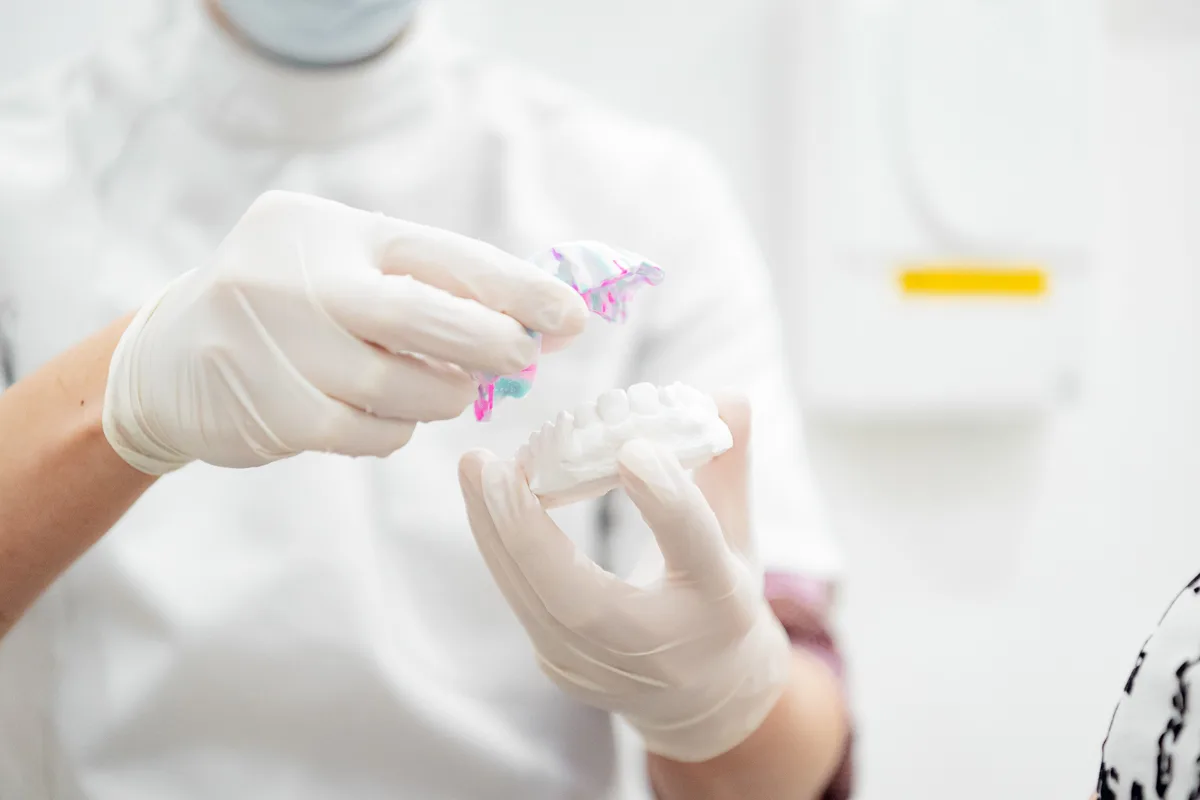
The abutment teeth are prepared by removing a layer of enamel so the crowns can fit over them. Impressions are taken and the bridge is fabricated in a dental laboratory. A temporary bridge is worn while the permanent one is made. At the second appointment, the permanent bridge is cemented into place.
The entire process typically takes two to three appointments over a few weeks.
Types of dental bridges
There are four main types, each suited to different clinical situations.
Traditional bridge
The most common type. Crowns are placed on both teeth adjacent to the gap, with a pontic between them. This is the strongest option and works well when the abutment teeth are healthy and can support the load.
Cantilever bridge
Similar to a traditional bridge, but the pontic is supported by a crown on only one side. This is used when there is only one adjacent tooth available, such as at the back of the mouth. Cantilever bridges carry more stress on the single abutment tooth and are not suitable for high-load areas.
Maryland bridge (resin-bonded)
Instead of full crowns, a Maryland bridge uses metal or ceramic wings that bond to the back surfaces of adjacent teeth. This approach is more conservative because it does not require significant preparation of the abutment teeth. It is most commonly used for front teeth where biting forces are lower.
Implant-supported bridge
Rather than relying on natural teeth for support, this type of bridge is anchored by dental implants. Two or more implants are placed in the jaw, and the bridge spans between them. This is often the preferred option when multiple adjacent teeth are missing or when the neighbouring teeth are not strong enough to support a traditional bridge.
You can read more about how this compares in our guide on bridges versus implants.
What does a dental bridge cost in Brisbane?
Bridge pricing depends on the number of units, the materials used, and the complexity of the preparation. Here is a general guide.
Bridge type | Starting price | Notes |
|---|---|---|
Three-unit porcelain bridge | From $3,000 | Most common. Replaces one missing tooth. |
Four-unit bridge | From $4,000 | Replaces two adjacent missing teeth. |
Maryland bridge | From $1,800 | Less invasive. Typically used for front teeth. |
Implant-supported bridge | From $8,000 | Includes implant placement. Varies with number of implants required. |
These are indicative starting prices. Your quote may differ based on clinical assessment, material choices, and any preparatory treatment needed.
Health fund rebates may apply. Bridges are classified as major dental, and rebates depend on your level of extras cover and any waiting periods. We accept all major health funds with HICAPS on site.
Payment plans may be available to approved applicants if you prefer to spread the cost.
Book a consultation to get an accurate quote for your situation. Book a consultation
How long does a dental bridge last?
A well-maintained bridge can last 5 to 15 years, and some last longer. The main factors that affect longevity are:
- Oral hygiene. Bridges require diligent cleaning, particularly underneath the pontic where food and plaque can accumulate. Special floss threaders or interdental brushes make this easier.
- Health of abutment teeth. If the supporting teeth develop decay or gum disease, the bridge may fail.
- Bite forces. Patients who grind their teeth may experience faster wear. A night guard can help protect the bridge.
- Material quality. Porcelain-fused-to-metal and all-ceramic bridges each have different wear characteristics. Your dentist will recommend the material suited to the location in your mouth.
Regular six-monthly reviews at Ivy Dental allow us to monitor the bridge, the supporting teeth, and the surrounding gum tissue so issues can be caught early.
Pros and cons of dental bridges
Advantages:
- Fixed in place. No removal needed.
- Treatment completed in 2 to 3 weeks (faster than implants).
- Proven track record with predictable results.
- No surgery required (unless implant-supported).
- Restores chewing function and appearance.
Disadvantages:
- Requires preparation (reshaping) of adjacent healthy teeth for traditional bridges.
- Does not prevent bone loss in the area of the missing tooth.
- Abutment teeth carry additional load, which may affect their long-term health.
- May need replacement after 5 to 15 years.
- Cleaning underneath the bridge requires extra effort.
Bridges compared to other options
If you are weighing a bridge against other missing tooth replacement options, here is how they compare at a high level.
Bridge | Implant | Partial denture | |
|---|---|---|---|
Invasiveness | Moderate (tooth preparation) | Surgical | Minimal |
Treatment time | 2 to 3 weeks | 3 to 6 months | 2 to 4 weeks |
Bone preservation | No | Yes | No |
Longevity | 5 to 15 years | 15 to 25+ years (fixture) | 5 to 10 years |
Adjacent teeth affected | Yes | No | Minimal |
Cost (starting) | From $3,000 | From $4,500 | From $800 |
There is no single right option. The right choice depends on the location of the missing tooth, the condition of your neighbouring teeth, your jawbone health, and your preferences.
Caring for your dental bridge
Bridges do not get cavities, but the natural teeth underneath the crowns can. Good maintenance includes:
- Brushing twice daily, paying attention to the gum line around the bridge.
- Using a floss threader or interdental brush to clean under the pontic daily.
- Attending regular check-ups so your dentist can assess the bridge and surrounding tissues.
- Avoiding habits that put excessive force on the bridge, such as chewing ice or opening packaging with your teeth.
Next steps
If you have a missing tooth and want to understand whether a bridge is the right solution, a clinical assessment is the sensible starting point. At our Everton Park and Nundah clinics, we will examine the gap, assess the health of your adjacent teeth, and explain which options are realistic for your situation.
Book a consultation to discuss your missing tooth options. Book a consultation, or call (07) 3266 7120.