A child's dental visit is adapted to age, communication, previous experience, and clinical need. Some parts may feel unfamiliar or uncomfortable, so it is better to describe the visit calmly without promising that it will be painless. Knowing what may happen at each stage can help you prepare.
Here is a step-by-step walkthrough of a typical children's dental check-up at Ivy Dental.
Before the appointment
A small amount of preparation goes a long way.
Explain without over-explaining. Tell your child they are going to visit the dentist, who will count their teeth and make sure they are healthy. Avoid words like "needle", "drill", or "hurt". Most check-ups involve none of those things, and pre-loading anxiety makes the visit harder.
Bring their health fund card and Medicare card. If your child is eligible for the Child Dental Benefits Schedule (CDBS), bring their Medicare card. CDBS provides up to $1,158 in dental benefits over a two-year period for eligible children aged 0 to 17. Check-ups, cleans, X-rays, fillings, and extractions are all covered under this scheme.
Eat normally beforehand. There is no need to fast. A child who is hungry tends to be less cooperative.
Step 1: The welcome
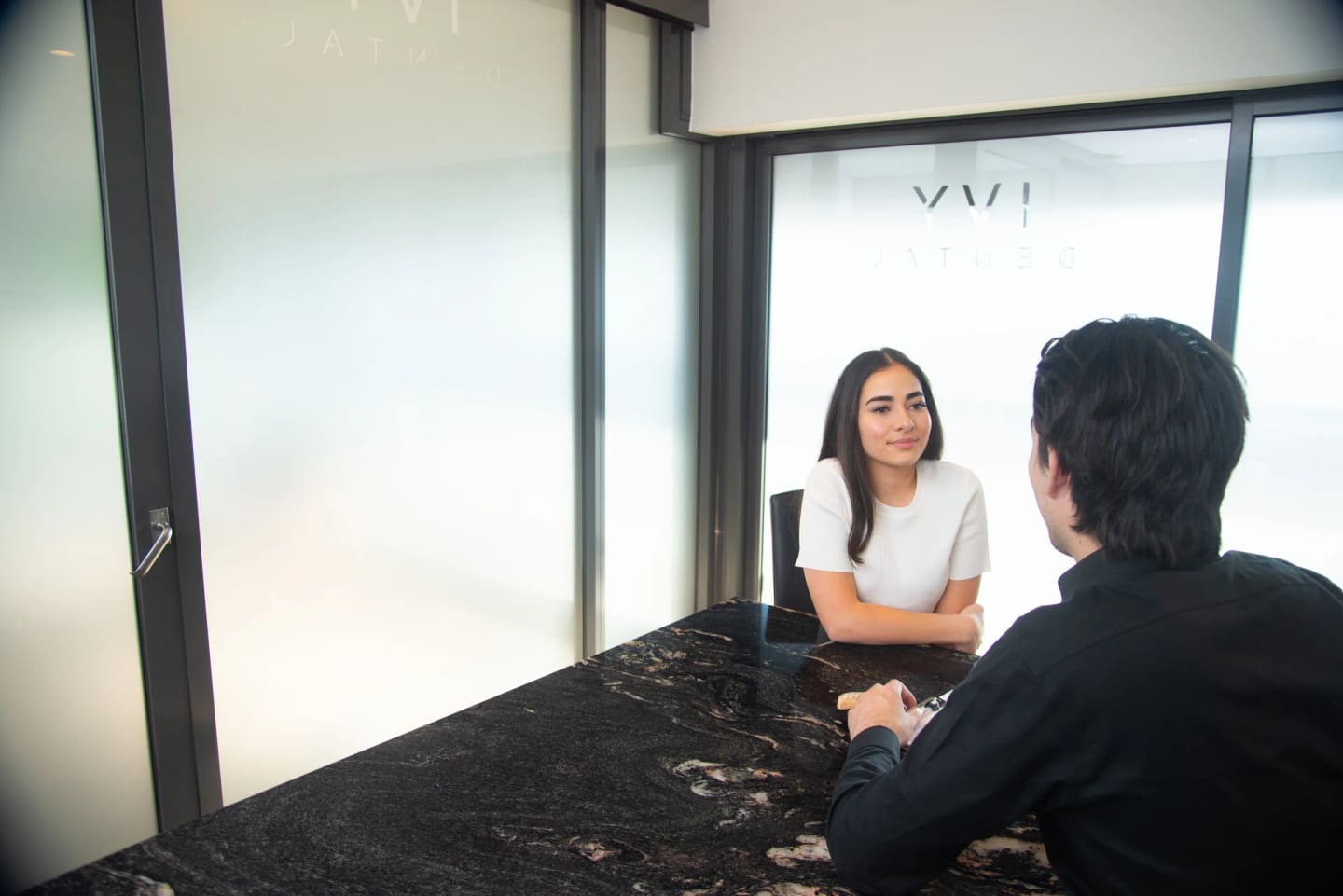
At our Everton Park and Nundah clinics, our team greets families at reception and walks through any forms or medical history updates. For a first visit, we will ask about:
- Any medications your child takes
- Known allergies
- Previous dental experience (positive or negative)
- Current concerns (pain, sensitivity, a tooth that looks different)
Parents are welcome in the treatment room throughout the appointment. For older children who prefer to go in alone, that is fine too.
Step 2: Getting comfortable in the chair
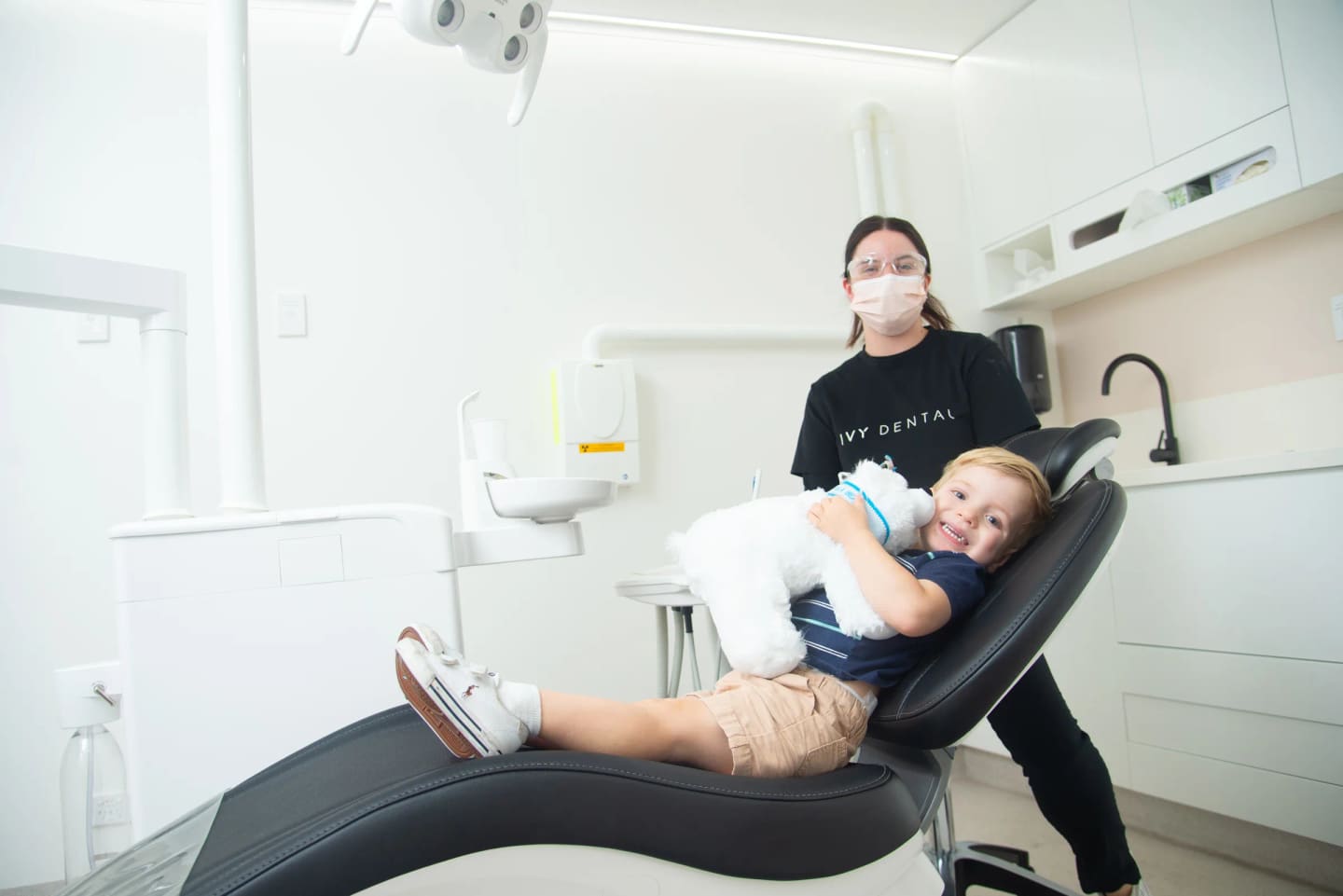
The dental chair itself can look unfamiliar to a young child. We take time to show them how it moves, let them see the overhead light, and explain that the tools are for looking at teeth, not doing anything scary.
For children under five or those attending for the first time, we often start with a "show, tell, do" approach. We show the instrument, explain what it does in simple language, and demonstrate on a glove or their finger before using it in their mouth. This builds trust and reduces surprises.
Step 3: Counting and checking teeth
The dentist examines every tooth visually, checking for:
- Decay. Brown spots, soft areas, or visible cavities in the enamel.
- Development. Whether teeth are coming through in the right order and position.
- Bite. How the upper and lower teeth meet. Early identification of bite issues can simplify treatment later.
- Soft tissue. Gums, tongue, cheeks, and the roof of the mouth are checked for any abnormalities.
- Habits. Signs of thumb sucking or tongue thrusting that may affect tooth alignment.
This part takes a few minutes. It is gentle and does not involve any instruments that cause discomfort.
Step 4: X-rays (if needed)
Not every visit requires X-rays. For a very young child with no concerns, the dentist may defer imaging until the child is older and more cooperative.
When X-rays are recommended, they help identify:
- Decay between teeth that is not visible to the eye
- The position of adult teeth developing beneath the gums
- Any missing or extra teeth
- Root health
We use digital X-rays, which use significantly less radiation than traditional film. The images appear on screen within seconds.
Step 5: Cleaning and polishing
A dental hygienist or the dentist will clean your child's teeth using a gentle polishing tool and a mild flavoured paste. This removes plaque buildup and surface staining.
For older children, scaling (removing hardened calcite deposits) may also be included. This involves a small ultrasonic instrument that vibrates plaque off the teeth. It can feel ticklish but is not painful.
Step 6: Fluoride treatment
After the clean, a fluoride varnish may be applied. This is a quick brush-on treatment that strengthens enamel and helps protect against cavities. It takes 30 seconds and tastes mildly fruity.
Fluoride application is especially valuable for children who are at higher risk of decay due to diet, brushing habits, or enamel quality.
Step 7: Fissure sealants (if recommended)
For children whose adult molars have come through, dental sealants may be recommended. Sealants are a thin protective coating applied to the grooves of back teeth, where food and bacteria tend to accumulate.
Sealant placement does not usually require drilling or local anaesthetic, although comfort and appointment time vary. Sealants can reduce decay risk on treated surfaces when clinically indicated. CDBS coverage depends on eligibility, remaining balance, and the planned item.
Step 8: The report to parents
At the end of the visit, the dentist will:
- Show you any X-ray images and explain what they reveal
- Report on the health of your child's teeth and gums
- Flag any areas of concern (early decay, crowding, bite issues)
- Recommend any treatment needed, with an itemised quote
- Advise on brushing and diet for your child's age group
Nothing proceeds without your understanding and consent. If treatment is needed, we schedule it separately so your child's first experience is positive and low-pressure.
What a kids' check-up costs
Item | Starting price |
|---|---|
Comprehensive examination | From $70 |
Scale and clean | From $90 |
Bitewing X-rays (2 images) | From $50 |
Fluoride application | From $35 |
Fissure sealant (per tooth) | From $55 |
Indicative pricing. Your quote may differ based on clinical assessment.
For eligible children, CDBS-covered check-up items are bulk billed directly to Medicare. There is $0 out of pocket while the remaining Medicare balance covers the planned items.
Tips for building a positive dental habit
- Start dental visits early. The Australian Dental Association recommends a first visit by age one.
- Keep the tone casual. Treat dental visits like any other appointment, not a special event that requires bravery.
- Avoid using the dentist as a threat. "If you do not brush, the dentist will have to fix your teeth" creates fear, not motivation.
- Praise cooperation after the visit, not before. "You did well sitting still" works better than "You need to be brave."
- Maintain a six-monthly schedule so visits become routine rather than reactive.
Book your child's check-up at Ivy Dental. Book a consultation, or call (07) 3266 7120.