A Thin Coating That Can Prevent Years of Fillings
Fissure sealants are a preventive option for selected pits and grooves. Placement usually does not require drilling or local anaesthetic, although comfort and appointment time vary. They reduce, rather than eliminate, decay risk on the treated surface and still require home care and review.
If you're a parent weighing up whether sealants are worth it for your child, here's what you need to know.
What Fissure Sealants Are
The chewing surfaces of back teeth (premolars and molars) have grooves and pits called fissures. In many children, these fissures are deep and narrow. Toothbrush bristles can't reach the bottom. Bacteria and food debris settle in and stay there despite good brushing habits.
A fissure sealant is a thin, protective coating applied to these grooves. It fills in the deep pits, creating a smooth surface that's much easier to keep clean. The material bonds to the enamel and acts as a physical barrier between bacteria and the tooth surface.
Sealants are applied to the chewing surface only. They don't cover the sides of the tooth or the areas between teeth. Brushing and flossing are still necessary for those surfaces.
How They're Applied
The procedure is straightforward, takes a few minutes per tooth, and requires no drilling or anaesthetic.
- The tooth is cleaned and dried.
- A mild acid solution is applied to the chewing surface for a few seconds. This roughens the enamel slightly so the sealant bonds effectively.
- The tooth is rinsed and dried again.
- The sealant material (a liquid resin) is painted into the fissures.
- A curing light hardens the sealant in about 20 seconds.
That's it. Your child can eat and drink normally straight away.
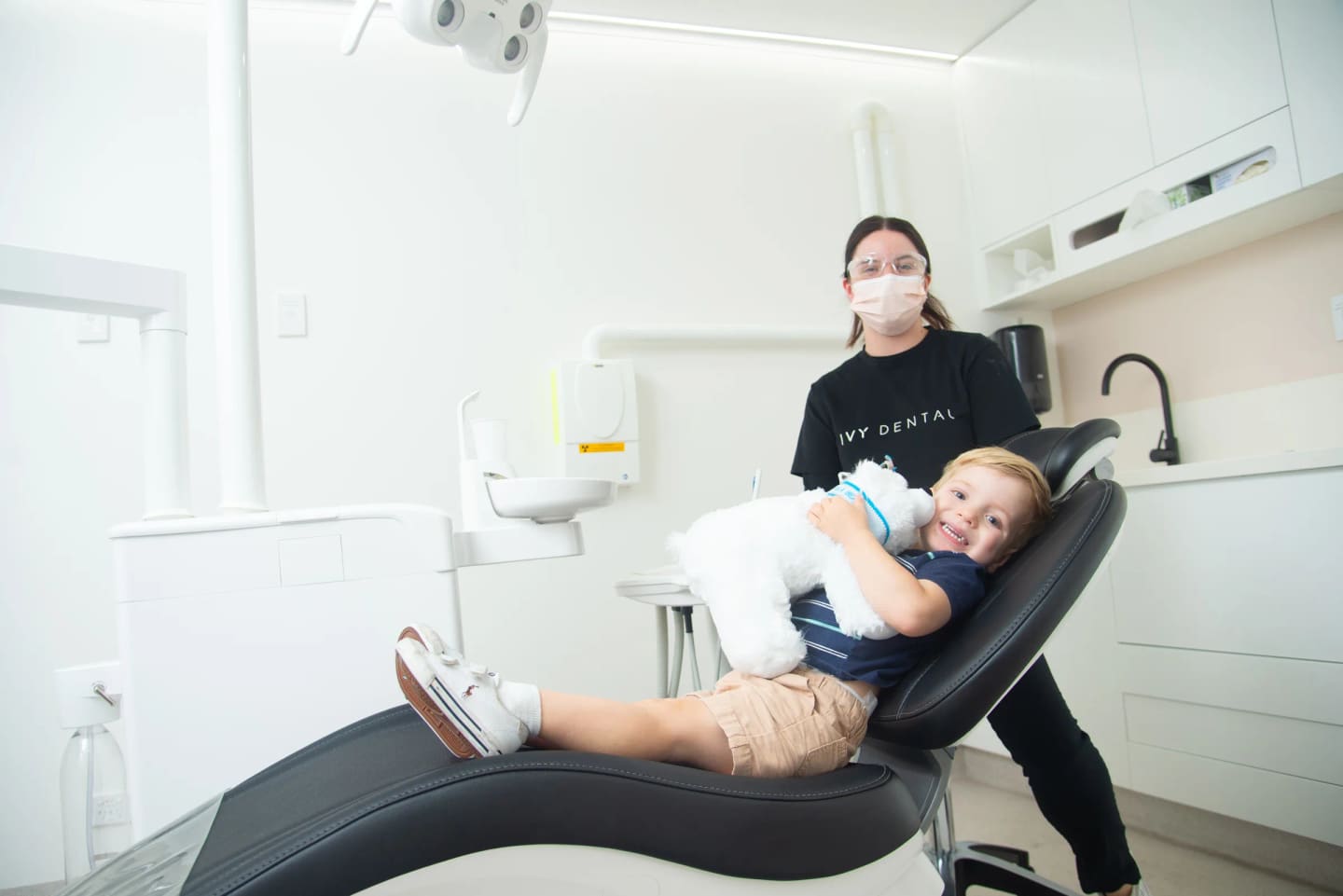
The process is comfortable for children because nothing is removed from the tooth. There's no noise from a drill and no numbness afterwards. For kids who are anxious about dental procedures, sealants are a positive first experience.
When to Get Sealants
The ideal time to apply sealants is soon after a permanent tooth comes through, before decay has a chance to start.
First permanent molars (the "six-year molars") emerge around age 6. These are the highest-priority teeth for sealants because they appear early and must last a lifetime.
Second permanent molars emerge around age 12. Sealing these at that time provides protection during the teenage years when diet and oral hygiene habits may be inconsistent.
Premolars (between molars and canines) can also be sealed if they have deep fissures.
The typical window for sealants is between ages 6 and 14, covering the period when the most cavity-prone permanent teeth are erupting. Your dentist at Ivy Dental will assess your child's teeth and recommend sealants based on their individual fissure depth and cavity risk.
For more on when children should start dental visits, see our guide on what age kids should see a dentist.
Book a children's dental check-up to find out if your child's teeth would benefit from sealants.
How Long Do They Last?
Sealants can last 5 to 10 years with normal wear. Some last longer. They're checked at each routine dental visit, and if a sealant has worn or chipped, it can be repaired or reapplied.
The protective benefit is highest in the first two years after placement and remains significant throughout the lifespan of the sealant. Even a partially intact sealant offers some protection compared to an unsealed tooth.
Cost and CDBS Coverage
Fissure sealants typically cost from $50 to $80 per tooth. The exact cost depends on the tooth and the material used.
For eligible children aged 0 to 17, fissure sealants are usually covered under the Child Dental Benefits Schedule (CDBS) when clinically appropriate. The CDBS provides up to $1,158 in dental benefits over a two-year period. At Ivy Dental, CDBS-covered items are bulk billed at $0 out of pocket while the remaining Medicare balance covers the planned treatment.
Eligibility is linked to receipt of Family Tax Benefit Part A or certain government payments. Check with Medicare or ask our team at Ivy Dental, and we can verify your child's eligibility on the spot.
For a detailed breakdown of what the CDBS covers, see our CDBS guide for parents.
Even without CDBS coverage, sealants represent strong value. A single filling on a permanent molar costs more than a sealant and involves removing tooth structure that can never be replaced. Prevention is cheaper than repair.
Are Sealants Safe?
Yes. Fissure sealants have been used in dentistry for over 50 years. They are endorsed by the Australian Dental Association, the American Dental Association, and the World Health Organization.
The most common question parents raise is about BPA (bisphenol A). Some sealant materials contain trace amounts of BPA or BPA derivatives. Research indicates that the exposure from dental sealants is extremely low, well below levels considered harmful, and is limited to the first few hours after placement. The amount is far less than daily exposure from food packaging, receipts, and other common sources.
If this is a concern, discuss it with your dentist. BPA-free sealant materials are available.
Who Benefits Most
Sealants are recommended for children, but not every child needs them. Your dentist will assess:
- Fissure depth. Deep, narrow grooves trap more bacteria and benefit most from sealing. Shallow, well-formed grooves may not need treatment.
- Cavity history. Children who have already had decay in primary teeth are at higher risk for decay in permanent teeth.
- Diet. Frequent snacking, sugary drinks, and high-carbohydrate diets increase risk.
- Oral hygiene. Children who struggle with thorough brushing benefit from the extra protection.
- Saliva factors. Some children naturally produce less saliva or have saliva with lower buffering capacity.
Adults with deep, unfilled fissures and a history of decay can also benefit from sealants, though they're less commonly discussed in that context.
Sealants as Part of a Bigger Picture
Sealants protect chewing surfaces. They don't replace other preventive measures.
A complete cavity prevention strategy for children includes:
- Twice-daily brushing with fluoride toothpaste. Supervised until around age 8, when children develop the coordination to brush effectively on their own.
- Flossing or interdental cleaning once teeth are touching.
- Limiting sugary snacks and drinks between meals.
- Drinking fluoridated tap water. Brisbane's water supply is fluoridated.
- Regular six-monthly dental check-ups. Catching problems early and reinforcing good habits.
- Fissure sealants on vulnerable teeth.
Each layer of protection contributes. Sealants are one part of the strategy, and a particularly effective one for the surfaces they cover.
Next Steps
If your child is approaching age 6 or has recently had their first permanent molars come through, it's a good time to ask about sealants.
Book a children's check-up at Ivy Dental in Everton Park or Nundah, or call (07) 3266 7120. We'll check your child's teeth, assess fissure depth, confirm CDBS eligibility if applicable, and apply sealants the same day if appropriate.