You brush twice a day. You floss most nights. So why does your dentist still recommend a professional cleaning every six months?
Because even good brushing misses spots. Calculus (hardened plaque) forms in areas your toothbrush cannot reach, particularly behind lower front teeth and along the gum line. Once plaque mineralises into calculus, no amount of home care removes it. That requires clinical instruments.
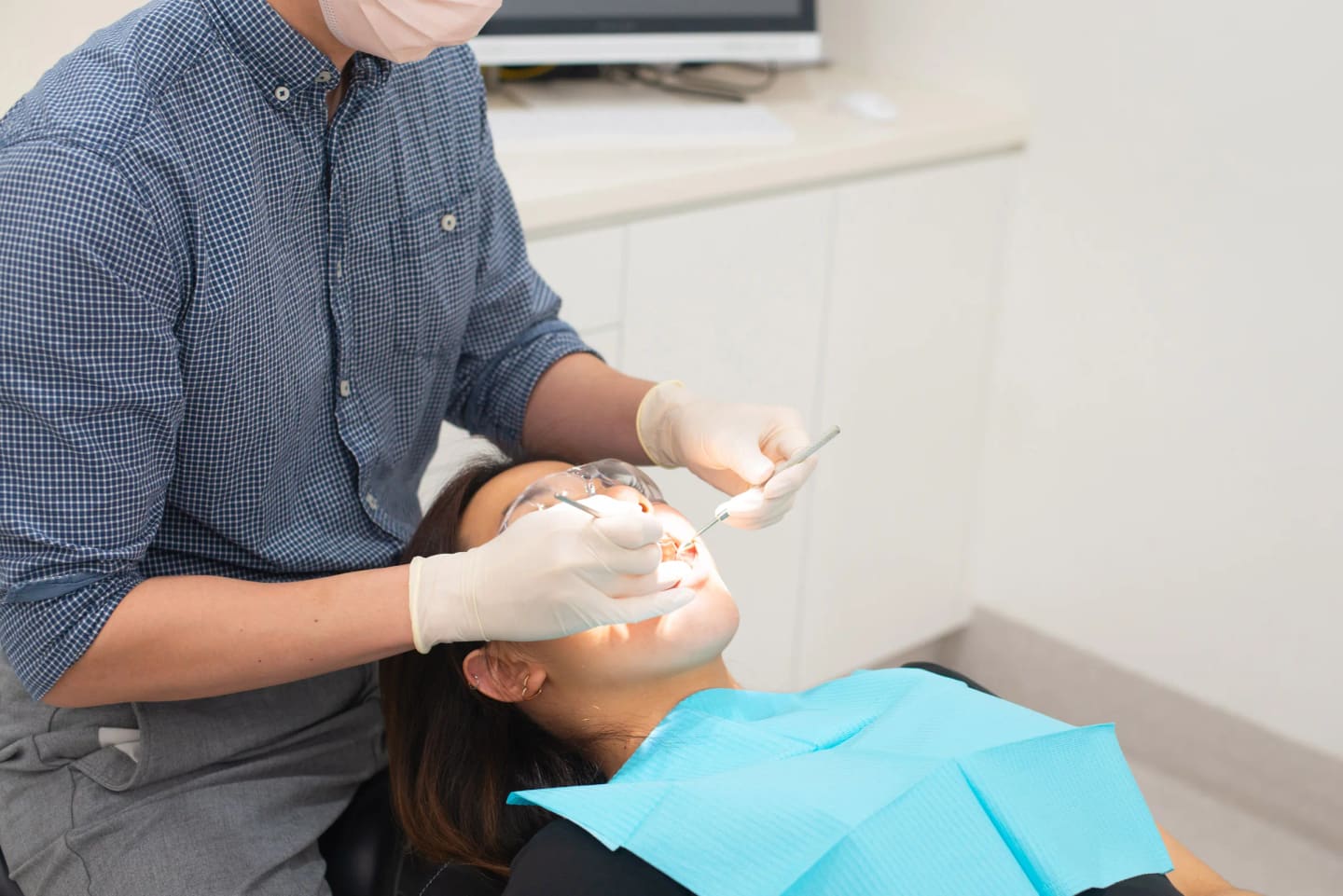
Here is what happens during a professional teeth cleaning at Ivy Dental, step by step.
Your clinician assesses first
Before any scaling begins, your clinician examines your mouth. They are looking for signs of gum inflammation, pocketing around teeth, areas of heavy calculus build-up, and any soft tissue changes that need monitoring.
If it has been a while since your last visit, or if you are a new patient, this assessment may include dental X-rays to check for issues below the gum line and between teeth that are not visible during a visual exam.
This assessment phase is important. It determines how your cleaning is approached. A patient with healthy gums and light build-up gets a different clean than someone with early signs of gum disease.
Ultrasonic scaling removes the heavy build-up
The first active step is ultrasonic scaling. Your clinician uses a hand-held instrument that vibrates at high frequency, breaking calculus off the tooth surface. A fine mist of water washes away the debris.
Ultrasonic scalers are effective on both supragingival calculus (above the gum line) and light subgingival deposits (just below the gum line). The vibration does most of the work. You will feel a buzzing sensation and hear a high-pitched hum.
For most patients in Brisbane who attend regular six-monthly appointments, this is the main cleaning phase. It takes 10 to 20 minutes depending on how much build-up there is.
Hand scaling targets stubborn deposits
After the ultrasonic scaler has removed the bulk of the calculus, your clinician may use hand instruments called curettes and scalers to clean areas the ultrasonic tip cannot reach effectively. These are particularly useful for tight spaces between teeth and along the root surfaces just below the gum margin.
Hand scaling is precise. Your clinician feels the tooth surface with the instrument, detecting any remaining rough spots where calculus is still attached. This tactile feedback ensures a thorough clean.
If you have sensitive teeth, this stage can cause mild discomfort. Let your clinician know. They can adjust pressure, use a topical anaesthetic, or focus on one area at a time.
Polishing smooths the tooth surfaces
Once scaling is complete, your clinician polishes the teeth using a slow-speed handpiece with a rubber cup and a mildly abrasive prophylaxis paste. This removes surface stains from coffee, tea, wine, and food pigments.
Polishing also smooths the tooth surface. A smooth surface is harder for plaque to adhere to, which helps keep your teeth cleaner for longer between visits.
Polishing is not the same as teeth whitening. It removes extrinsic surface stains but does not change the underlying colour of your teeth. If you want to go lighter, that is a separate conversation. We cover the difference in our cleaning vs whitening guide.
Fluoride application (if appropriate)
For patients at higher risk of decay, your clinician may apply a concentrated fluoride varnish after the clean. This is painted onto the teeth and left to absorb. It strengthens enamel and can help remineralise early areas of demineralisation.
Fluoride application is quick. You are typically asked to avoid eating or drinking for 30 minutes afterwards.
Not every adult needs fluoride at every visit. Your clinician will recommend it based on your decay risk, diet, saliva flow, and other individual factors.
Your clinician talks through what they found
A good cleaning appointment is also an educational one. Your clinician will point out areas where plaque is accumulating, demonstrate technique adjustments for your brushing or flossing, and flag anything that needs watching.
At Ivy Dental, this is not a lecture. It is a practical conversation. If you are missing a spot behind your lower molars, we will show you a specific way to angle your brush. If interdental brushes would work better than floss for your spacing, we will recommend a size.
This is also when your clinician discusses whether your current cleaning interval is right, or whether you might benefit from more frequent visits. Patients with a history of periodontal disease or heavy tartar production may do better with three- or four-monthly appointments.
What about deep cleaning?
A standard scale and clean addresses deposits above the gum line and just below it. If you have deeper pockets around your teeth (4mm or more), you may need a deep clean, also called root debridement or scaling and root planing.
Deep cleaning goes further below the gum line to remove calculus and bacteria from root surfaces within periodontal pockets. It is usually done over two appointments, sometimes with local anaesthetic for comfort.
Your clinician will tell you if a deep clean is needed based on your periodontal assessment. Not everyone requires one.
Book a check-up and clean appointment at Ivy Dental →
How much does a check-up and clean cost in Brisbane?
At Ivy Dental, a check-up and clean appointment starts from $220. We rarely book cleaning as a standalone service because the dentist needs to assess gum health, X-ray timing, and whether a standard clean or deeper gum treatment is appropriate. The exact cost depends on how much time is needed and whether additional treatment like fluoride or X-rays is included.
Most private health funds provide a rebate for preventive dental services. We process claims on the spot with HICAPS, so you only pay the gap. Check our dental checkup cost guide for more detail on what affects pricing.
Indicative pricing. Your quote may differ based on clinical assessment.
How often should you get your teeth cleaned?
Every six months is the standard recommendation for most adults. Some patients need more frequent visits. Others with excellent oral health and minimal build-up may be fine with less frequent appointments, though this is less common.
The key factors are your rate of calculus formation, your gum health, your diet, and whether you have restorations like crowns or implants that need monitoring.
Your clinician at Ivy Dental will recommend a schedule based on your individual situation, not a one-size-fits-all rule.
Book your next check-up and clean
If it has been more than six months since your last professional cleaning, or if you are noticing bleeding gums, persistent bad breath, or visible build-up on your teeth, it is time.
Ivy Dental offers check-up and clean appointments at our Everton Park and Nundah locations, seven days a week.
Book a check-up and clean appointment →, or call (07) 3266 7120.