Bleeding gums are easy to ignore. Most people notice it when they brush or floss, assume it is normal, and carry on. It is not normal. Healthy gums do not bleed with routine cleaning. If yours do, it is worth understanding what may be happening and what can be done about it.
Gum disease (periodontal disease) is one of the most common chronic conditions in Australia. Research suggests that around 30% of Australian adults have moderate to severe periodontitis, with rates increasing significantly after age 40. It is also one of the common causes of tooth loss in adults.
This guide covers how gum disease develops, how it is diagnosed and treated, and what it typically costs in Brisbane.
What is gum disease?
Gum disease is an inflammatory condition caused by bacteria in dental plaque. When plaque builds up along and below the gum line, the bacteria trigger an immune response that inflames the gum tissue. If the plaque is not removed through brushing, flossing, and professional cleaning, this inflammation can progress and damage the structures that support the teeth.
There are two main stages.
Gingivitis
Gingivitis is the early, reversible stage. The gums become red, swollen, and prone to bleeding, but the underlying bone and connective tissue are not yet damaged. With professional cleaning and improved home care, gingivitis can typically be resolved completely.
Periodontitis
If gingivitis is left untreated, it can progress to periodontitis. At this stage, the inflammation spreads below the gum line, forming pockets between the teeth and gums where bacteria accumulate. Over time, this leads to destruction of the bone and connective tissue that hold the teeth in place. Periodontitis cannot be fully reversed, but it can be managed and stabilised to prevent further progression.
Signs you may have gum disease
Many people with gum disease do not experience pain, which is one reason it often goes undiagnosed until it has progressed. Watch for these signs:
- Bleeding gums when you brush or floss
- Red, swollen, or tender gums that look puffy along the gum line
- Persistent bad breath (halitosis) that does not resolve with brushing
- Receding gums making teeth appear longer than they used to
- Loose teeth or teeth that feel like they are shifting position
- Pain when chewing or sensitivity along the gum line
- Pus between the teeth and gums
If you are experiencing any of these, it is worth booking a dental check-up to have your gums assessed. Early detection makes a significant difference in outcomes.
How gum disease is diagnosed
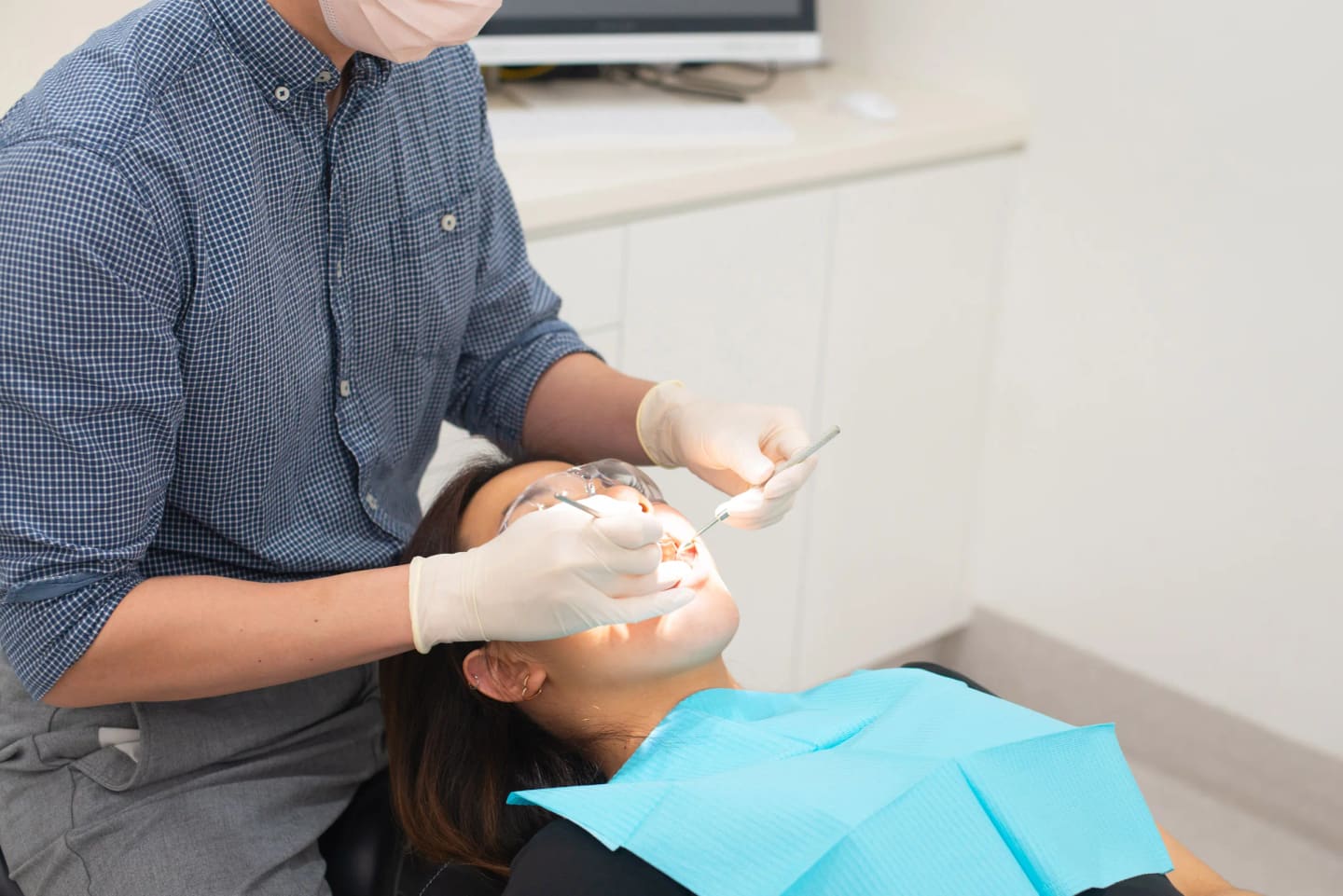
During a dental examination, your dentist or hygienist will assess your gum health using several methods.
Visual examination. Checking for redness, swelling, and signs of inflammation.
Periodontal probing. A small measuring instrument is gently placed between the tooth and gum to measure pocket depth. Healthy gums typically have pocket depths of 1 to 3 millimetres. Pockets of 4 millimetres or deeper may indicate periodontal disease.
X-rays. Dental X-rays show the bone levels around the teeth. Bone loss that is not visible clinically can be identified on X-rays, which helps determine the severity and extent of the disease.
Bleeding on probing. Whether the gums bleed when gently probed is an indicator of active inflammation.
Your dentist will use these findings to determine the stage and severity of gum disease and recommend appropriate treatment.
Treatment options by stage
Gingivitis treatment
For gingivitis, treatment is relatively straightforward:
- Professional cleaning (scale and clean) to remove plaque and calculus (hardened deposits) above and below the gum line
- Oral hygiene instruction to improve brushing and flossing technique at home
- Follow-up to confirm that the inflammation has resolved
Most patients with gingivitis respond well to a single professional clean combined with consistent home care. A follow-up appointment 4 to 6 weeks later can confirm that the gums have returned to a healthy state.
Periodontitis treatment
Periodontitis requires more intensive treatment, typically delivered over several appointments.
Scaling and root planing (deep cleaning). This is the primary non-surgical treatment for periodontitis. Your dentist or hygienist cleans below the gum line, removing plaque, calculus, and bacterial toxins from the root surfaces. This is done under local anaesthetic, usually one or two quadrants (sections of the mouth) per appointment.
The goal is to reduce pocket depths, eliminate bacterial reservoirs, and create a clean root surface that allows the gum tissue to reattach. Scaling and root planing is effective for many patients with mild to moderate periodontitis.
Reassessment. After completing initial treatment, your dentist will reassess your gum health 6 to 8 weeks later. Pocket depths, bleeding, and inflammation are measured again to determine how the gums have responded.
Ongoing maintenance. Patients with periodontitis typically need professional cleaning every 3 to 4 months to keep the disease stable. This is more frequent than the standard 6-monthly interval because periodontitis patients are at higher risk of disease reactivation.
Referral for advanced cases. If non-surgical treatment does not adequately control the disease, your dentist may refer you to a periodontist (a specialist in gum disease) for surgical treatment options such as flap surgery or bone grafting.
Book a gum health assessment at Ivy Dental if you have noticed bleeding, swelling, or other changes in your gums.
Gum disease treatment costs in Brisbane
The cost of gum disease treatment depends on the severity of the condition and the extent of treatment required.
Treatment | Starting price | Notes |
|---|---|---|
Check-up and clean appointment | From $220 | Assessment and standard cleaning where clinically appropriate |
Scaling and root planing (per quadrant) | From $200 | Deep cleaning below the gum line under local anaesthetic |
Full-mouth periodontal treatment (4 quadrants) | From $800 | Spread across 2 to 4 appointments |
Periodontal reassessment | From $60 | Follow-up assessment after initial treatment |
Maintenance clean (3-monthly) | From $180 | Ongoing management for periodontitis patients |
Indicative pricing. Your quote may differ based on clinical assessment.
Professional cleans and periodontal treatment generally attract health fund rebates under general or major dental categories. The level of rebate depends on your fund and cover. We can provide item numbers so you can check your expected out-of-pocket cost.
Payment plans may be available to approved applicants for more extensive treatment plans.
Risk factors for gum disease
Some people are more susceptible to gum disease than others. Known risk factors include:
- Smoking is the single largest modifiable risk factor. Smokers are significantly more likely to develop periodontitis and respond less well to treatment.
- Diabetes (particularly when poorly controlled) increases susceptibility to infections including periodontal disease.
- Genetics play a role in how your immune system responds to bacterial plaque.
- Medications that cause dry mouth reduce saliva flow, which increases plaque accumulation.
- Hormonal changes during pregnancy, menstruation, or menopause can make gums more sensitive to inflammation.
- Stress can affect immune function and is associated with poorer periodontal outcomes.
Understanding your risk factors can help you and your dentist develop an appropriate prevention and monitoring plan.
The link between gum disease and general health
Research over the past two decades has identified associations between periodontal disease and several systemic health conditions, including cardiovascular disease, type 2 diabetes, adverse pregnancy outcomes, and respiratory infections. While the exact mechanisms are still being studied, the relationship between chronic oral inflammation and systemic health is increasingly recognised in medical and dental literature.
Managing gum disease is not only about keeping your teeth. It is part of maintaining your overall health.
Prevention
The most effective way to prevent gum disease is consistent, thorough plaque removal.
- Brush twice daily for two minutes using a soft-bristled or electric toothbrush
- Clean between your teeth daily using floss, interdental brushes, or a water flosser
- Attend regular dental check-ups so early signs can be detected and managed before they progress
- Avoid smoking or seek support to quit
- Manage underlying conditions such as diabetes that increase your risk
If it has been more than six months since your last dental visit, or if you are experiencing any of the signs described above, booking a check-up is a practical first step.
Next steps
If you have noticed bleeding gums, persistent bad breath, or changes in how your gums look or feel, a clinical assessment can determine whether gum disease is present and how to manage it. Early treatment produces the most predictable outcomes.
You can learn more about general dentistry at Ivy Dental, check our guide on signs you should see a dentist, or read about what happens at a dental check-up. Book a consultation at our Everton Park or Nundah clinic, or call (07) 3266 7120.
Individual outcomes vary. The effectiveness of gum disease treatment depends on the severity of the condition, patient compliance with home care and maintenance schedules, and individual health factors.