A dental check-up is the single most cost-effective thing you can do for your teeth. Catching a small cavity early costs a fraction of a crown. Spotting gum disease before bone loss starts can save teeth entirely. Yet many Brisbane patients put off check-ups because they are unsure what is involved, how long it takes, or what it will cost.
This guide covers the full process at Ivy Dental, from arrival to walking out with a treatment plan.
Before your appointment
If you are a new patient, arrive 10 minutes early. You will fill in a medical history form covering medications, allergies, and any conditions that affect dental treatment (diabetes, blood-thinning medication, heart conditions, pregnancy).
Bring your health fund card if you have one. Ivy Dental Everton Park is an HCF Preferred Provider, and Ivy Dental Nundah is a Medibank Preferred Provider. Everton Park and Nundah process claims on-site via HICAPS for all major Australian health funds where your policy applies. You pay only the gap at the time of your visit.
If you have dental anxiety, let the reception team know when you book. We can schedule extra time and talk through what to expect before anything starts.
The examination itself
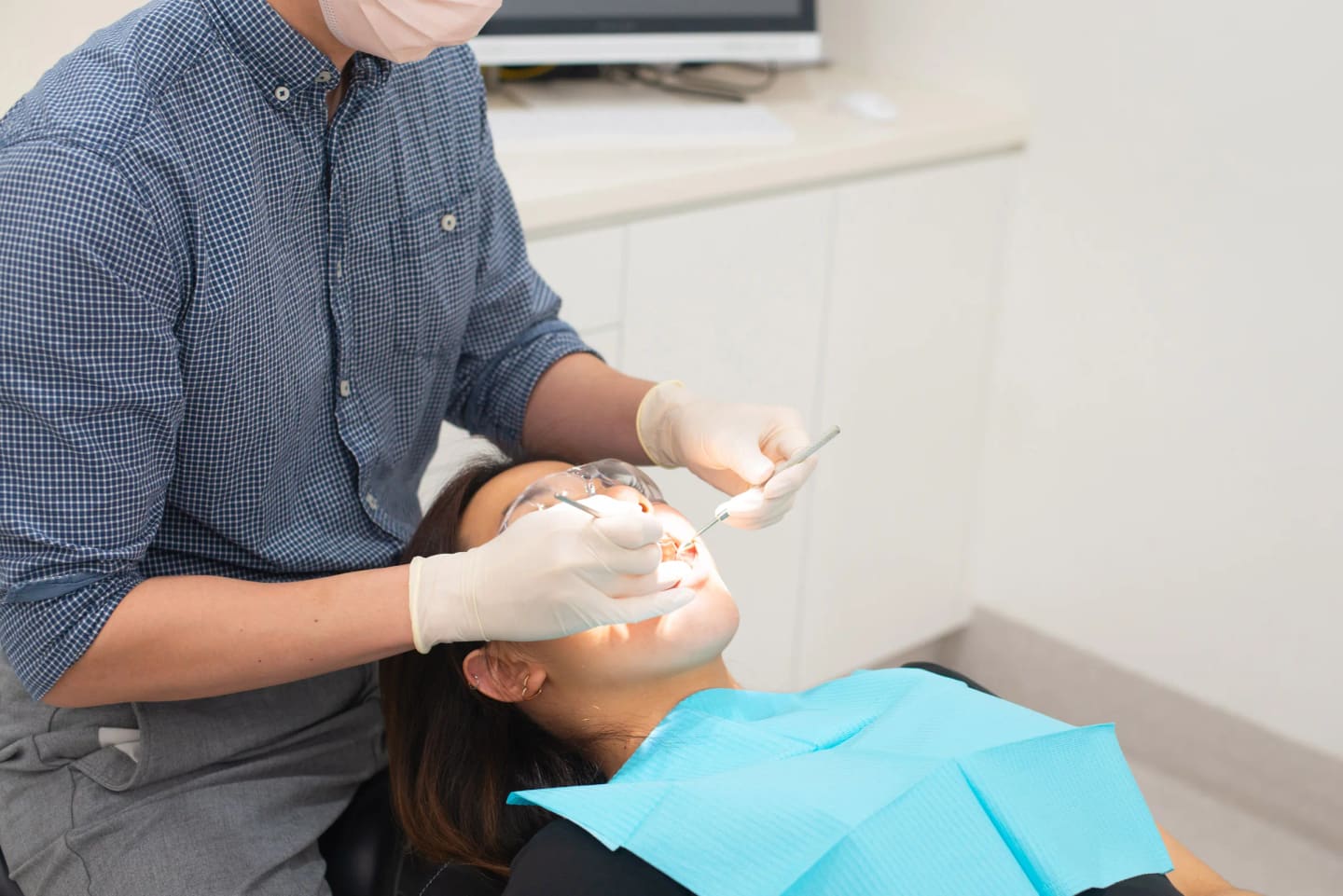
Your dentist will work through a structured clinical exam. This is not a quick glance. At Ivy Dental, a standard check-up includes:
Visual examination. Every tooth is checked for decay, cracks, wear, and existing restorations that may be failing. Gums are assessed for inflammation, recession, and pocket depth.
Digital X-rays. Bitewing X-rays show decay between teeth that is invisible to the naked eye. A panoramic X-ray (OPG) may be taken at your first visit or every few years to assess bone levels, wisdom teeth, and jaw health. Digital X-rays use significantly less radiation than older film-based systems.
Soft tissue screening. Your dentist checks your tongue, cheeks, palate, and throat for any unusual patches, lumps, or colour changes. This is an oral cancer screening and takes about 60 seconds.
Bite assessment. How your teeth meet when you close affects wear patterns, jaw pain, and the long-term success of any restorations. Your dentist will check for signs of grinding or clenching.
The whole examination typically takes 15 to 20 minutes.
Professional cleaning
Most check-up appointments include a professional scale and clean. Your dental hygienist or therapist removes calculus (hardened tartar that brushing cannot shift) and polishes surface staining.
A standard clean targets above-the-gum deposits. If you have signs of gum disease, your dentist may recommend a deeper clean that addresses deposits below the gumline. This is a separate appointment and a different fee.
The clean usually adds 15 to 20 minutes to your visit.
What the check-up costs
Pricing varies depending on what is included. At Ivy Dental, indicative costs for a standard check-up are:
- Standard check-up and clean appointment: from $220
- Additional diagnostic imaging: quoted before it is taken if it is needed
- Deeper gum treatment: quoted separately if the examination shows it is required
At Ivy Dental, cleaning is usually planned as part of a check-up and clean appointment, not as a standalone service. These are indicative figures. Your actual cost depends on the complexity of the examination, the number of X-rays required, and whether additional diagnostic imaging is needed.
With health fund cover, your out-of-pocket gap for a standard check-up and clean is often between $0 and $80, depending on your fund and plan level. We accept all major health funds with HICAPS on-site.
For a full breakdown, see our check-up cost page.
Book a check-up at Ivy Dental →, or call (07) 3266 7120.
What happens if something is found
If your dentist identifies a problem, you will not be pressured into immediate treatment. Here is how it works:
- Your dentist explains the issue using intraoral photos or X-ray images on the screen beside you.
- You receive a written treatment plan listing each item, the corresponding item number, and the cost.
- If you have a health fund, we can estimate your rebate before you leave.
- You decide when to proceed. Many patients take the plan home to review.
Small issues (a tiny cavity, minor calculus) are sometimes addressed at the check-up appointment if time allows and you are comfortable. Anything more involved is booked separately.
How often should you come back
The standard recommendation is every six months. But the right interval depends on your individual risk. Patients with active gum disease, a history of frequent cavities, or diabetes may benefit from three- to four-monthly visits. Low-risk patients with excellent home care may be fine at 12-month intervals.
Your dentist will recommend a recall interval based on what they find at your appointment. For more detail, read our guide on how often you should visit the dentist.
Getting the most from your check-up
A few things that help us help you:
- Be honest about your habits. Smoking, grinding, inconsistent flossing. We are not here to judge. Accurate information leads to better care.
- Mention any changes. Sensitivity, bleeding gums, a tooth that feels different when you bite. Even if it seems minor, mention it.
- Ask about anything that concerns you. Cosmetic questions are welcome at a check-up. Want to know about whitening or veneers? Ask. We can give you a realistic idea of what is involved.
If you have not been to the dentist in years
If it has been a long time since your last visit, you are not alone. Many patients feel apprehensive about returning, and that is understandable. Our approach is to assess where things are now, explain what we find, and work with you on a plan that fits your priorities and budget. There is no judgement.
If anxiety is a concern, let us know when you book. We can allow extra time, explain each step beforehand, and adjust the pace to suit you. Our dental anxiety tips offer practical strategies that many patients find helpful.
First visit checklist
If you are a new patient, arrive 10 minutes early and bring your Medicare card, health fund card (if applicable), photo ID, a list of current medications, and any previous X-rays or referral letters. Our first visit checklist covers this in detail.
Children eligible for the CDBS can receive up to $1,158 in benefits over two calendar years, which typically covers check-ups, X-rays, cleans, fillings, and extractions. At Ivy Dental, CDBS-covered items are bulk billed at $0 out of pocket while the remaining Medicare balance covers the planned treatment.
Ivy Dental check-ups in Everton Park and Nundah
We offer check-ups seven days a week at Everton Park and Nundah. New patients and existing patients are welcome. If it has been a while since your last visit, that is fine. No lectures. Just an honest assessment of where things stand and a clear plan forward.
Book your check-up at Ivy Dental →, or call (07) 3266 7120.
Indicative pricing. Your quote may differ based on clinical assessment. Individual results vary.