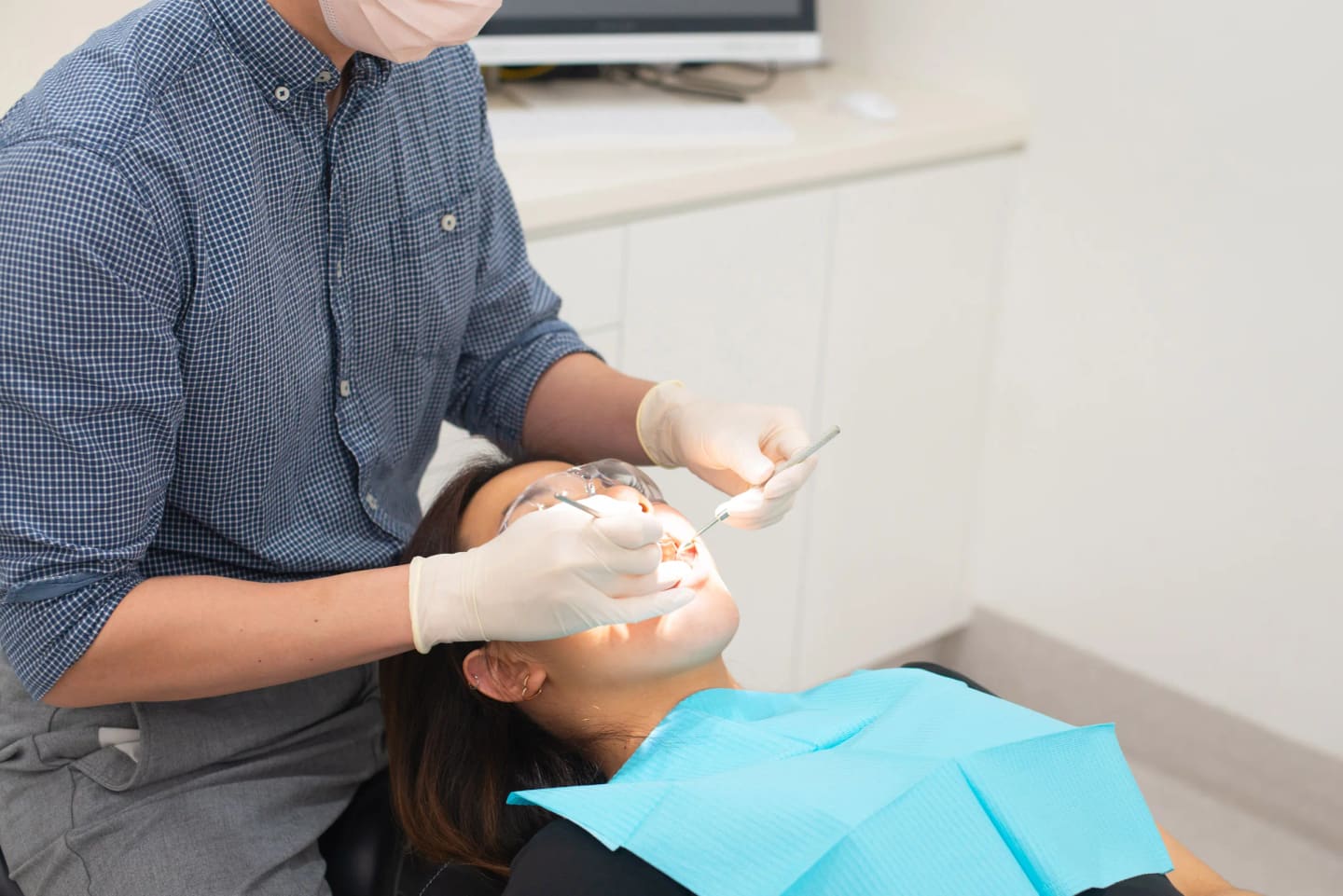
Your dentist sees inside your mouth more regularly than almost any other health professional. That puts them in a position to spot signs of conditions you might not expect, including obstructive sleep apnoea (OSA).
Sleep apnoea is a condition where the airway partially or fully collapses during sleep, causing repeated breathing interruptions. It affects an estimated 9% of Australian adults, and a significant proportion are undiagnosed. Many of those undiagnosed patients sit in dental chairs every six months without knowing their dentist can see warning signs.
What sleep apnoea looks like in the mouth
The mouth, jaw, and throat offer several clues.
Teeth grinding (bruxism). Flat, worn biting surfaces on the teeth are one of the most common oral findings associated with sleep apnoea. Research suggests the body may clench and grind during sleep as a response to airway obstruction. The grinding tenses the jaw muscles, which may help brace the airway open.
If your dentist notices grinding wear and you also report poor sleep, daytime fatigue, or snoring, the combination raises a flag.
Scalloped tongue. A tongue with wavy, indented edges (scallop marks from pressing against the teeth) can indicate the tongue is too large for the oral space. A large tongue is a known risk factor for airway obstruction during sleep.
Large tongue relative to the mouth. When your dentist asks you to open wide and say "aah", they assess the Mallampati score. This measures how much of the throat is visible past the tongue. A high score (meaning the tongue blocks most of the view) correlates with increased OSA risk.
Narrow or high palate. A narrow upper jaw with a high, vaulted palate reduces the volume of the nasal airway above and the oral airway below. This anatomical feature is more common in people who breathed through their mouth during childhood and is associated with higher OSA prevalence.
Redness or swelling in the soft palate and throat. Chronic snoring causes vibration trauma to the soft tissues at the back of the throat. Redness, swelling, or an elongated uvula can be visible signs of this.
Enlarged tonsils. While more common in children, enlarged tonsils in adults can contribute to airway narrowing and are checked during oral examination.
Dry mouth. Patients with sleep apnoea often breathe through their mouth at night. This leads to dry mouth, which your dentist may notice as reduced saliva, dry or cracked lips, and inflamed gum tissue. Chronic dry mouth also increases cavity risk, as saliva is the mouth's natural defence against decay.
Gum disease. Some research links untreated sleep apnoea with increased gum disease risk, potentially due to the inflammatory effects of repeated oxygen drops during sleep.
Signs you might notice yourself
In addition to what the dentist sees, consider whether you experience any of the following:
- Loud, persistent snoring (ask your partner)
- Witnessed pauses in breathing during sleep
- Waking gasping or choking
- Excessive daytime sleepiness, despite sleeping seven or more hours
- Morning headaches
- Difficulty concentrating or memory issues
- Waking with a dry mouth or sore throat
- Irritability or mood changes
None of these on their own confirm sleep apnoea. But several together, combined with oral signs your dentist identifies, build a picture that warrants investigation.
What your dentist does with this information
Your dentist cannot diagnose sleep apnoea. That requires a sleep study, either an in-lab polysomnography or a home sleep test, ordered by your GP or a sleep physician.
What your dentist can do is:
- Identify the oral signs during a routine check-up.
- Ask screening questions about your sleep quality, snoring, and daytime symptoms.
- Refer you to your GP or a sleep physician for formal testing.
- Treat with an oral appliance if you receive a diagnosis of mild to moderate OSA.
At Ivy Dental, screening for sleep-disordered breathing is part of our comprehensive examination. If we see signs, we will discuss them with you and recommend appropriate next steps.
Dental sleep medicine at Ivy Dental
For patients diagnosed with mild to moderate obstructive sleep apnoea, Ivy Dental offers dental sleep medicine treatment. This involves a custom-made mandibular advancement splint (MAS), which is an oral appliance worn during sleep.
The appliance holds the lower jaw slightly forward, which increases the space behind the tongue and helps keep the airway open. It is custom-fitted from a digital scan of your teeth and adjusted over several appointments to find the optimal jaw position.
Important clarification: Dental sleep medicine (treating sleep apnoea with oral appliances) is not sedation dentistry. Ivy Dental does not offer sedation dentistry. These are entirely different services. Read our explanation of the difference.
Who is a candidate for an oral appliance
An oral appliance may be appropriate if:
- You have been diagnosed with mild to moderate OSA via a sleep study
- You cannot tolerate CPAP (the mask-based therapy that is the standard first-line treatment)
- You snore significantly but do not meet the threshold for OSA diagnosis
- Your sleep physician recommends an oral appliance as an alternative or adjunct to CPAP
An oral appliance is not suitable for severe sleep apnoea as a standalone treatment. In severe cases, CPAP or surgical options are typically recommended by your sleep physician.
Why this matters beyond sleep
Untreated sleep apnoea is not just about tiredness. Research links it to increased risk of:
- Hypertension (high blood pressure)
- Heart disease and stroke
- Type 2 diabetes
- Motor vehicle accidents due to daytime drowsiness
Getting screened, diagnosed, and treated can have significant health benefits beyond better sleep.
Next steps
If your dentist has mentioned signs of grinding, a large tongue, or dry mouth, and you also experience poor sleep or daytime fatigue, raise it at your next appointment or with your GP.
If you have already been diagnosed with sleep apnoea and want to explore an oral appliance, book a dental sleep medicine consultation at Ivy Dental in Everton Park or Nundah.
Book a consultation at Ivy Dental. Book a consultation, or call (07) 3266 7120.