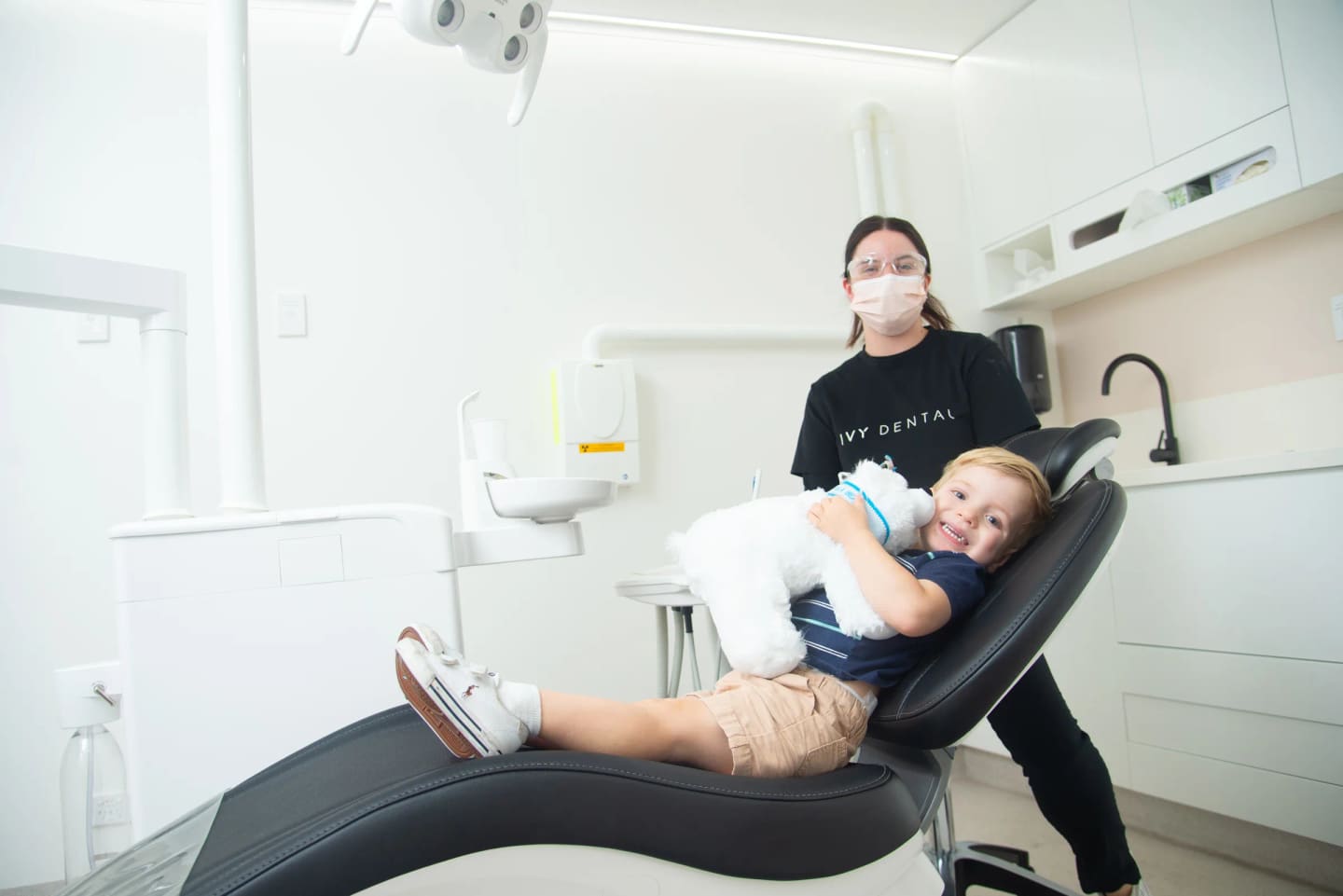
Around age 5 or 6, most kids start to notice something familiar: a front tooth that moves when they push it with their tongue. It is one of those childhood milestones that tends to generate a lot of parental questions. Is it too early? Too late? Should I help it along?
Here is a practical guide to the baby teeth timeline, what to expect at each stage, and when something might need a dentist's attention.
How baby teeth fall out
Baby teeth (also called primary or deciduous teeth) are not pushed out randomly. Each one has a permanent successor developing in the jaw beneath it. As that adult tooth grows, it gradually resorbs the root of the baby tooth above it. The root shortens, the tooth loosens, and eventually it falls out.
This process is called exfoliation. It happens on its own schedule. Some children are early, some are late, and both can be within the range of normal.
Children have 20 baby teeth in total. These are replaced by 32 permanent teeth (including wisdom teeth, which arrive much later). The transition from baby to adult teeth typically spans about 6 years, from roughly age 6 to age 12.
Tooth-by-tooth timeline
The table below shows the typical age range for losing each group of baby teeth. These are averages based on published paediatric dental data. Individual variation of 6 to 12 months either side is common.
Tooth | Typical age lost |
|---|---|
Lower central incisors (bottom front) | 6 to 7 years |
Upper central incisors (top front) | 6 to 7 years |
Upper lateral incisors (beside top front) | 7 to 8 years |
Lower lateral incisors (beside bottom front) | 7 to 8 years |
Lower canines | 9 to 12 years |
Upper first molars | 9 to 11 years |
Lower first molars | 9 to 11 years |
Upper canines | 10 to 12 years |
Lower second molars | 10 to 12 years |
Upper second molars | 10 to 12 years |
The general pattern: front teeth go first, back teeth go last. Lower teeth often fall out slightly before their upper counterparts. Girls tend to lose teeth a little earlier than boys on average, though this varies.
What is normal and what is not
Most of the time, losing baby teeth is straightforward. The tooth gets wobbly over a few weeks, comes out with minimal fuss, and the permanent tooth starts appearing within a few months.
Here are some situations that fall within the normal range:
- A tooth is loose for several weeks before it comes out
- Minor bleeding at the gum after a tooth falls out
- The permanent tooth looks larger, more yellow, or more ridged than the baby tooth it replaced (adult teeth are naturally a different shade and texture)
- A gap remains for a few months before the adult tooth appears
And here are situations worth mentioning to your dentist:
- A baby tooth fell out before age 4 with no obvious cause (such as an injury)
- A permanent tooth has been visible for months but the baby tooth has not loosened
- A permanent tooth is coming through in an unusual position, such as behind the baby tooth rather than beneath it (this is sometimes called a "shark tooth")
- Your child is over 8 and has not lost any teeth yet
- A baby tooth was lost due to decay rather than natural exfoliation
None of these are necessarily urgent, but they can benefit from a dental assessment. An X-ray can show the position and development of the adult teeth and help determine whether anything needs attention.
The "shark tooth" situation
One of the most common concerns Brisbane parents bring to us is a permanent tooth growing in behind a baby tooth that has not fallen out yet. This happens most often with the lower front teeth.
It looks alarming, but in many cases it resolves on its own. Once the baby tooth falls out or is removed, the tongue tends to push the adult tooth forward into its correct position over the following weeks.
If both teeth are present for more than a few weeks, or if the baby tooth is still firmly anchored, your dentist can advise on whether the baby tooth should be removed to give the permanent tooth space.
Book a children's dental check-up at Ivy Dental or call (07) 3266 7120 if you have questions about your child's teeth.
Looking after teeth during the transition
The years between 6 and 12 are a mixed dentition period. Your child has a combination of baby teeth and adult teeth at the same time. This creates some specific oral hygiene challenges.
Gaps where teeth have fallen out can trap food. Encourage your child to brush gently around these areas.
Newly erupted permanent teeth are more vulnerable to decay in their first 1 to 2 years. The enamel is still maturing and is less resistant to acid. This is why regular dental check-ups during these years are particularly valuable. Dental sealants may be recommended for the permanent molars to reduce decay risk.
Loose teeth do not need special treatment. Your child can continue brushing normally and can gently wiggle the tooth with clean fingers. Avoid tying string to it or forcing it out. If a tooth is very loose at bedtime, some parents prefer to have the child remove it to avoid a swallowing concern overnight, but this is a personal choice rather than a clinical recommendation.
When your child is eligible for CDBS
The Child Dental Benefits Schedule (CDBS) provides up to $1,158 over two consecutive calendar years for eligible children aged 0 to 17. It covers services like check-ups, X-rays, cleans, fillings, and extractions. Eligibility is based on receiving a qualifying government payment such as Family Tax Benefit Part A.
If your child is losing teeth and due for a check-up, it is worth checking whether they are eligible. We process CDBS claims on the spot at our Everton Park and Nundah clinics, with $0 out of pocket for covered services while the remaining Medicare balance covers the planned treatment.
When to see a dentist about baby teeth
Regular check-ups every 6 months during the transition years help your dentist monitor the eruption pattern and catch any spacing or alignment issues early. If orthodontic treatment may be needed down the track, early detection gives more options.
Outside of routine visits, bring your child in if:
- A tooth has been knocked out or damaged in a fall or sports injury
- There is significant pain around a loose tooth
- You notice a permanent tooth erupting in an unusual position
- Baby teeth are decaying rather than falling out naturally
- Your child has not started losing teeth by age 8
Our Everton Park and Nundah clinics welcome children and families. We are open 7 days, which makes it easier to fit appointments around school and work schedules.
Book a children's dental appointment at Ivy Dental | Call (07) 3266 7120
Individual tooth development timelines vary. Your dentist can confirm whether your child's pattern is within normal range.