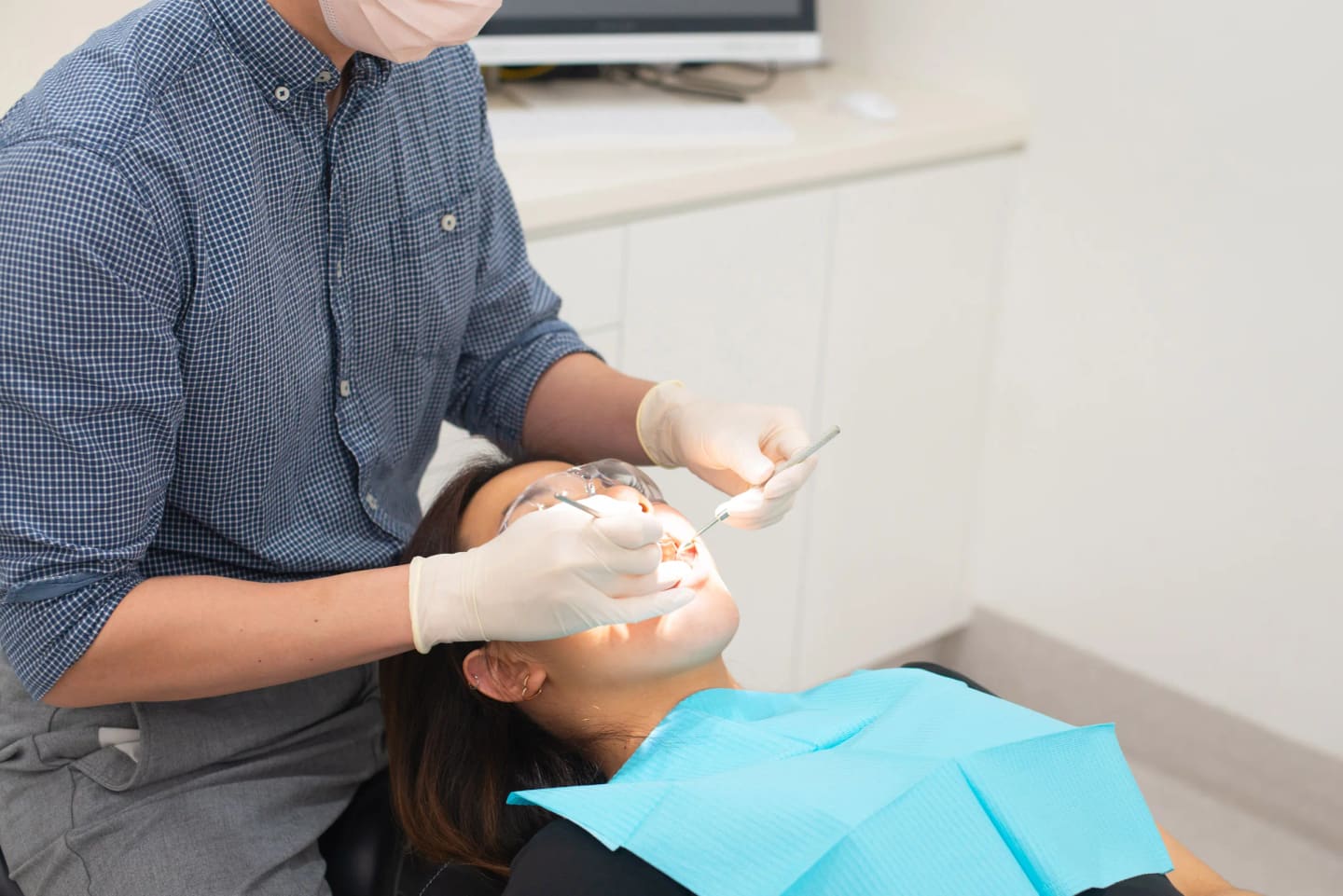
Men are statistically less likely to visit the dentist regularly than women. Research from the Australian Institute of Health and Welfare shows that men attend fewer dental visits, are more likely to delay treatment, and are more likely to present with advanced problems when they do come in.
Some of that gap is about scheduling and priorities. But a significant portion of it comes down to anxiety that goes unacknowledged.
Dental anxiety in men is common. It is also underreported, undertreated, and often masked as indifference. "I just haven't got around to it" is easier to say than "I am scared of the dentist."
This article is for men who know they should go but keep putting it off.
The pattern most men follow
It usually starts the same way. You skip a check-up because you are busy. Then another. A year passes. Two years. Maybe five.
During that time, something starts to bother you. A tooth gets sensitive. Your gums bleed when you brush. You notice a dark spot. You think about calling the dentist, but the longer you have been away, the more you assume it is going to be bad news. So you wait.
By the time pain forces the issue, the problem is bigger than it needed to be. A cavity that could have been a 20-minute filling is now a crown. Or a root canal. Or an extraction. The treatment is more involved, the cost is higher, and the experience confirms the feeling that the dentist is something to avoid.
This cycle is predictable. It is also avoidable.
Anxiety is not weakness
There is a persistent cultural assumption that men should be able to tolerate discomfort without complaint. That asking for help, admitting fear, or taking time for preventive health is somehow optional or soft.
That assumption costs men their teeth. And in some cases, their broader health. Oral infections can affect cardiovascular health, diabetes management, and overall wellbeing.
Dental anxiety is a physiological response. It is not a character flaw. Roughly 10 to 20 percent of Australians experience moderate to high dental anxiety, and research suggests the rates are similar between men and women. The difference is that women are more likely to tell someone about it and seek strategies to manage it. Men are more likely to just stop going.
Telling your dental team you are nervous is not a confession. It is practical information that helps them do a better job. The same way you would tell a mechanic about an intermittent noise, you tell your dentist about your anxiety so they can adjust their approach.
What you are afraid of
Most dental anxiety has specific triggers. Knowing yours helps, because the solutions are different depending on the source.
The needle. Fear of the injection is one of the most common triggers. Modern dental needles are very fine. Topical numbing gel is applied before the injection so you feel less. Your dentist can inject slowly and give you a moment to prepare. Many patients say the anticipation was worse than the actual injection.
Loss of control. Lying back with your mouth open while someone works on you can feel vulnerable. A stop signal, like raising your left hand, gives you the ability to pause the procedure at any point. Knowing you can stop changes the experience.
The sounds. The high-pitched drill is a trigger for many people. Noise-cancelling earbuds with a podcast or playlist block it out effectively. Let your dentist know you are wearing them.
Judgment about the state of your teeth. If you have been away for years, you may assume the dentist will be shocked by what they find. They will not be. Dental teams see patients in your situation every week. The condition of your teeth after a long absence may be better than you expect, or it may need work. Either way, the appointment is about making a plan, not passing judgment.
Bad experiences as a kid. Dentistry has changed significantly in the last 10 to 20 years. Materials are better. Techniques are more conservative. Communication is a recognised part of clinical care. A bad childhood experience does not predict what an appointment feels like now.
For a detailed guide on managing each of these triggers, read our dental anxiety guide.
Practical steps to get back in the chair
Start with a consultation, not treatment. Book an appointment where nothing happens except a conversation and an examination. No drilling. No needles. This separates finding out from having things done. Those are two different steps and they do not have to happen on the same day.
Book first thing in the morning. A morning appointment means less time to think about it. Call during business hours when the impulse is there. Or book online if calling feels like too much.
Tell them you are anxious. When you book, say: "I get anxious at the dentist." You do not have to explain why. That one sentence triggers a series of adjustments: more time allocated, a slower pace, clearer communication during the appointment, and a dentist who checks in more frequently.
Bring someone. A partner, mate, or family member can sit in the room during your appointment. There is no requirement to go through it alone.
Set a hard deadline. If you have been putting it off, pick a date. Tell someone. External accountability works for the same reason it works with exercise. An appointment booked is harder to cancel than a vague intention to call next week.
Book a check-up at Ivy Dental by calling (07) 3266 7120 or booking online. Let us know about your anxiety when you do. We will adjust the appointment accordingly.
What the first appointment back looks like
If it has been years since your last visit, here is what to expect.
Your dentist will ask about your dental and medical history. They will examine your teeth and gums visually. If you are comfortable, they will take X-rays to see what is happening below the surface. They will explain what they find in plain language and outline what treatment, if any, is recommended.
Nothing happens without your consent. If treatment is needed, it can be staged across multiple visits so no single appointment feels overwhelming.
The appointment takes 30 to 60 minutes depending on what is involved. You will leave with a clear picture of where things stand and a written treatment plan if work is needed.
Read our dental check-up guide for a detailed walkthrough.
The cost of waiting
Delaying assessment can allow some conditions to become more complex, although progression is not identical for every tooth. At Ivy Dental, a filling starts from $200, a crown from $1,600, root canal treatment from $1,000, and a single implant from $4,500. Combined treatment is assessed and quoted rather than inferred from a simple example.
Indicative pricing. Your quote may differ based on clinical assessment.
The clinical cost is similar. Gum disease that starts as reversible gingivitis can progress to periodontitis, which involves bone loss that cannot be fully reversed. Teeth that could have been saved with early treatment may reach a point where extraction is the only option.
You can read more about the compounding effects of delayed care in our cost of avoidance article.
Ivy Dental sees anxious patients every day
Our Everton Park and Nundah clinics in north Brisbane are open 7 days. We see anxious patients regularly, including many men who are visiting a dentist for the first time in years.
When you let us know about your anxiety, we note it on your file. Your dentist will be informed before you sit down. Appointments can be structured with more time, more breaks, and more communication.
Note: Ivy Dental does not offer sedation dentistry. If your anxiety is severe enough to require sedation, we can provide a referral to an appropriate provider. For most patients, practical strategies and a supportive clinical team are enough to get through the appointment comfortably.
If you have been putting this off, today is a reasonable day to stop. Call (07) 3266 7120 or book a consultation online. You can also visit our locations page to find which clinic is closest to you.
Individual responses to anxiety management strategies vary. Your dentist can help identify an approach suited to your situation.