A child who is anxious about the dentist is not being difficult. They are responding to an unfamiliar environment filled with strange sounds, bright lights, and adults they do not know asking them to do uncomfortable things. It is a normal reaction, and how it is handled can shape their relationship with dental care for years.
Research suggests that dental anxiety established in childhood often persists into adulthood. The stakes are not just about getting through one appointment. They are about building a foundation where dental visits are unremarkable rather than something to dread.
This guide covers why children develop dental fear, how to prepare them, what to say and what to avoid, and what to do if anxiety is severe.
Why Children Become Afraid of the Dentist
Several factors contribute to dental anxiety in children:
Unfamiliarity. Young children have limited experience with medical or dental settings. The chair that reclines, the overhead light, the sound of suction, the taste of fluoride. None of it is part of their normal world. Unfamiliar experiences can be threatening when you are three or four years old.
A previous negative experience. A painful or uncomfortable dental visit, a visit to the doctor that involved needles, or even an unrelated medical procedure can create a generalised fear of clinical settings. One bad experience can overshadow several good ones.
Parental anxiety. Children are perceptive. If a parent is visibly nervous about dental visits, children often pick up on that anxiety. Research shows a correlation between parental dental fear and childhood dental anxiety. This is not about blame. It is about awareness.
Stories from other children. Playground conversations about the dentist are rarely reassuring. Other children may describe experiences in dramatic terms, and a child without their own frame of reference may take those stories at face value.
Loss of control. Lying back in a chair while someone works inside your mouth requires a level of trust that young children may not yet have with a stranger. The feeling of not being able to talk or move freely can be distressing.
Preparing Your Child at Home
What you do before the appointment matters as much as what happens during it.
Talk about it in simple terms. For young children, keep explanations brief. "We are going to visit the dentist. They will count your teeth and make sure they are healthy." That is enough for a first visit. Do not describe instruments or procedures in detail.
Avoid certain words. Words like "hurt," "pain," "needle," "drill," and "shot" create fear before there is anything to be afraid of. If your child asks "Will it hurt?" a good response is: "The dentist will be gentle. If anything feels funny, you can put your hand up and they will stop."
Read books about dental visits. There are several children's books that normalise dental appointments. They are most useful for children aged 2 to 5 who benefit from seeing familiar characters go through the same experience.
Play dentist at home. Let your child pretend to be the dentist and "check" your teeth with a toothbrush. Then swap roles. This can make the real visit feel more familiar. It also gives them a sense of control, which is often the missing ingredient.
Do not make promises you cannot keep. Saying "It won't hurt at all" or "It will be over in a second" sets up expectations that may not match reality. Honesty, delivered calmly, builds trust. "Some parts might feel a little strange, but the dentist will tell you everything before they do it."
Time the announcement. For children under 5, mentioning the appointment the day before or the morning of is usually enough. Too much lead time gives anxious children more time to worry. Older children may prefer a few days' notice so they can ask questions and mentally prepare.
What Happens at a Child-Friendly Dental Practice
At Ivy Dental, our approach with anxious children follows a few core principles.
Go at the child's pace. If a child needs to spend their first visit sitting in the chair, looking at the light, and going home, that is a successful first visit. Building comfort is more important than completing a check-up on the first attempt.
Tell-show-do. This is a standard technique in paediatric dentistry. Before using any instrument, the dentist tells the child what they are going to do, shows them the instrument (often letting them touch it or see it work on a glove or fingernail), and then does the procedure. It removes the element of surprise.
Use age-appropriate language. Dental teams that work with children describe things in terms children understand. The suction is "Mr Thirsty." The polishing paste "tickles." The X-ray is "taking a photo of your teeth." These descriptions are not condescending. They are practical communication tools that reduce fear.
praise effort, not the end result. A child who sat in the chair and opened their mouth for 30 seconds deserves acknowledgment, even if the full check-up could not be completed. Positive reinforcement builds confidence for the next visit.
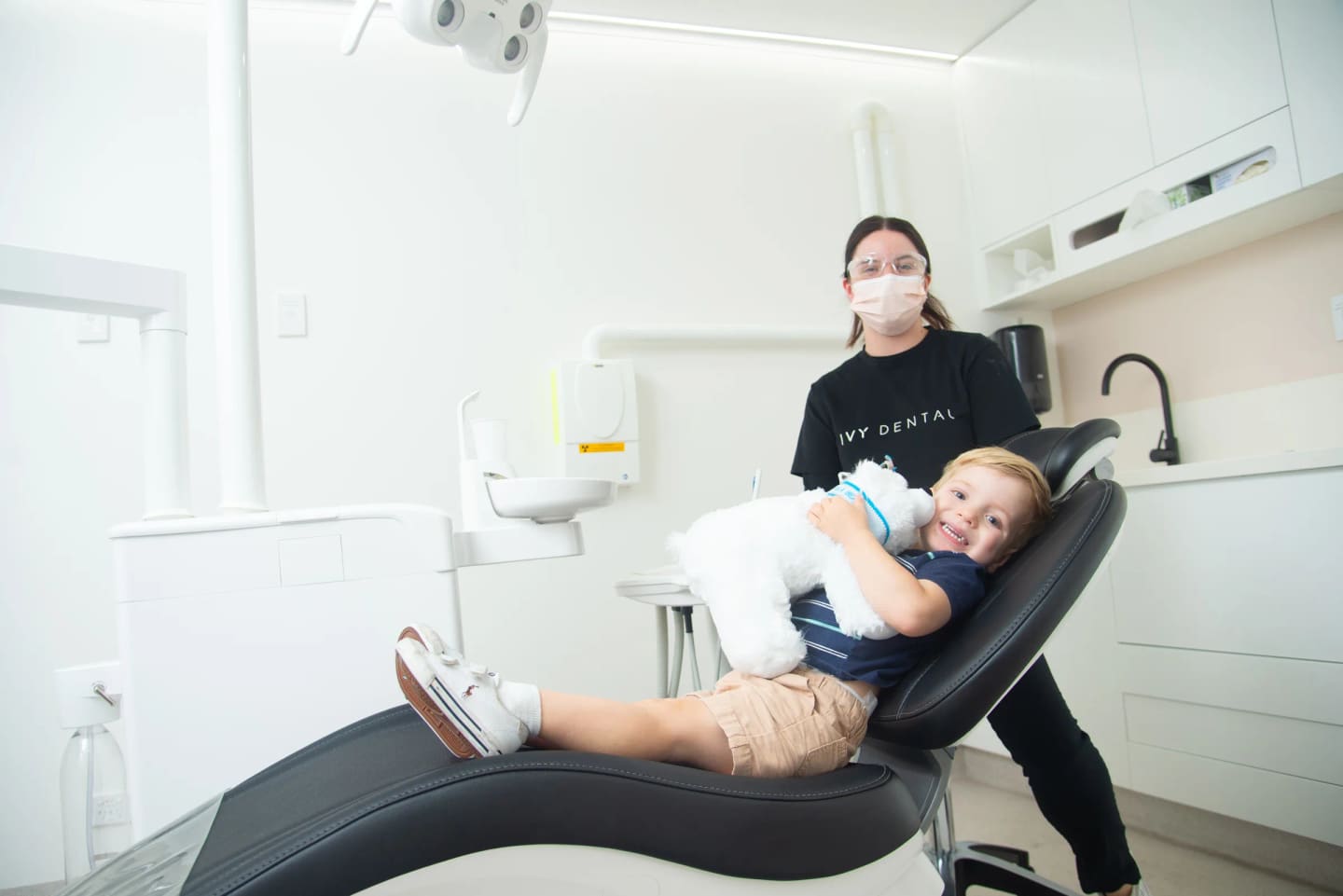
Parents are welcome. At our Everton Park and Nundah locations, parents can sit with their child throughout the appointment. Some children feel safer with a parent holding their hand. Others, particularly those over age 6 or 7, may prefer to manage independently. Either approach is fine.
Book your child's dental visit at Ivy Dental
What to Say After the Appointment
How you debrief matters. Focus on what went well:
- "You did a great job sitting in the chair."
- "The dentist said your teeth look good."
- "You were very brave putting your hand up when you needed a break."
Avoid framing it as something that is finished or survived. "Thank goodness that is over" reinforces the idea that it was an ordeal. Instead, treat it as routine. "We will go back in six months for another check."
If the visit did not go well, that is okay. Not every appointment will be smooth. Avoid expressing frustration in front of your child. Talk to the dental team privately about strategies for next time.
When Anxiety Is Severe
For most children, the strategies above are enough to manage normal levels of dental nervousness. But some children have anxiety severe enough that standard approaches do not work. Signs may include:
- Extreme distress (screaming, vomiting, or panic) that does not settle
- Complete refusal to enter the dental surgery after multiple attempts
- Physical symptoms like stomach aches or sleep disturbance in the days before an appointment
- A history of trauma or sensory processing difficulties that amplify the experience
If this is your child, here are some options:
Desensitisation visits. A series of short, non-treatment visits designed to build familiarity gradually. The child visits the practice, meets the team, sits in the chair, and leaves. No instruments. No check-up. Over several visits, comfort often increases enough to attempt examination.
Referral to a paediatric dentist. Paediatric dental specialists have additional training in managing childhood anxiety and behavioural techniques. For children with severe anxiety, a referral may be appropriate.
Discussion with your GP or paediatrician. If dental anxiety is part of a broader pattern of anxiety, your doctor may be able to provide additional support or referral.
Ivy Dental does not offer sedation dentistry. If sedation or general anaesthesia is needed for a child's dental treatment, we can arrange a referral to an appropriate provider. For more detail, see our page on dental anxiety management for adults, which covers related topics.
Building a Long-Term Foundation
The goal is not to get through one appointment. It is to build a pattern where dental visits are ordinary. That takes time, patience, and a dental team that understands children.
A few long-term strategies:
- Start dental visits early. The Australian Dental Association recommends a first visit by age 1 or when the first tooth appears. Early visits, when there is nothing to treat, establish the dentist as a familiar and non-threatening figure.
- Keep a regular schedule. Six-monthly visits mean the environment stays familiar. Long gaps between visits allow anxiety to rebuild.
- Model calm behaviour. If you have your own dental appointments, mention them casually. "I went to the dentist today for a check-up. Everything was fine." Children learn from what they observe.
Ivy Dental sees children and families across north Brisbane, including Everton Park, Nundah, Stafford, Kedron, and surrounding suburbs. We are open seven days.
Book your child's appointment at Ivy Dental, or call (07) 3266 7120.