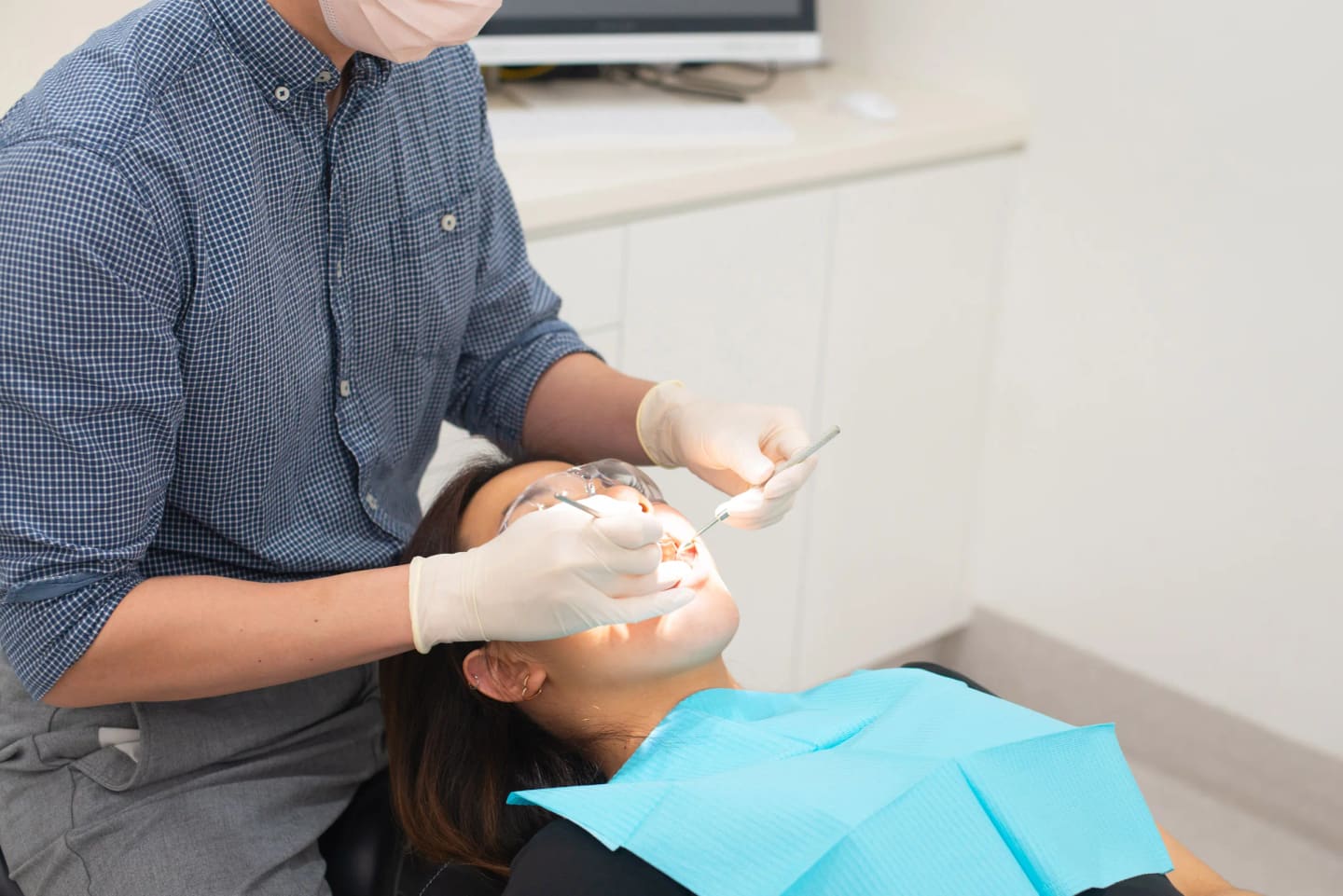
Most people know that smoking is harmful to their lungs and heart. The effects on teeth and gums receive less attention, but they are significant, well-documented, and visible long before the more serious systemic consequences appear.
If you smoke and live in Brisbane, here is a direct summary of what smoking does to your mouth, how it complicates dental treatment, and what happens when you stop.
What smoking does to your gums
Gum disease is the most consequential oral health effect of smoking. Smokers are roughly two to three times more likely to develop periodontal disease than non-smokers, and the disease tends to progress faster and respond less predictably to treatment.
Smoking affects the gums through several mechanisms:
Reduced blood flow. Nicotine constricts blood vessels, reducing the blood supply to gum tissue. This impairs the delivery of oxygen and immune cells to the gums, weakening the body's ability to fight bacterial infection.
Masked symptoms. Healthy gums that are inflamed typically bleed as a warning sign. In smokers, the reduced blood flow means gums may not bleed even when significant inflammation and disease are present. This masking effect can delay diagnosis, because the usual early warning signal is suppressed.
Impaired immune response. Smoking reduces the effectiveness of white blood cells and other immune components in the mouth. Bacteria in periodontal pockets are harder for the body to control, which accelerates the destruction of bone and soft tissue.
Slower healing. After dental procedures, including deep cleaning (scale and root planing), extractions, and surgery, smokers heal more slowly and have higher rates of complications such as dry socket and infection.
The net effect is that smokers are more likely to develop gum disease, more likely to have it progress to advanced stages, and less likely to respond well to treatment. Periodontal disease is a primary cause of tooth loss in adults, and smoking is its most significant modifiable risk factor.
Staining and discolouration
Tar and nicotine cause characteristic brown and yellow staining on teeth. This staining is external (extrinsic) and accumulates on the enamel surface and in microscopic pits and grooves. It tends to concentrate along the gum line and between teeth where plaque also builds up.
Professional cleaning can remove most external tobacco staining. Teeth whitening can improve the overall shade. But as long as smoking continues, the staining returns. For patients considering veneers or other cosmetic work, ongoing smoking can affect the appearance and longevity of the restoration.
Increased risk of decay
Smokers tend to have higher rates of tooth decay for several reasons:
- Reduced saliva flow (smoking decreases saliva production, and saliva is protective against decay)
- Higher plaque accumulation rates
- Altered oral bacteria composition, with a shift towards more cariogenic (decay-causing) species
- Behavioural factors, as smoking is sometimes associated with higher sugar intake and less consistent oral hygiene
Effects on dental implants
Dental implants rely on a process called osseointegration, where the titanium implant fuses with the surrounding jawbone over three to six months. Smoking impairs this process.
Research indicates that smokers experience higher rates of implant failure compared to non-smokers. The reduced blood supply to the bone, impaired healing, and increased infection risk all contribute. Some studies put the failure rate for smokers at roughly double that of non-smokers, though figures vary across different studies and patient populations.
Many dental professionals will discuss smoking cessation before recommending implant treatment. Some will proceed with implants for patients who smoke, but with clear communication about the elevated risks. At Ivy Dental, we assess each case individually and ensure patients understand how smoking may affect their implant outcome.
Oral cancer risk
Smoking is a major risk factor for oral cancer, including cancers of the tongue, floor of the mouth, cheeks, gums, and throat. The risk increases with the duration and intensity of smoking, and is further elevated when smoking is combined with heavy alcohol consumption.
Your dentist screens for signs of oral cancer during routine examinations. This includes checking for unusual patches (white or red), persistent sores, lumps, or changes in tissue texture. Regular dental check-ups are an important part of early detection.
If you notice a sore in your mouth that does not heal within two to three weeks, a persistent lump, numbness, or difficulty swallowing, see your dentist or GP promptly.
Effects on other dental treatments
Beyond implants, smoking can complicate or compromise the outcomes of several common dental treatments:
Extractions. Smokers have a higher risk of dry socket (alveolar osteitis) after tooth removal. Dry socket occurs when the blood clot that protects the extraction site is lost, exposing the underlying bone. It is painful and delays healing.
Gum disease treatment. Scale and root planing, the standard first-line treatment for periodontal disease, is less effective in smokers. The reduced healing capacity means pockets are less likely to shrink to the same degree as in non-smokers.
Cosmetic work. Staining from ongoing smoking affects the appearance of composite bonding and can discolour the margins around crowns and veneers over time.
Orthodontics. Smoking does not prevent orthodontic treatment, but the increased gum disease risk during treatment (when oral hygiene is already more challenging) is a consideration.
What happens when you quit
The oral health benefits of quitting smoking begin relatively quickly.
Within two to four weeks. Blood flow to the gums starts to improve. The gum tissue begins to respond more normally to inflammation, which means you may notice some bleeding when brushing. This is a sign that the immune response is returning to normal, not a sign that things are getting worse.
Within three to six months. Gum inflammation typically reduces. Pocket depths may stabilise or improve. The response to professional cleaning and periodontal treatment improves.
Within one year. The risk of gum disease progression is measurably reduced. Healing after dental procedures approaches normal rates. The oral environment becomes more favourable for treatments like implants.
Over several years. The elevated risk of oral cancer decreases progressively after quitting, though it may take a decade or more to approach the level of a never-smoker.
Staining from past smoking can be addressed with professional cleaning and whitening treatment. The cosmetic effects are often the most immediately visible improvement after quitting.
What your dentist can do
Your dentist cannot make you quit, but they can help manage the oral health consequences and support your efforts.
At Ivy Dental, we take a straightforward approach:
- We assess periodontal health thoroughly at every visit, with measurements that track changes over time.
- We recommend cleaning frequencies based on your individual risk level. Smokers often benefit from three to four monthly maintenance visits.
- We discuss how smoking affects any planned treatment so you can make informed decisions.
- We can refer to smoking cessation resources, including Quitline (13 78 48) and your GP, who can discuss nicotine replacement therapies and other cessation support.
We do not lecture. We provide information, answer questions, and support whatever decision you make.
An honest assessment
Smoking causes measurable harm to oral tissues. It accelerates gum disease, increases decay risk, complicates healing, and raises the likelihood of oral cancer. These are not scare tactics. They are consistent findings across decades of peer-reviewed research.
If you smoke and have not had a dental check-up recently, that is a good place to start. If you are considering quitting, know that the oral health benefits are real and begin within weeks.
Book a check-up at Ivy Dental in Everton Park or Nundah. Call (07) 3266 7120 or visit our contact page.
Indicative pricing. Your quote may differ based on clinical assessment.