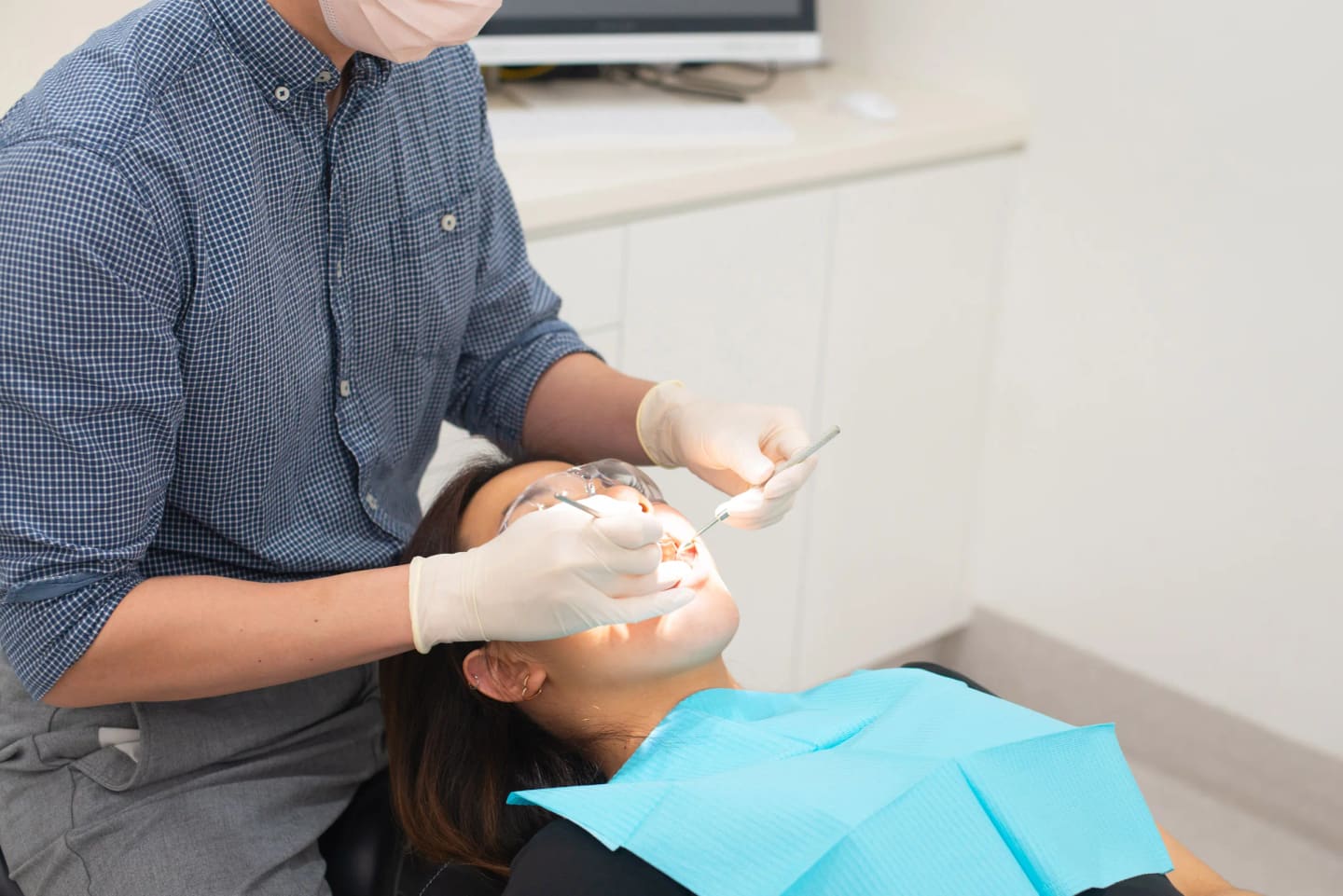
Your dentist has told you that you need a "deep clean." You know it is more involved than a standard scale and polish, but beyond that, the details are unclear. You are not alone. It is one of the most commonly recommended periodontal treatments, and one of the least well explained.
Here is what a deep clean is, why it is recommended, what the procedure involves, and what to expect during recovery.
Deep clean vs regular clean
A regular dental clean (also called a prophylactic clean or scale and polish) is part of a routine check-up. It removes plaque and calculus (tartar) from the surfaces of your teeth above and slightly below the gum line. It is preventive maintenance for healthy gums.
A deep clean, clinically known as scale and root planing (SRP), is a therapeutic treatment for gum disease. It addresses deposits and bacterial contamination that have accumulated below the gum line, on the root surfaces of the teeth, inside periodontal pockets.
The key difference is depth and purpose. A regular clean maintains health. A deep clean treats disease.
Why you might need one
Your dentist or hygienist will recommend a deep clean when they detect signs of periodontal disease that a regular clean cannot address.
During your examination, they measure the depth of the "pockets" between your gums and your teeth using a small probe. Healthy pockets are typically 1 to 3 millimetres deep. Pockets of 4 millimetres or more may indicate that the attachment between the gum and the tooth has started to break down, allowing bacteria and calculus to accumulate below the gum line.
Other signs that may prompt a deep clean recommendation:
- Bleeding on probing. If your gums bleed when the probe touches them, active inflammation is present.
- Visible calculus below the gum line. Hardened deposits on the roots that cannot be removed with a standard clean.
- Bone loss on X-rays. Periodontal disease can erode the bone that supports your teeth. X-ray changes may indicate that gum disease has progressed beyond the soft tissue.
- Persistent bad breath. Deep pockets harbour bacteria that produce sulphur compounds, causing a persistent odour that does not resolve with normal brushing.
If left untreated, periodontal disease can progress to a point where teeth become loose and may eventually need extraction. A deep clean is an early intervention designed to halt or slow that progression.
What happens during scale and root planing
Local anaesthetic
The procedure is performed under local anaesthetic. The area being treated is numbed so you do not feel pain during the cleaning. If you have dental anxiety, discuss this with your dentist beforehand. Options to help you feel more comfortable can be discussed at your appointment.
Scaling
Using ultrasonic instruments and hand scalers, your dentist or hygienist removes plaque and calculus from the tooth surfaces and root surfaces below the gum line. The ultrasonic scaler uses vibrations and a water spray to break up calculus, while hand instruments are used for detailed cleaning in areas the ultrasonic scaler cannot easily reach.
Root planing
After the deposits are removed, the root surfaces are smoothed (planed). Rough root surfaces provide a textured surface where bacteria can reattach. Smoothing the roots helps the gum tissue heal and reattach more closely to the tooth, reducing pocket depth over time.
How many appointments
The treatment may be completed in a single visit or spread across two to four appointments, depending on the severity of the disease and how many areas of the mouth are affected. Treating one quadrant (one quarter of the mouth) per visit is common for more advanced cases, as it limits the area of anaesthesia and allows more thorough treatment.
What to expect after treatment
The first few days
Some tenderness and sensitivity is normal, particularly around the gum line and on the root surfaces that were cleaned. This typically peaks within the first 24 to 48 hours and improves steadily over the following week.
Cold sensitivity is common as root surfaces that were previously covered by inflamed gum tissue are now exposed to temperature changes. This usually settles as the gums heal and reattach.
Minor bleeding when brushing the treated areas may occur for a few days. This should decrease as the tissue heals.
Pain management
Over-the-counter pain relief (paracetamol or ibuprofen, following the dosage on the packaging) is usually sufficient. Rinsing gently with warm salt water (half a teaspoon of salt in a glass of warm water) can help soothe the tissue.
What to avoid
For the first 24 to 48 hours after treatment:
- Avoid hot, spicy, or crunchy foods that may irritate the treated gums.
- Avoid smoking. Smoking significantly impairs healing and reduces the effectiveness of the treatment.
- Avoid vigorous rinsing or using an alcohol-based mouthwash, which can irritate raw tissue.
Brushing and flossing
Continue brushing and flossing, but be gentle around the treated areas for the first few days. Switching to a soft-bristled brush temporarily can help. Your dentist may recommend a specific mouthwash (such as a chlorhexidine rinse) for the first week or two after treatment.
Follow-up and maintenance
A deep clean is not a one-and-done procedure. The follow-up matters as much as the treatment itself.
Re-evaluation
Your dentist will typically schedule a re-evaluation four to six weeks after the deep clean is completed. At this appointment, pocket depths are measured again and the gum tissue is assessed for signs of healing. In many cases, pocket depths will have reduced by 1 to 2 millimetres, and bleeding on probing will have decreased.
Maintenance schedule
After successful treatment, most patients are placed on a more frequent cleaning schedule. Rather than the standard six-monthly check-up, you may be recommended for a maintenance clean every three to four months. This prevents bacteria from recolonising the pockets and keeps the condition stable.
Over time, if your gums respond well and remain stable, the interval between maintenance visits may be extended. But for many patients with a history of periodontal disease, three to four monthly visits become the ongoing standard.
When further treatment is needed
If pockets remain deep (5mm or more) after scaling and root planing, or if the condition does not respond adequately, your dentist may recommend referral to a periodontist (a specialist in gum disease) for further assessment. Surgical options such as flap surgery or guided tissue regeneration may be considered in more advanced cases.
Who is most at risk of needing a deep clean
Certain factors increase the likelihood of developing the kind of gum disease that requires scale and root planing:
- Smoking. The single most significant modifiable risk factor for periodontal disease.
- Diabetes. Particularly when blood glucose is not well controlled. (Read more about diabetes and dental health.)
- Infrequent dental visits. Patients who have not had a professional clean in several years are more likely to have subgingival calculus and established periodontal pockets.
- Genetics. Some individuals are more susceptible to gum disease regardless of their oral hygiene habits.
- Medications that cause dry mouth. Reduced saliva flow increases plaque accumulation and gum inflammation risk.
- Hormonal changes. Pregnancy and menopause can increase gum sensitivity and susceptibility to periodontal disease.
The bottom line on deep cleans
A deep clean is a standard, well-established treatment for gum disease. It is not dramatic or unusual. If your dentist recommends one, it means they have identified a problem that is better addressed now than later. Early intervention with scaling and root planing can prevent the progression to more advanced disease, more complex treatment, and potential tooth loss.
At Ivy Dental in Everton Park and Nundah, we perform periodontal assessments as part of every routine examination. If you have been told you need a deep clean, or if you have not had your gums assessed in some time, we can help.
Book a periodontal assessment at Ivy Dental. Call (07) 3266 7120 or visit our contact page.
Indicative pricing. Your quote may differ based on clinical assessment.