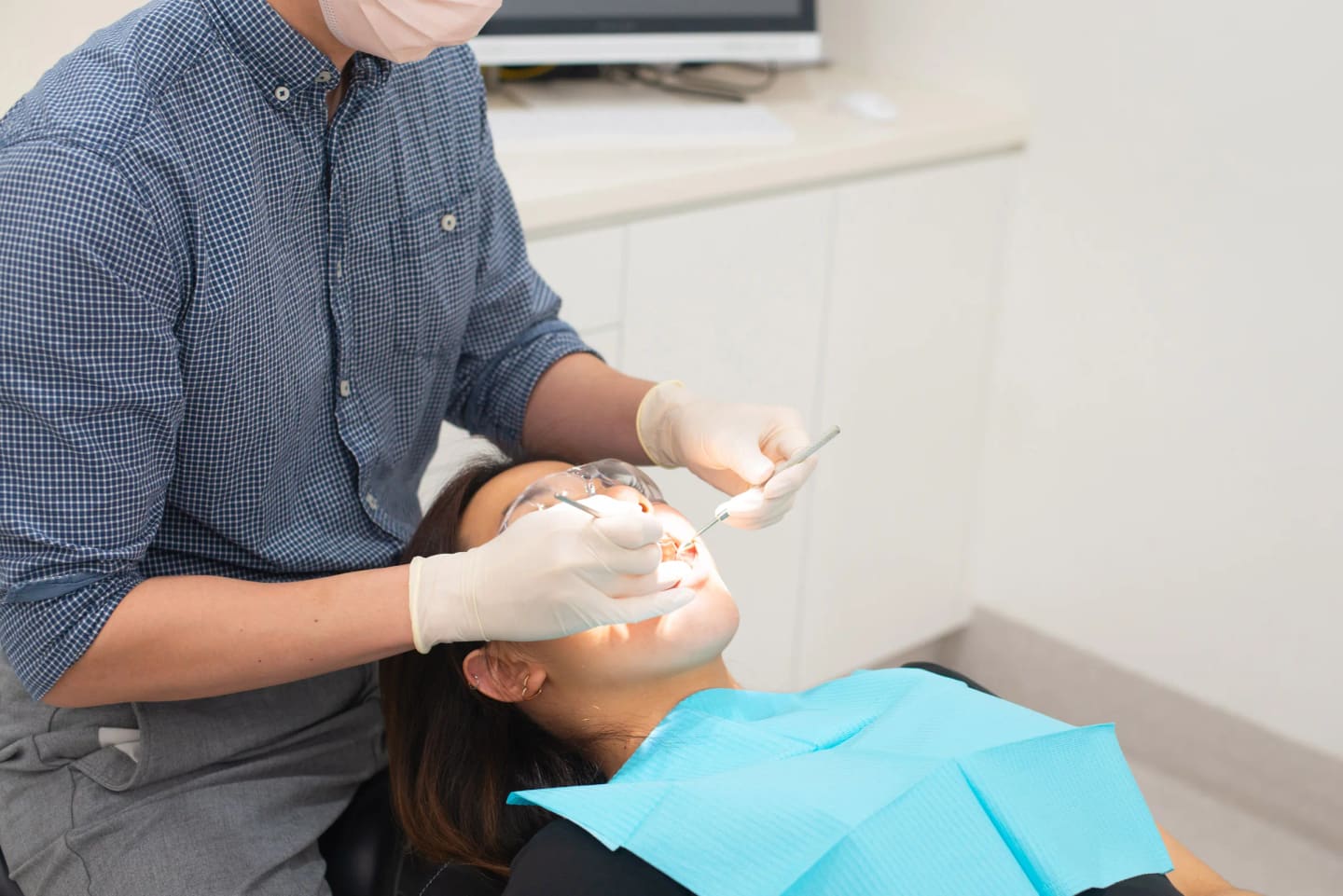
If you visit the dentist for a check-up and clean, there is a good chance part of your appointment will be with a dental hygienist rather than the dentist. Many patients are not entirely sure what a hygienist does, how their role differs from a dentist, or why they are part of the appointment at all.
Here is a clear explanation of the role, what happens during your time with a hygienist, and why it matters for your oral health.
What a dental hygienist is
A dental hygienist is a registered oral health professional who specialises in preventive dental care. In Australia, hygienists complete a Bachelor of Oral Health (or equivalent degree) and are registered with the Dental Board of Australia through AHPRA.
Their scope of practice centres on prevention: professional cleaning, gum health assessment, oral hygiene education, fluoride application, and identifying early signs of problems that need a dentist's attention.
They are not dentists. They do not diagnose conditions, place fillings, perform extractions, or prescribe medications. They work alongside dentists as part of a clinical team, with each role covering a different part of your care.
You may also encounter oral health therapists, who hold a dual qualification in dental hygiene and dental therapy. Our dentist vs dental therapist article explains that distinction in more detail.
What a hygienist does during your appointment
When you visit Ivy Dental for a check-up and clean, the hygienist's portion of the appointment typically includes several components.
Scaling and cleaning. This is the core of the appointment. The hygienist removes plaque (soft bacterial film) and calculus (hardened tartar that brushing cannot remove) from your teeth. They use ultrasonic instruments that vibrate at high frequency to break up deposits, along with hand instruments for precision work around the gum line.
You can read a more detailed breakdown of what this process involves in our teeth cleaning guide.
Gum health assessment. The hygienist measures the depth of the pockets between your gums and teeth using a small probe. Healthy pockets are typically 1 to 3 millimetres. Deeper pockets may indicate gum disease that needs monitoring or treatment. They also check for bleeding on probing, which is an early indicator of gum inflammation.
Stain removal and polishing. After scaling, the hygienist polishes your teeth to remove surface stains from coffee, tea, red wine, or other common sources. This is done with a slow-speed handpiece and a mildly abrasive polishing paste. It does not change the underlying colour of your teeth. For actual colour change, teeth whitening is a separate service.
Fluoride application. Depending on your risk profile, the hygienist may apply a concentrated fluoride varnish to your teeth after cleaning. This strengthens enamel and provides additional protection against decay for the following months.
Oral hygiene coaching. A hygienist will assess your brushing and flossing technique and give specific, practical feedback. This is not a lecture. It is targeted advice based on what they see in your mouth: areas you are missing, technique adjustments, or product recommendations.
How the hygienist and dentist work together
In a typical check-up appointment, you may see both the hygienist and the dentist. The workflow varies between practices, but at Ivy Dental, the structure is designed so each clinician handles the part of the appointment they are most suited to.
The hygienist focuses on cleaning, gum assessment, and preventive care. The dentist focuses on examination, diagnosis, and treatment planning. If the hygienist notices something during your clean, such as a suspicious area on a tooth or an unusual gum pocket reading, they flag it for the dentist to assess.
This team-based approach means you get thorough preventive care from a specialist in that area, and diagnostic assessment from a dentist with full training in examination and treatment.
Why regular hygienist visits matter
Professional cleaning removes calculus that your toothbrush and floss cannot. Once plaque hardens into calculus, which can happen within 24 to 72 hours, it bonds to the tooth surface. No amount of brushing at home will remove it. Left in place, calculus harbours bacteria that cause gum inflammation, which can progress to periodontal disease and eventually bone loss.
Regular professional cleans interrupt this process. They keep the bacterial load manageable and give your hygienist a chance to catch gum disease early, when it is reversible.
For most patients, a clean every six months is sufficient. Patients with active or treated gum disease, heavy calculus buildup, or other risk factors may benefit from cleans every three to four months. Your hygienist will recommend a frequency based on what they see.
What a hygienist cannot do
Understanding the limits of a hygienist's scope helps you know when to ask for the dentist.
A dental hygienist in Australia cannot:
- Diagnose dental conditions
- Take or interpret diagnostic X-rays independently (they can take X-rays under a dentist's direction)
- Place or replace fillings, crowns, or other restorations
- Perform extractions
- Prescribe medications
- Administer local anaesthetic in all states (scope varies by state and practice arrangement)
- Provide treatment for conditions beyond preventive care
If you need restorative work, orthodontic assessment, or treatment for a specific problem, that falls within the dentist's scope. The hygienist's role is to keep the foundation healthy: clean teeth, stable gums, and early detection of issues before they become larger problems.
What to tell your hygienist
Your hygienist appointment is more useful when you share relevant information upfront.
Mention if you experience bleeding gums, sensitivity to hot or cold, areas where food gets trapped, or any changes you have noticed since your last visit. If you have dental anxiety, let them know. They can adjust their pace and communicate more during the appointment.
If you are on medications that affect your mouth, such as those causing dry mouth, or if you have health conditions like diabetes that influence gum health, mention those too. They inform how your hygienist approaches your care.
Hygienist appointments at Ivy Dental in Brisbane
At our Everton Park and Nundah clinics, hygienists are part of the clinical team. They work alongside our dentists to deliver check-up and clean appointments, gum treatment, and ongoing preventive care.
If you have not had a professional clean in a while, or if you are noticing bleeding gums or persistent bad breath, a hygienist appointment is a good starting point. Most major health funds provide rebates for preventive dental services including cleans, and we process claims on the spot with HICAPS.
Call (07) 3266 7120 or book a check-up and clean online. Our clinics are open 7 days at Everton Park and Nundah. Regular hygienist visits are a core part of our general dentistry services.
The frequency of hygienist visits recommended for you will depend on your individual oral health status. Your dental team will advise an appropriate schedule.