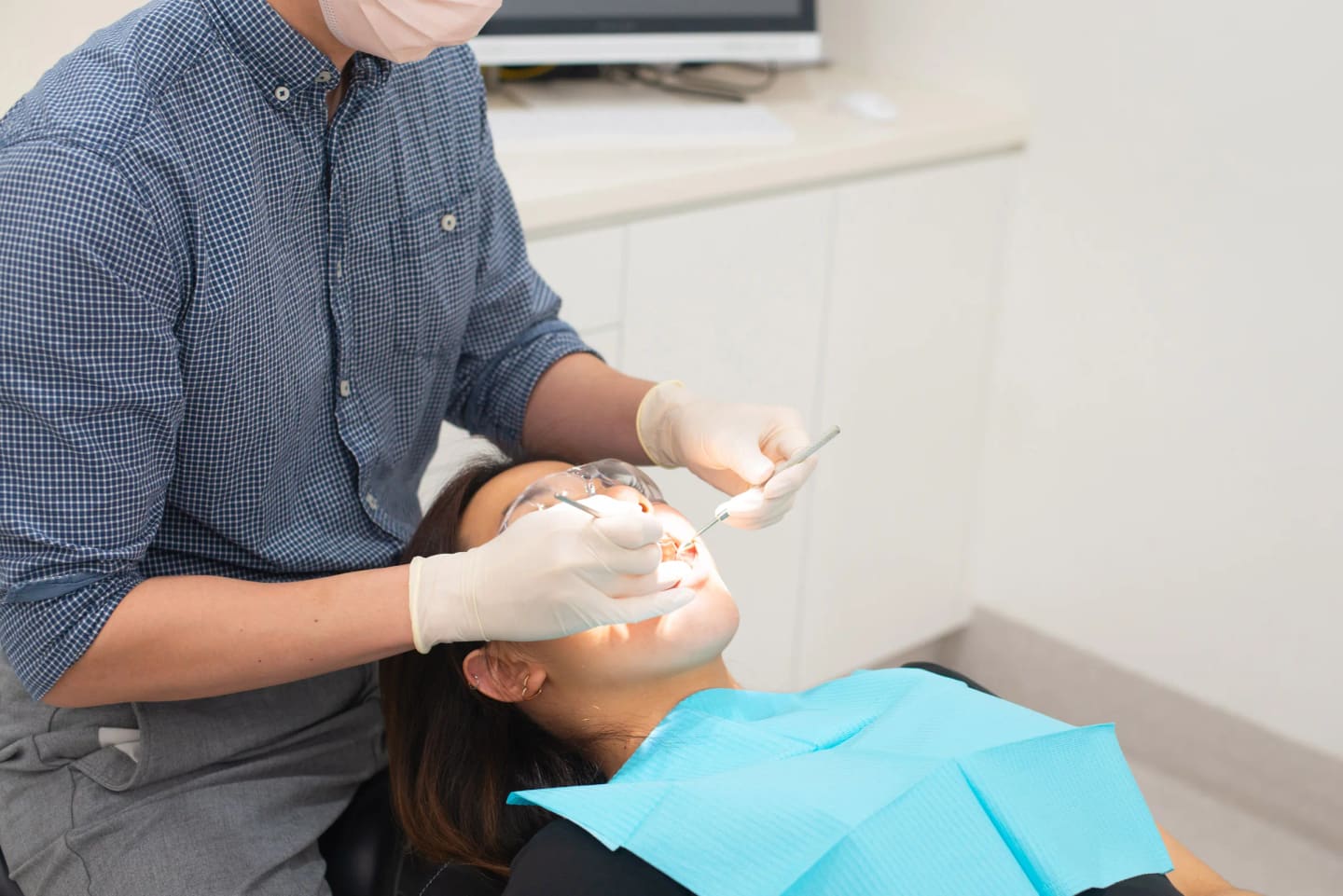
Losing baby teeth is a normal childhood milestone. Losing adult teeth is not. If one of your permanent teeth feels loose, something is wrong. The good news: depending on the cause and how early you act, many loose teeth can be stabilised and saved.
This guide covers the most common reasons adult teeth become mobile, what your dentist will look for, and the treatment options available in Brisbane.
How Teeth Stay Anchored
Each tooth sits in a socket in the jawbone, held in place by the periodontal ligament, a network of tiny fibres that connect the tooth root to the surrounding bone. Healthy gum tissue seals the top of this system, keeping bacteria out.
When any part of this support system is compromised, the tooth begins to move. Dentists measure mobility on a scale: Grade 1 (slight movement), Grade 2 (visible movement of more than 1mm), and Grade 3 (the tooth can be depressed into the socket or moved in all directions). The grade of mobility helps determine whether the tooth can be saved.
Cause 1: Gum Disease (Periodontal Disease)
This is the most common reason adults develop loose teeth. Periodontal disease is a bacterial infection that destroys the bone and ligament supporting your teeth. It progresses slowly, often without pain, which is why many people do not realise they have it until a tooth starts moving.
Signs that gum disease may be the cause:
- Bleeding gums when brushing or flossing
- Gums that have receded, making teeth look longer
- Persistent bad breath
- Multiple teeth feeling slightly mobile, not just one
Treatment involves professional deep cleaning (scaling and root planing) to remove bacteria and calculus from below the gum line. In advanced cases, gum surgery may be needed to access and clean deeper pockets. If bone loss is significant, bone grafting may be considered.
Cause 2: Hormonal Changes
Pregnancy, menopause, and other hormonal shifts can affect gum health by increasing blood flow to the gums and changing the body's inflammatory response. Some pregnant women notice increased gum sensitivity, bleeding, or mild tooth mobility during pregnancy. This is usually temporary and resolves after hormonal levels stabilise, but it should still be monitored by a dentist. Read more about dental care during menopause.
Cause 3: Trauma or Injury
A knock to the face during sport, a fall, or biting down on something unexpectedly hard can loosen a tooth. This is common in Brisbane, where active lifestyles and contact sports are part of daily life.
If you have loosened a tooth through trauma, see a dentist within 24 hours. Time matters. Your dentist may:
- Splint the loose tooth to adjacent stable teeth, allowing the periodontal ligament to heal
- Monitor the tooth's nerve health with vitality testing over the following weeks
- Take X-rays to check for root fractures that may not be visible
A splint typically stays in place for two to four weeks. Many traumatised teeth stabilise fully with this approach.
If you play contact sport without a mouthguard, consider getting a custom-fitted mouthguard made. The protection is significantly better than store-bought alternatives.
Cause 4: Teeth Grinding (Bruxism)
Chronic grinding or clenching places excessive force on teeth, which can gradually loosen them. Bruxism often occurs during sleep, so you may not be aware of it. Signs include worn tooth surfaces, jaw stiffness in the morning, and headaches.
Treatment focuses on reducing the destructive forces. A night guard or occlusal splint worn during sleep cushions the teeth and redistributes bite pressure. Once the excessive force is managed, mild mobility may improve over time.
If grinding has already caused significant damage, your dentist may also recommend crowns to restore worn teeth and redistribute your bite more evenly.
Cause 5: Dental Abscess
An infection at the tip of a tooth root can erode the surrounding bone, causing the tooth to feel loose. You may also notice throbbing pain, sensitivity to heat, and swelling in the gum. This requires urgent treatment. Read more about abscess treatment options.
Book an emergency assessment if you suspect an abscess. Book online at any time, or call Ivy Dental on (07) 3266 7120 during opening hours for phone triage and booking help.
Cause 6: Osteoporosis
Osteoporosis reduces bone density throughout the body, including the jawbone. While it does not directly cause tooth loosening, it may accelerate bone loss caused by gum disease, making the problem worse.
Cause 7: Bite Problems and Occlusal Trauma
If your bite is uneven, certain teeth may absorb more force than they are designed to handle. Over months or years, this can lead to localised loosening. Your dentist may identify premature contacts (spots where your teeth hit first when you close) and adjust them through selective reshaping.
What to Do Right Now If Your Tooth Feels Loose
- Do not wiggle or push the tooth with your fingers or tongue
- Eat soft foods on the opposite side of your mouth
- Maintain gentle brushing and flossing around the tooth (stopping oral hygiene worsens gum disease)
- Avoid hard, crunchy, or sticky foods
- Contact your dentist for an appointment as soon as possible
At Ivy Dental, emergency appointments at Everton Park or Nundah can be booked online at any time. During opening hours, call for phone triage and booking help. Timing depends on clinical urgency and clinic capacity, so same-day or next-day care is not guaranteed.
How Your Dentist Assesses a Loose Tooth
At your appointment, your dentist will:
- Test the tooth's mobility by applying gentle pressure in different directions
- Probe the gums to measure pocket depth around the tooth
- Take X-rays to assess bone levels and look for infection
- Review your medical history for contributing factors
This assessment determines whether the tooth can be saved, needs stabilisation, or requires extraction and replacement.
Can a Loose Tooth Be Saved?
It depends on how much support remains. If the bone and ligament damage is localised and caught early, treatment can stabilise the tooth for years. If bone loss is severe and the tooth is Grade 3 mobile, extraction and replacement may be the more predictable option.
Your dentist will be honest with you about the prognosis. Saving a tooth that is likely to fail within months is not always in your interest, particularly if delayed extraction makes future implant placement more complex.
Replacing a Tooth That Cannot Be Saved
If extraction is recommended, several replacement options exist. Dental implants are generally the most stable and long-lasting option. Bridges and partial dentures are alternatives depending on your clinical situation and budget.
Your dentist will discuss the timing of replacement. In some cases, an implant can be placed at the time of extraction. In others, a healing period is needed first.
Prevention
Most cases of adult tooth loosening are preventable with consistent oral care:
- Brush twice daily with a soft-bristled brush
- Floss or use interdental brushes daily
- Attend regular dental check-ups every six months
- Do not ignore bleeding gums. It is not normal.
- Wear a mouthguard during contact sports
- Address grinding or clenching before it causes damage
The Key Takeaway
A loose adult tooth is your body telling you something needs attention. The earlier you act, the more options you have. Contact Ivy Dental on (07) 3266 7120 or book a consultation online. We are open seven days at our Everton Park and Nundah clinics.